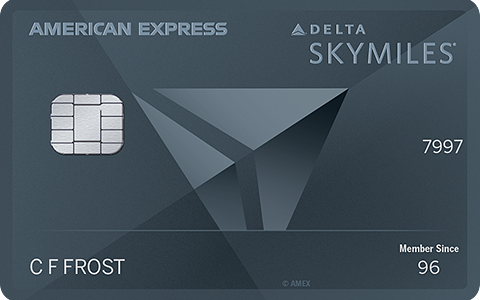
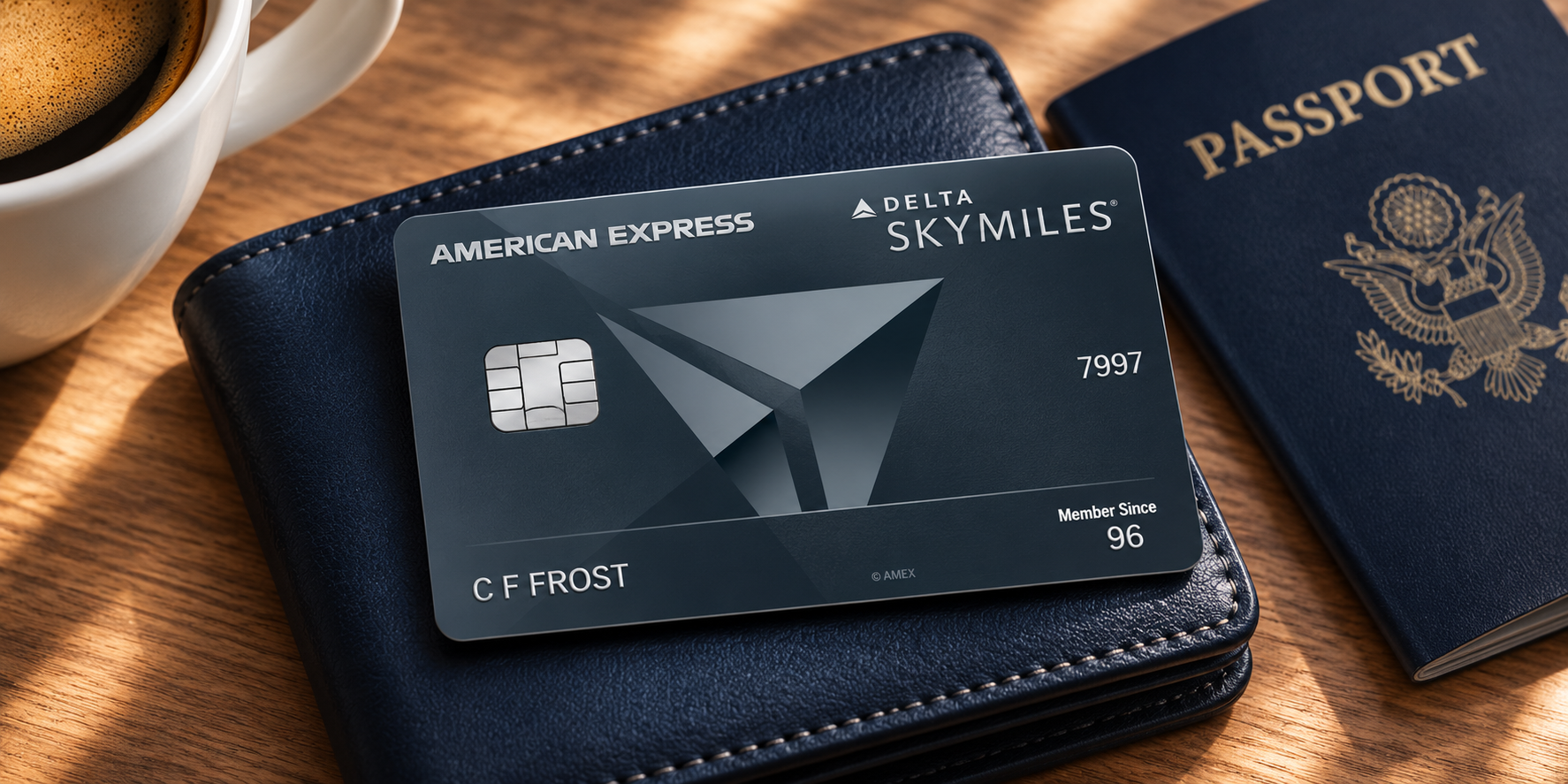



The *delta reserve card* is Delta’s top-tier credit card, and at $650 a year (see rates & fees), it’s also the one Delta flyers most often talk themselves into without doing the math. It’s built first and foremost for travelers chasing Delta Medallion elite status, who can use the card’s spending to rack up Medallion Qualifying Dollars (MQDs), the dollar-based yardstick Delta uses to decide who earns status.
To be fair, the card comes loaded with perks, including 15 visits a year to Delta Sky Club airport lounges, an annual companion certificate (starting in your second year with the card), 2,500 MQDs deposited into your account every year, and free checked bags on Delta flights.
But if what you really want is free bags and a nicer airport experience, a cheaper Delta card can cover the basics, and the *amex platinum* gets you into far more lounges … Delta or not.
If you’ve been on the fence, the current welcome offer makes the decision more pressing. Through Wednesday, Nov. 4, new cardholders can earn two round-trip Delta Comfort flight certificates plus 50,000 bonus miles after spending $10,000 in the first six months – the first time flight certificates have been part of this card’s welcome offer.
But a big bonus doesn’t change what you’ll pay every year after that, so let’s break down who the Reserve card actually makes sense for, and who should skip it.
The Basics of the Delta SkyMiles® Reserve American Express Card
- Welcome offer: bonus_miles_full
- Check your first bag free on Delta flights worldwide and get a second checked bag free when flying domestically – a potential savings of $200 on each roundtrip flight
- Zone 5 Priority boarding (even with a basic economy ticket)
- Get 15 Delta Sky Club visits each year (to use between Feb. 1 and Jan. 31 of the following year) when flying Delta. You can unlock unlimited Sky Club access by spending $75,000 or more on your card in a calendar year.
- You also get four free guest passes and can bring up to two guests at a time. After that, each guest visit will cost an additional $50.
- Complimentary access to the American Express Centurion® Lounges when you are flying Delta on a ticket purchased with your Reserve card
- Get a Delta Main, Delta Comfort, or Delta First companion certificate to destinations throughout the U.S. (including Hawaii, Alaska, the U.S. Virgin Islands and Puerto Rico) as well as many destinations in Mexico, the Caribbean, and Central America each year upon card renewal
- MQD Headstart: Get a head start on earning Medallion status with an automatic 2,500 Medallion Qualifying Dollars (MQDs) each year
- Earn 1 MQD for every $10 you spend on your card
- Earn 3x SkyMiles per dollar spent on Delta purchases
- Earn 1x SkyMiles per dollar spent on all other eligible purchases
- Up to a $200 Delta Stays credit: Earn up to $200 in statement credits each year when you make a Delta Stays prepaid hotel or vacation rental booking on the Delta Stays platform.
- Up to a $120 Rideshare Credit: Get up to $120 in statement credits (doled out in $10 monthly installments) a year when you use your card to pay for a ride with Uber, Lyft, Curb, Revel, or Alto in the U.S.
- Up to a $240 Resy Credit: Get up to $240 in statement credits each year (doled out in $20 chunks each month) when you use your card to pay for eligible purchases on Resy, Amex’s restaurant reservation platform. This is also a use-it-or-lose-it benefit: Any unused balance won’t roll over to the following month.
- Get up to a $120 credit to cover the cost of Global Entry or up to $85 for TSA PreCheck
- Complimentary space-available upgrades, even for non-Medallion members. A great way to improve your upgrade chances.
- Get 15% off SkyMiles award tickets with TakeOff 15 when booking on delta.com or through the Fly Delta app
- Hertz President’s Circle Status: Receive complimentary top-tier Hertz President’s Circle elite status upon enrollment.
- Enjoy 20% off in-flight purchases such as food & drinks in the form of a statement credit
- No foreign transaction fees
- annual_fees annual fee (see rates & fees)
Learn more about the *delta reserve card*.
Chasing Elite Status
If there’s one reason to pay $650 a year for the Delta Reserve Card, it’s earning Delta Medallion status, and these days, flying a lot with Delta isn’t enough on its own. You have to spend a lot, too.
Before getting into the specifics, it’s worth saying plainly that chasing elite status is rarely worth it, and most travelers are far better off as elite status free agents who book whichever airline is cheapest or most convenient. But if you already spend a ton of time on Delta planes – preferably on your employer’s dime – status can make the experience a lot more pleasant, and the Reserve card is the most efficient way to get there.
How to Earn Medallion Status
After turning some of its most loyal flyers against the airline with sweeping and painful changes to earning Medallion Status at the end of 2023, earning Delta status is a whole new world.
Nowadays, earning any level of Delta Medallion status is largely determined by how much you spend with the airline, measured by Medallion Qualifying Dollars (MQDs). And from the lowest tier to the top, you’ll have to spend a lot to earn status.
You’ll earn $1 MQD per $1 spent on Delta flights. You’ll also earn $1 MQD for every $10 spent on the *delta reserve card*, and $1 MQD for every $20 spent on the *delta skymiles platinum card*.
However, to ease the pain of reaching these spending requirements, Delta offers an MQD headstart on both the Delta SkyMiles Reserve and Platinum Cards (and their small business counterparts). With this MQD boost, the airline doles out 2,500 MQDs to travelers at the beginning of each year.
That means if you’ve got the Delta Reserve or Platinum Card in your wallet at the start of the year, you’ll get 2,500 MQDs right off the bat – half of what it takes to reach Silver Medallion status. And since you’ll earn $1 MQD for every $10 spent on the Reserve Card, you could spend $25,000 on your card in a calendar year to meet the $5,000 MQD requirement to earn the lowest level Silver status without setting foot on a Delta plane.
Here’s what it takes to reach each tier. Delta confirmed last month that these thresholds won’t change in 2027, the third straight year they’ve held steady, even as United just raised the bar for its top-tier 1K status. Any status you earn next year is good through Jan. 31, 2029.

Since the Delta Platinum Card earns $1 MQD for every $20 spent on the card, you’d need to spend twice as much ($50,000) to earn the additional $2,500 MQDs to earn Silver status. So, like it or not, holding the Reserve Card is practically a requirement if earning Delta status is your goal. Critically, you won’t earn any MQDs whatsoever by spending on the *delta skymiles gold card* or the *delta blue*.
There’s also a shortcut that skips the spending entirely, because the Headstart stacks across cards. Hold both the Reserve and the Delta Platinum card, and you’ll start each year with 5,000 MQDs and instant Silver status without spending a dime with Delta. The business versions of both cards come with the Headstart, too, so holding all four would get you to Gold.
That shortcut isn’t cheap, though. Pairing the Reserve with the personal Delta Platinum runs $1,000 a year in annual fees, and even the cheapest route – the personal and business versions of the Platinum card – costs $700 a year.
Like it or not, if Delta status is your goal, the Reserve card is the path of least resistance, and for anyone putting serious spending on a Delta card, it’s practically a requirement.
Is Delta Status Really Worth It?
If all this status talk is making your head spin or you’re not following how to earn MQDs (or why they matter), then the Delta Reserve Card is not for you.
Of course, Delta Medallion Status can be quite nice. You’ll have a chance at complimentary upgrades – though these days, that’s gotten less and less likely as the ranks of Medallion Status members have grown and Delta continues to sell more and more first class seats outright. Other status perks include access to waived baggage fees, priority boarding, and more.
But do you really fly enough to make use of those perks? Is it worth spending so much on one single credit card, foregoing bigger (and better) bonuses on other travel cards? Unless you’re a true Delta road warrior, traveling multiple weeks per month, the answer is probably no.
All that means you should likely look past the Delta SkyMiles Reserve Card – especially if what you really want is access to the Delta Sky Club and other airport lounges.
Lounge Access
Status may not be your goal, but the Delta Reserve Card is also powerful if you want to hit the Delta Sky Club before (or after) your flight.
There’s good and bad news there. You no longer get unlimited access: Reserve cardholders are now limited to 15 Sky Club visits each year (Feb. 1 – Jan. 31) unless you spend $75,000 on your card in a calendar year. But unless you’re also planning to spend that much to earn elite status, it likely isn’t worth it anyway.
That 15-visit allotment is five more than you get with *amex platinum* each year. Any trips involving multiple Sky Club visits in a single 24-hour period count as one visit, so hopping into the Delta lounge before departure and again during a connection won’t cost you two visits.
While some Delta lounges are better than others, they all provide a nice place to relax (or work) away from the hustle and bustle of a crowded terminal. In general, you can expect to get complimentary food and drinks, comfortable seating, and free Wi-Fi. Some outposts, like the relatively new Sky Clubs at Chicago-O’Hare (ORD) and Los Angeles (LAX), even include shower suites, where you can freshen up before or after your flight and lean heavily on local influences with specially curated menu items and design touches.
Reserve cardholders also get four free one-time guest passes to the Sky Club to bring a friend or family member. After that, you’ll have to pay $50 per guest for up to two guests at a time.
Related Reading: The Definitive List of the 8 Best Delta Sky Clubs

What About Upgrades?
On paper, the Reserve Card gives non-Medallion-status holders some elite-like perks, including access to complimentary space-available upgrades. This benefit gives Reserve Cardholders the chance to be bumped to Delta First and Delta Comfort – even without any elite status. Who doesn’t want a free upgrade to the front of the plane?
We hate to break it to you: In practice, it rarely happens. You need to emphasize the words “space-available” for this perk.
Delta determines its Medallion upgrade order based on a series of factors. And while holding the Reserve card can be a decent tiebreaker if you’ve already got Medallion status, it will almost never be enough to secure you an upgrade to first class on its own – especially as travel demand and elite status ranks have grown following the pandemic.
Here’s the current hierarchy of who gets first dibs on a free upgrade:
- Delta Medallion Status level: Diamonds get precedence over Platinums, Platinums over Golds, etc.
- Cabin Purchased: (Original + Paid Upgrades)
- Million Miler status members have slightly better odds at an upgrade than others.
- Delta SkyMiles Reserve Card: A Platinum Medallion member with a Reserve Card in their wallet gets precedence over another Platinum member who bought the same fare type
- Delta Corporate Travelers get a slight edge over everyday Medallion members.
- Medallion Qualification Dollars (MQDs) earned in the current calendar year
- Date and time of upgrade request: Buying your ticket earlier than someone whose odds are otherwise equal can give you the final nod for the free seat.
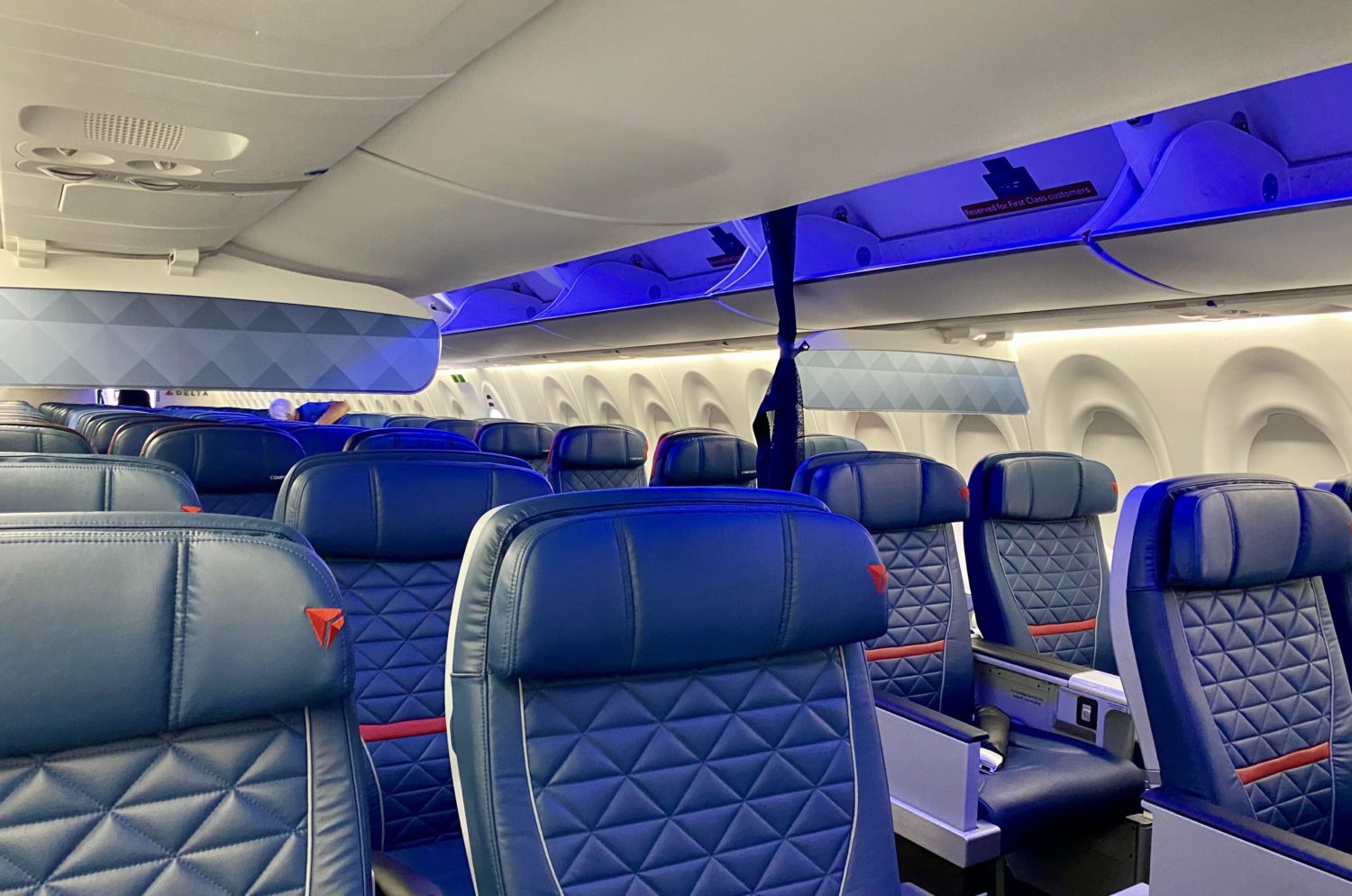
Regardless, all those factors make it highly, highly unlikely you’ll score a first class upgrade with a Reserve card alone. What’s more, Delta is increasingly selling these first class seats to paying customers rather than holding them for complimentary upgrades. That has made it hard for even top Delta elites with a Reserve card to count on a complimentary upgrade.
Case in point: Just over a decade ago, the Atlanta-based airline was selling less than 10% of first class seats, filling the rest of the seats up front with Medallion members via complimentary upgrades. But Delta President Glen Hauenstein told investors late last year that it’s now selling a whopping 88% of first class seats, leaving just 12% of the cabin available for upgrades.
So even if you have top Delta Diamond Medallion status and hold the Delta Reserve Card, if you want status for complimentary upgrades, the calculus is getting harder and harder to justify.
Read more: Why Delta Medallions Can (Almost) Never Count on Free Upgrades Now
Why The American Express Platinum Card® Might Be a Better Fit
Plenty of travelers who think they need the Delta Reserve card would be better off with a different card entirely, and it doesn’t have Delta’s name on it. It’s the *amex platinum*, the top-tier card in the American Express lineup – not to be confused with the *delta skymiles platinum card*.
To be clear, the Platinum Card costs $245 more than the Reserve with its $895 annual fee (see rates & fees). But if what you really want is lounge access, it opens far more doors, and it comes with enough credits to cover that gap (and then some) if you’ll actually use them.
You’ll still get into the Sky Club, with 10 complimentary visits a year when flying Delta. That’s five fewer than the Reserve card, and you don’t get any free guest passes, but there’s a small workaround that turns your $200 annual airline fee credit into four more visits a year. Just like with the Reserve, spending $75,000 in a calendar year unlocks unlimited Sky Club visits, and on the Platinum Card, it also lets you bring two guests into Centurion Lounges for free.
The Sky Club is only the start, though. The Platinum Card gets you into Amex’s own Centurion Lounges no matter which airline you’re flying – subject to the same July 8 rules on guests and layovers – plus a Priority Pass Select membership and other networks like Plaza Premium and Escape Lounges, including our go-to lounge at Minneapolis-St. Paul (MSP). Amex calls all this the Global Lounge Collection, and it adds up to more than 1,550 lounges worldwide.
Then there are the credits, and the Platinum Card has more of them than almost anyone can keep straight. Here are the highlights:
- Up to $600 a year toward prepaid hotels booked through Amex Travel, split into two $300 credits each year. Starting in 2027, Fine Hotels + Resorts bookings will require a two-night minimum stay, just like The Hotel Collection already does, though prepaid Airbnb Luxe stays now qualify, too.
- Up to $400 a year at Resy restaurants, doled out as up to $100 each quarter.
- Up to $300 a year in digital entertainment credits for eligible streaming services and subscriptions.
- Up to $300 a year at lululemon, as up to $75 each quarter.
- Up to $200 in Uber Cash for rides or Uber Eats, plus up to $120 a year toward an Uber One membership.
- Up to $200 in airline fee credits each year.
- Up to $219 a year toward CLEAR+.
Unlike the Reserve card’s SkyMiles, the Platinum Card earns American Express Membership Rewards points, including 5x points on flights booked directly with airlines and on Airbnbs booked through Amex Travel. You can transfer those points into your Delta SkyMiles account whenever you need them. Or better yet, move them to one of Amex’s many other airline and hotel partners, which makes them far more flexible – and usually more valuable – than SkyMiles alone.
Simply put, unless you’re chasing Delta elite status, you’ll likely get more out of the Platinum Card, even after paying a bit more for it.
Read More: A Full Review of the American Express Platinum® Card
Learn more about the *amex platinum*.
Bottom Line
The Delta Reserve Card is Delta’s ultra-premium, co-branded credit card that comes packed with perks for loyal Delta Flyers. But the truth is that unless you’re on the hunt for Delta Medallion elite status, the Reserve Card likely isn’t for you. Most travelers will be better served with a lower-priced Delta card like the *delta skymiles gold card*.
And even if your primary reason for getting the Reserve Card is Sky Club access, the Platinum Card from American Express might be a better option altogether.