
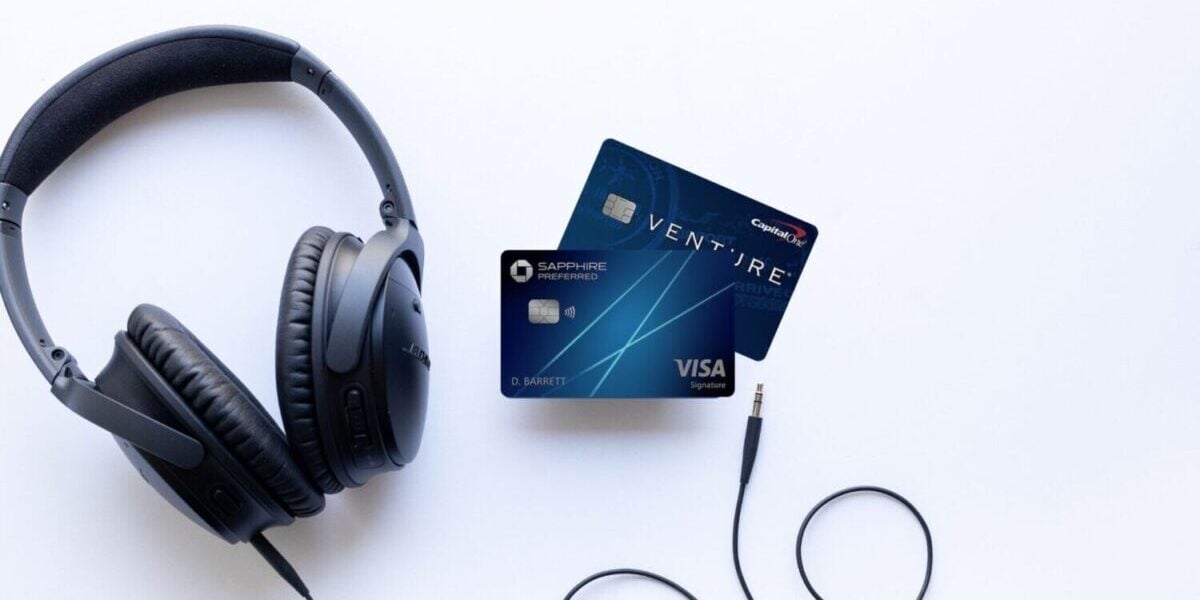



Shelling out hundreds of dollars in annual fees on premium credit cards isn’t for everybody – especially if you’re just getting started. We get it.
Luckily, some great travel rewards credit cards earn lucrative points and miles for less than $100 in annual fees. Two titans are the new-look *csp* and the *capital one venture card*.
With welcome bonuses worth at least $750 towards travel, either card is worth considering. Maybe it’s even worth holding both?
While the big sign-up bonuses get all the attention, it’s the little things like added travel protections, statement credits, and bonus point earning that might make one card a better fit for you than the other.
We’ll break down the benefits of each card to help you decide which is right for you and your travel goals.
Welcome Bonuses
Both the Chase Sapphire Preferred and the Capital One Venture Rewards Card come with generous welcome bonuses.
Chase Sapphire Preferred
bonus_miles_full
Capital One Venture
bonus_miles_full
Winner
While the bonus miles on both cards are the same, the Sapphire Preferred requires an additional $1,000 in spending in the first three months. If you’re a more modest spender, the Venture Card could be the right choice for you.
Learn more about the *capital one venture card*
Annual Fees
In this category, it’s easy to determine a winner … or lack thereof. The annual fee on both the Chase Sapphire Preferred and the Capital One Venture card is $95.
Each card offers additional benefits that can help offset the annual fee, but both will cost you the same out-of-pocket amount each year you hold the card.
Winner
This one is a clear tie, as both cards charge the same $95 annual fee.
Earning Points
New card welcome bonuses only go so far. Luckily, racking up more points (or miles) on your everyday spending is quite easy with either of these cards.
Chase Sapphire Preferred
You’ll earn 3x points per dollar spent in the following categories:
- Dining at restaurants, including takeout and eligible delivery services
- Gas & EV charging
- Online grocery purchases (excluding Target, Walmart, and wholesale clubs)
- Vacation homes at top brands like Airbnb & Vrbo
- Top streaming services
You’ll also earn 2x points per dollar spent on travel purchases – and you’ll also get an annual up to $100 credit to use toward hotel bookings made through Chase Travel℠ (more on that in a bit).
Finally, you’ll also earn 5x total points per dollar spent on travel purchased through Chase Travel℠ and 5x points per dollar spent on qualifying Lyft purchases (through Sept. 30, 2027).
Capital One Venture
With the Venture Card, you’ll earn an unlimited 2x miles on every dollar you spend. You’ll also get 5x miles on hotels, vacation rentals, and rental cars booked through Capital One Travel.
Winner
So which is better? It depends on your spending patterns. But in our opinion, getting 3x on dining, gas, online grocery purchases, and vacation rentals – plus 2x points on all other travel purchases – makes the Sapphire Preferred the better option.
Learn more about the *csp*.
Redeeming Points
Earning points is only half the battle – after that, you’ve got to be able to put them to good use! Whether you’re looking to travel, redeem for gift cards, merchandise, or cash back. There are plenty of ways to use the points (or miles) from either of these cards. But some are more valuable than others.
Chase Sapphire Preferred Redemptions
There’s no shortage of options to use the Ultimate Rewards points you earn with the Chase Sapphire Preferred … and that’s a good thing.
Transfer to Partners
One of the most valuable options for redeeming your points is to transfer them to one of the dozen-plus Chase travel partners for an award booking. With a dozen-plus airline and hotel partners (as of publication), you’ve got a lot of great options for using your points this way.
Chase points transfer to most partners at a 1:1 ratio. That means one Chase Ultimate Reward point equals one hotel point or airline mile.
The one exception? World of Hyatt. The only real downside to a broader update Chase recently made to the Sapphire Preferred is that Ultimate Rewards now transfer to Hyatt at a messy 4:3 ratio. This means that if a Hyatt property charges 30,000 points per night, you’ll need to transfer 40,000 Chase points to book.
Aside from needing to do some extra math before you transfer (we hate math), this devaluation is a bit of a double whammy: Hyatt recently raised rates at many of its best properties, making them more costly to book.
| Program | Type | Transfer Ratio | Transfer Time |
|---|---|---|---|
| Aer Lingus | Airline | 1:1 | Instant |
| Air Canada Aeroplan | Airline | 1:1 | Instant |
| Air France/KLM | Airline | 1:1 | Instant |
| British Airways | Airline | 1:1 | Instant |
| Iberia Plus | Airline | 1:1 | Instant |
| JetBlue | Airline | 1:1 | Instant |
| Singapore Air | Airline | 1:1 | 24-48 hours |
| Southwest Airlines | Airline | 1:1 | Instant |
| United Airlines | Airline | 1:1 | Instant |
| Virgin Atlantic | Airline | 1:1 | Instant |
| World of Hyatt (Sapphire Preferred & Ink Preferred cardholders) | Hotel | 4:3 | Instant |
| World of Hyatt (Sapphire Reserve cardholders) | Hotel | 1:1 | Instant |
| IHG | Hotel | 1:1 | Instant |
| Marriott Rewards | Hotel | 1:1 | Instant |
| Wyndham Rewards | Hotel | 1:1 | Instant - next business day |
Related reading: Hilton Honors: Chase’s Hidden Hotel Transfer Partner?
Redeem for Something Other Than Travel
If travel isn’t really your thing … well, that’s a bummer … you can also redeem your Ultimate Rewards for cash back at a rate of 1 cent per point. Or you can use them for gift cards, dining, and more. Some of these redemption options are better than others, but the fact that there are so many options to choose from is a good thing.
Capital One Venture Redemptions
Capital One has taken the travel world by storm over the past handful of years, transforming Capital One Miles into an indispensable program for travelers who want to do more for less.
In fact, no other credit card points give you more flexibility and versatility to redeem miles toward travel. That includes flights, hotels, rental cars, and much more. Whether you’re just getting started and want a simple option, or you consider yourself an advanced traveler who knows how to maximize your points and miles, there’s a path for you.
Here are some of the best ways to redeem your Capital One Miles.
Cover Travel Purchases
Let’s start with the easiest route. This is what Capital One is really known for.
Just charge your flight, hotel, Airbnb, or almost any other travel expense to your Capital One card and a few days later, you can go in and erase that charge from your statement using miles.
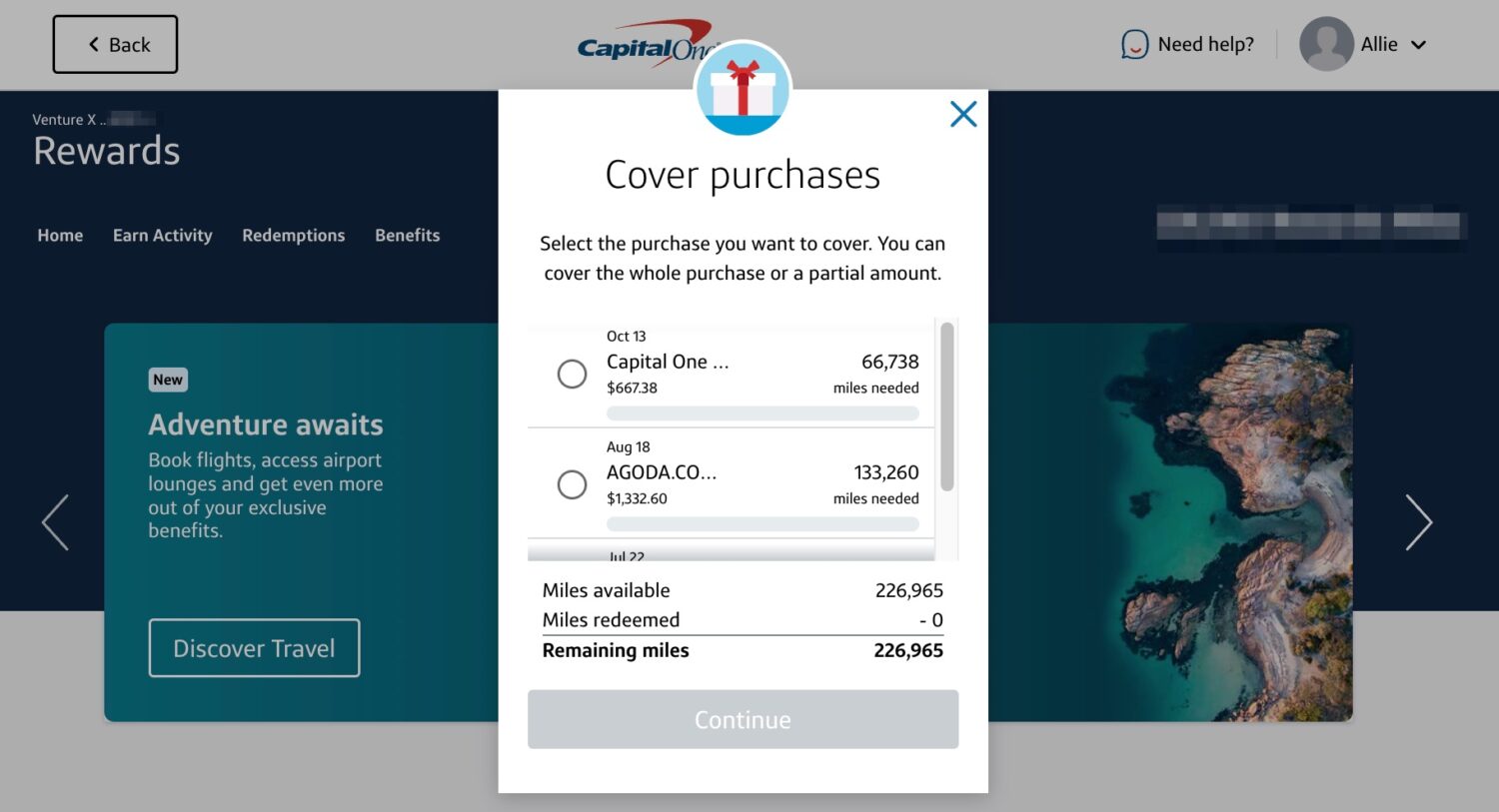
Read our step-by-step guide to covering travel purhcases with Capital One miles to see how it’s done!
When you use your miles this way, every Capital One Mile is worth 1 cent. That means you can book a $500 flight using 50,000 Capital One miles. That may not be an earth-shattering value, but it’s as easy as can be – and it goes far when you find a cheap flight.
But what’s really cool about this option is that you can use them beyond “typical” travel expenses like flights, hotels, and rental cars. So long as your purchase codes as travel, you’re good to go.
Thrifty Traveler co-founder Nick Serati used a boatload of Capital One Miles to cover a bucket list golf trip to Bandon Dunes – not exactly what most people would think of as a travel expense.
Book Through the Capital One Travel Portal
Just like Chase Travel℠, Capital One has its own travel portal where you can directly search for flights, hotels, car rentals, and more, then book using points. And the Capital One Travel Portal has some great features you won’t get elsewhere.
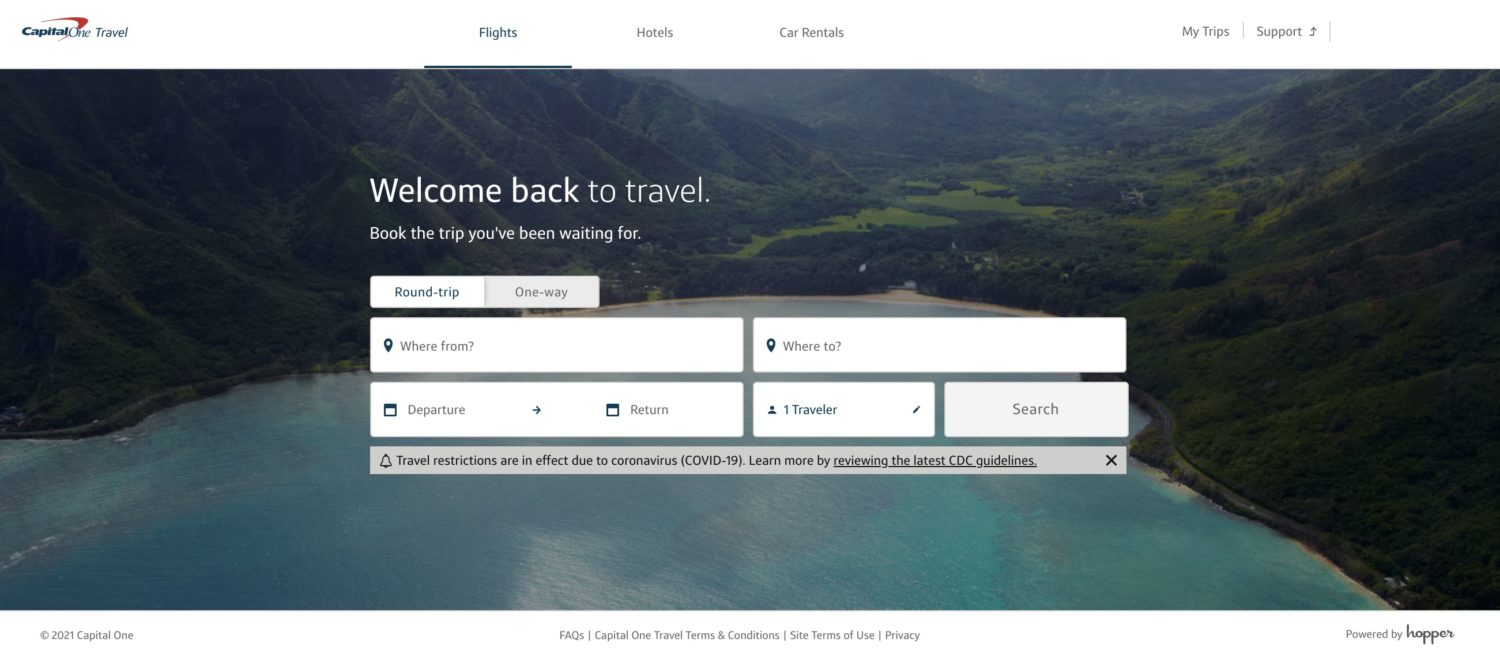
Capital One Travel’s booking engine is powered by the popular travel app Hopper. That means you should generally find the same prices you see directly through the airline or via Google Flights – but not always. Just tap in the details of the flight or hotel you’re hoping to book with Capital One Miles and start searching.
Unfortunately, you won’t get a bonus when using miles through the Capital One Travel portal like you do with the Sapphire Preferred. Just like booking straight through the airlines or hotels, every Capital One mile is worth 1 cent toward travel through the portal.
While you may not be getting more bang for your buck by using miles through the travel portal, Capital One has given travelers a few compelling reasons to consider it:
- Capital One will automatically credit you if the price of your flight drops after booking. Those Price Drop Protection credits are only available on flights where Capital One and Hopper predict that prices won’t fall, and they’re capped at up to $50 – or 5,000 Capital One Miles – in credits total.
- You can freeze a fare through the portal for up to 14 days, then decide and come back to buy it later at that price. Capital One charges a small fee to freeze a fare.
- Much like Google Flights, Capital One allows you to set price alerts for the flights you want to book. That means you’ll get an email if the flights you’re looking at drop or increase in price.
- Capital One offers an add-on “cancel for any reason” travel insurance policy, which is quite reasonably priced.
Unfortunately, the travel portal took a hit earlier this year when Capital One capped price drop refunds at $50. And now, the portal’s Price Match Guarantee gets paid out in the form of a travel credit – not a refund to your card.
It’s also worth noting that you might not be getting the best deal by booking through the portal. Our team did an extensive analysis and found hotels booked through Capital One Travel are often more expensive than booking directly or with another online travel agency. This certainly isn’t always the case, but there’s a key lesson here: You should always price shop before booking, no matter the channel.
Transfer to Partners
If you want to get the most bang for your buck, er … miles, you’ll want to acquaint yourself with Capital One’s slew of transfer partners.
Capital One added the ability to transfer miles straight to airline programs years ago. After steadily adding more and more partners, it’s now a bonafide option with some killer value. With few exceptions, for every 1,000 Capital One miles you transfer, you get 1,000 airline miles or hotel points.
| Program | Type | Ratio | Transfer Time |
|---|---|---|---|
| Aeromexico | Airline | 1:1 | Instant |
| Air Canada Aeroplan | Airline | 1:1 | Instant |
| Air France/KLM | Airline | 1:1 | Instant |
| Avianca LifeMiles | Airline | 1:1 | Instant |
| British Airways | Airline | 1:1 | Instant |
| Cathay Pacific AsiaMiles | Airline | 1:1 | 1-5 Days (sometimes instant) |
| Emirates | Airline | 2:1.5 | Instant |
| Etihad | Airline | 1:1 | Instant (sometimes 12-24 hours) |
| EVA Air | Airline | 2:1.5 | 24-48 Hours |
| Finnair | Airline | 1:1 | Instant |
| Japan Airlines | Airline | 2:1.5 | Instant |
| JetBlue | Airline | 2:1.2 | Instant |
| Qantas | Airline | 1:1 | Instant |
| Qatar Airways | Airline | 1:1 | TBD |
| Singapore | Airline | 1:1 | Up to 24 Hours |
| TAP Air Portugal | Airline | 1:1 | Same day |
| Turkish Airlines | Airline | 1:1 | Same day |
| Virgin Red | Other | 1:1 | Same day |
| Accor | Hotel | 2:1 | 1 Hour (Same Day) |
| Choice Hotels | Hotel | 1:1 | Same day |
| Preferred Hotels & Resorts | Hotel | 1:2 | TBD |
| Wyndham Rewards | Hotel | 1:1 | Same day |
Read our guide to Capital One transfer partners and learn how you can transfer your miles! And make sure to read our guide on using Capital One miles to see some of the best options.
Winner
While there’s a lot to love about the simplicity of covering travel purchases with Capital One Miles, the value you get when using Chase Ultimate Rewards is tough to beat.
Whether you’re booking travel through the portal with a Points Boost offer, transferring to partners like Virgin Atlantic, Aeroplan, or Hyatt (yes, even still), or even getting straight cash back, the Chase Sapphire Preferred clearly gives cardholders more value when redeeming points.
Learn more about the *csp*.
Travel Perks & Benefits
Neither of these cards is bursting at the seams with travel perks and credits, but that’s typical of cards with a reasonable annual fee. Having said that, the Sapphire Preferred recently got a couple of new credits that cover the annual fee (and then some).
Chase Sapphire Preferred
With the Sapphire Preferred, you’ll get an annual $100 statement credit for hotel bookings made through Chase Travel℠ – up from the old $50 hotel credit. That means if you use this benefit each and every year, you’ll come out ahead on the card’s $95 annual fee.
Just keep in mind that hotel bookings made through online travel agencies (OTAs) like Chase’s don’t typically earn hotel points, nor will any elite status be recognized. This means it might be best to use this credit to stay at a hotel that’s not part of a major chain – or when you don’t mind missing out on earning hotel points and elite benefits.
You’ll also get up to $120 in credit every four(ish) years to cover the cost of TSA PreCheck, Global Entry, or NEXUS.
While it’s not exactly travel related, you’ll also get a year of complimentary Apple TV when activated by Dec. 31, 2026 – a value of $156. You’ll also get complimentary DashPass membership ($120 value for 12 months), which is good for $0 delivery fees and reduced service fees on eligible DoorDash orders when you activate by Dec. 31, 2027.
Capital One Venture
You’ll also get up to $120 in credit every four(ish) years to cover the cost of TSA PreCheck or Global Entry with the Capital One Venture Card. How often you get the credit depends on which program you go with: You’ll receive a credit every 4 1/2 years for TSA PreCheck and every four years for Global Entry.
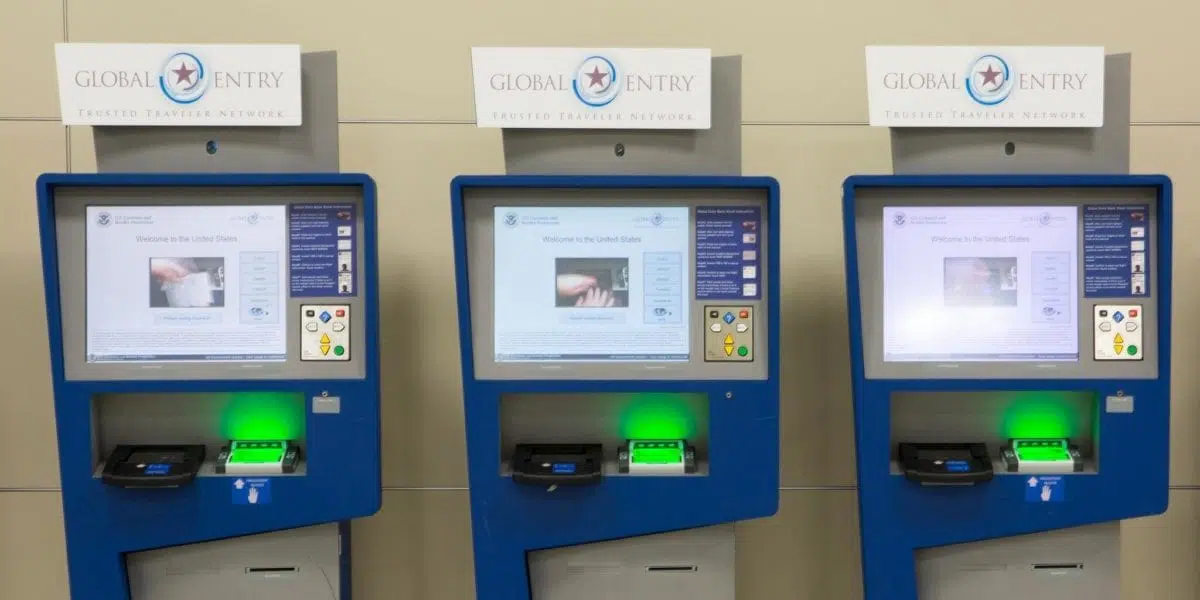
Either program makes getting through airport security a breeze – and considering Global Entry includes TSA PreCheck, that should make it an easy choice for international travelers.
This is a great benefit and one that isn’t offered on many cards with an annual fee below $120.
Read more: The Best Cards that Cover Global Entry or TSA PreCheck
Winner
The Sapphire Preferred’s new credits and perks are enough to offset the cost of the annual fee (and then some) each and every year, making it a
Learn more about the *csp*.
Travel Protections
It’s not a matter of if something will go wrong when you’re traveling, but when. Hopefully, it’s nothing major … but even minor issues can lead to big expenses.
Having a credit card in your wallet that helps protect you from the financial burden when things go wrong is a wise move. Both of these cards fit the bill – though one clearly comes out on top.
Chase Sapphire Preferred
The Chase Sapphire Preferred offers best-in-class insurance with benefits like primary rental car coverage, trip delay reimbursement, and protection for lost or delayed luggage. In short, it means you can skip that add-on policy from the airline – and the rental car agency, too.
The Sapphire Preferred’s rental car insurance will cover up to $60,000 for rental periods that do not exceed 31 consecutive days. It’s primary rental car insurance, better than what you can get from the rental company or even your own personal policy.
One small thing to note about this policy: Chase excludes “high-value motor vehicles” and exotic cars from its coverage. While most of the excluded brands are typically not going to be available on a standard rental lot, Tesla is one of the excluded brands and something to be aware of – especially now that they’re becoming more common with rental agencies.
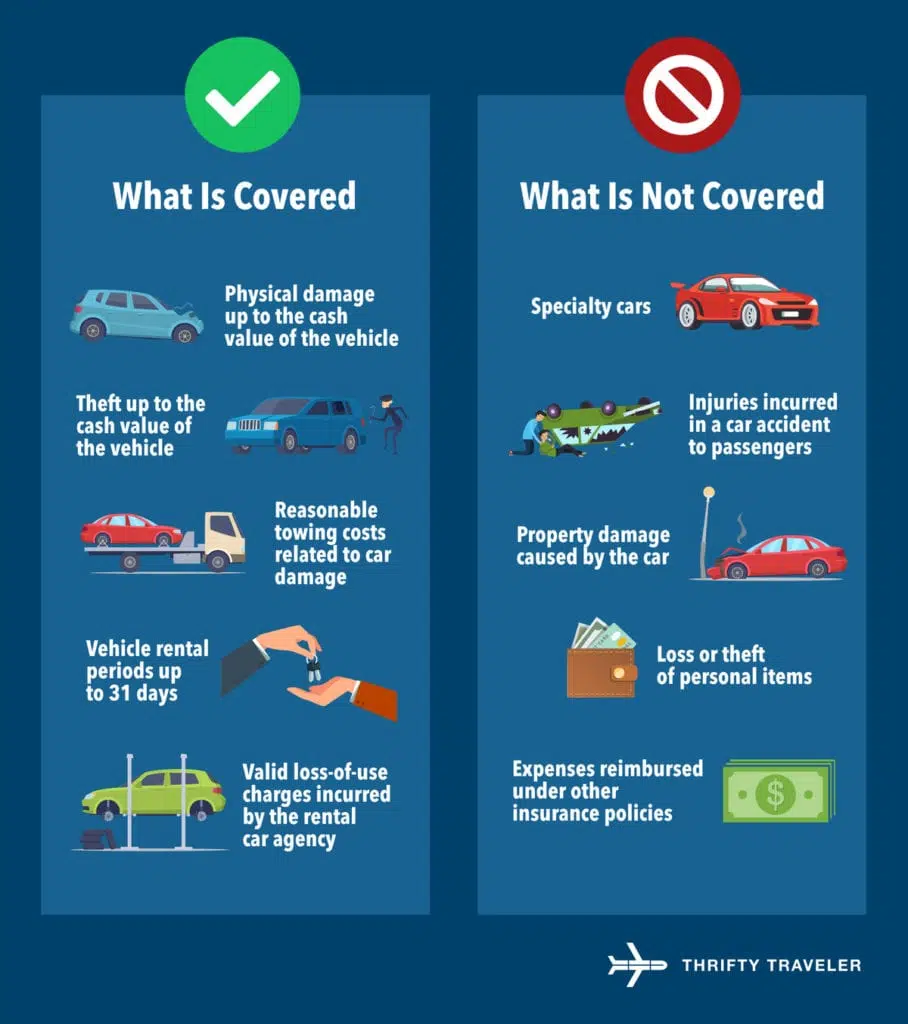
Beyond rental car insurance, the Chase Sapphire Preferred card will also reimburse you for expenses you incur due to a delayed or canceled flight, train, bus, or other means of travel.
With this coverage, you’ll be reimbursed for any delay lasting 12 hours or more (or requiring an overnight stay). Cardholders will be covered along with their spouse or domestic partner and any dependent children under the age of 22 for up to $500 for each purchased ticket.
But wait, there’s more: If you check your bags and they’re delayed more than six hours, the Sapphire Preferred will reimburse you up to $100 per day (for up to five days) for essential items like toiletries, clothing, and cell phone charging cables.
Finally, if disaster strikes and you (or a covered traveler) are injured or become sick during a trip 100 miles or more from home that results in an emergency evacuation, you can be covered for medical services and transportation up to $100,000. Like most travel protections, this is one you hope to never use. But if you ever find yourself in a bad spot, the added peace of mind that this benefit provides could be worth its weight in gold.
Read next: Our Experience Using Chase’s Trip Delay Reimbursement Coverage
Capital One Venture Rewards
The Venture Card also offers rental car coverage … but for rentals in the U.S., it’s secondary coverage, which isn’t nearly as good. If you’re renting a car abroad, the coverage you get with the Venture Card is primary.
Secondary coverage means you’d have to file a claim with your personal insurance policy before turning to your credit card for help. That means you’ll have to pay your deductible – and your auto insurance premiums will likely go up, too.
Outside of this secondary rental car coverage, the Venture Card provides additional protection if you’re in an accident while traveling, and you’re covered if the airline loses your luggage. But only if they lose it: This benefit won’t work if your luggage is delayed by a day or two, which is a huge bummer.
Related Reading: The 4 Best Credit Cards with Travel Insurance: What Do They Cover?
Winner
The Chase Sapphire Preferred offers some of the best travel protections of any card on the market, period. While the Capital One Venture Card certainly comes with more coverage than other cards, it just can’t compete with the Sapphire Preferred in this category.
Learn more about the *csp*.
Which Card is Best?
Every cardholder can and should weigh these individual categories differently – but for our money, the Chase Sapphire Preferred should be the clear choice for most travelers.
With the card’s recent changes, you can cover the $95 annual fee year in and year out with a single hotel booking. Add in a credit for TSA PreCheck, Global Entry, or NEXUS and a complimentary year of Apple TV and the math is even more in your favor … even before taking the big bonus offer into consideration.
If you’re looking for simplicity, there’s certainly something to be said about the unlimited 2x miles you can earn with the Venture Rewards Card and having the ability to easily cover travel purchases is a nice perk.
At the end of the day, your decision should be based on what you value most – and maybe you don’t need to choose: These cards work well in tandem, and it certainly wouldn’t be out of the question to hold both.
Bottom Line
Both the *capital one venture card* and the *chase sapphire preferred* are top-notch travel rewards cards, perfect for those just getting started with points and miles. In fact, the same is true for travelers who have been at it for years.
Every cardholder should weigh these individual categories differently and make a decision on the benefits that are most important to them. But you really can’t go wrong with either card.




I travel often for work. I have the Chase Sapphire Reserve card. I was initially attracted to the 5X points when travel is booked through Chase Travel. However, I gave up on that along time ago. Chase Travel is a total pain in the keister to deal with. Agents who are hard to understand, who read a script, and the process for canceling and re-booking is a huge drain on time and can be quite frustrating. I’d be interested to hear about Capital One travel Center experience.
Can you comment on applicability of the car rental insurance where services like Turo are concerned for these cards? Is it the same as for regular commercial providers like Avis, Budget etc.?
Hi Leslie! Unfortunately, the car rental insurance that comes with the Chase Sapphire Preferred doesn’t cover Turo rentals.
For more info on that, check out this story: https://thriftytraveler.com/news/turo-credit-card-car-rental-insurance/
I was told just today, May 5, that the $50 grocery credit was no longer available and that the offer expired Oct. 2020. I opened my Sapphire Preferred card in March and apparently I do not get this benefit. Please comment.
Hi Greg and Judy, the credit should still be available. It is being advertised on all of Chase’s sales channels as a current card benefit. I would call again and talk to a different customer service representative.