
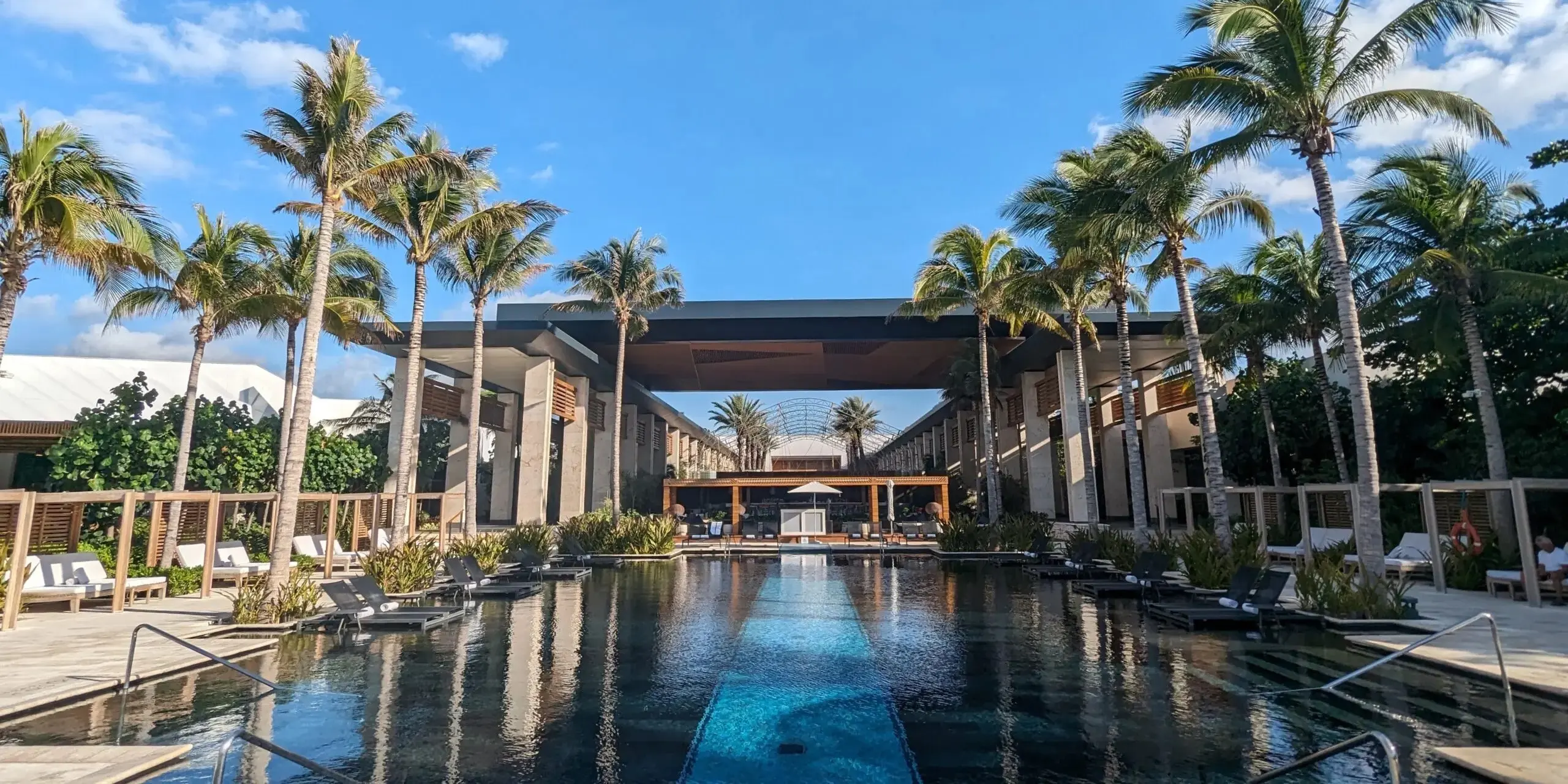



I’ve stayed at some incredible hotels over the years – the kind of places I’d never pay thousands of dollars a night for. But thanks to points, I’ve still been able to live the high life. And honestly, I’ve felt like an imposter at times.
But lately, I’ve started to sour on hotel points. Not because they’re harder to earn – if anything, that’s easier than ever – but because they increasingly don’t go nearly as far as they used to.
One by one, every major hotel chain has raised award rates at their most aspirational properties, making them far more expensive to book with points. Many programs have shifted to fully dynamic pricing, where award rates closely track the cash price – making it nearly impossible to get the kind of outsized value we’d all come to rely on. Even Hyatt – the toast of all things award travel for more than a decade – is joining the race to the bottom later this month with across-the-board increases.
At the same time, some banks have quietly cut transfer ratios to hotel partners (looking at you, Citi), meaning you’ll need to fork over even more of your hard-earned points for a “free” night. And the boom in premium travel cards has flooded the market with annual (or semi-annual) hotel credits. If you’re like me and carry one or two – OK, maybe three – of these cards, using those credits is key to justifying the annual fees … and naturally means leaning less on points. Even better, these bookings often come with elite-esque perks like free breakfast, early check-in, late checkout, property credits, and even a shot at an upgrade.
Add it all up, and hotel points just aren’t as useful – or necessary – for high-end stays as they once were.
Devaluations Have Changed the Equation
Ahh … the dreaded “D-word.” No, not divorce – I’m talking about devaluations.
Let me start by acknowledging that this trend isn’t isolated to hotel points. Whether you’re buying groceries, a new car, or even a house, prices are pretty much up across the board – a dollar simply doesn’t go as far as it used to. Inflation is natural in a healthy economy, and it’s only logical that as costs go up, so does the price … whether you’re paying cash or using points.
But what we’ve seen in the past few years is more than just inflationary adjustments to award charts. Instead, hotel chains have realized travelers hoard their points for top-dollar redemptions they normally wouldn’t pay cash for, and one by one, they’ve systematically killed off the best redemptions.
These days, both Marriott and IHG use a dynamic pricing model, which (more or less) sets a fixed value for each of their points. As cash prices rise, so does the number of points you’ll need to redeem for a free night – sometimes to truly astronomical levels.

It’s still possible to stretch your points further with the hotel chains’ fourth- or fifth-night free benefits, but dynamic pricing has taken a lot of the fun out of redeeming points at the best Marriott and IHG properties.
Meanwhile, Hilton uses a similar dynamic pricing model … with a twist. The points rate is typically tied to the cash price, but they also have “standard awards” at a set rate for every property. This means award rates can be all over the map at many Hilton properties – sometimes as high as 1 million points a night – but there’s still a lowest-and-best base rate when redeeming Hilton Honors points.
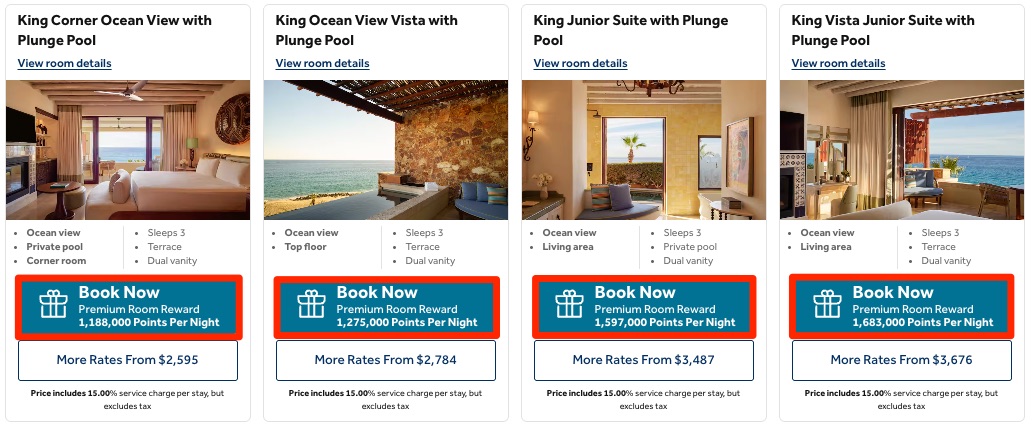
But those lowest-priced, “standard” award rates have been on the rise, with the highest-end hotels now costing 250,000 points per night – up from a maximum of 150,000 just over a year ago. Even with the fifth-night-free benefit available to any and all elite members, you’re still looking at a price of 1 million – yes, million – Hilton Honors points for a five-night stay at the best hotels. The only way you’ll have enough points for a top-tier hotel like the Waldorf Astoria Los Cabos Pedregal is to transfer from American Express … and even with a 1:2 ratio, you’re still looking at 500,000 Amex points for five nights in a hotel.
World of Hyatt has long been considered the most valuable hotel program for award travelers, because unlike its biggest competitors, Hyatt still uses a fixed award chart to determine the cost of a free night. But later this month, that’s changing … sort of.
Effective May 20, Hyatt is scrapping its current off-peak, standard, and peak pricing in favor of a new five-tier pricing system across its eight existing hotel categories, with a far wider range of award rates from the slowest to the busiest times. Under this new system, a “free” night could cost between 3,000 and 75,000 points, depending on the property.
It’s not full-blown dynamic pricing in the vein of Marriott and IHG … but maybe dynamic-lite.
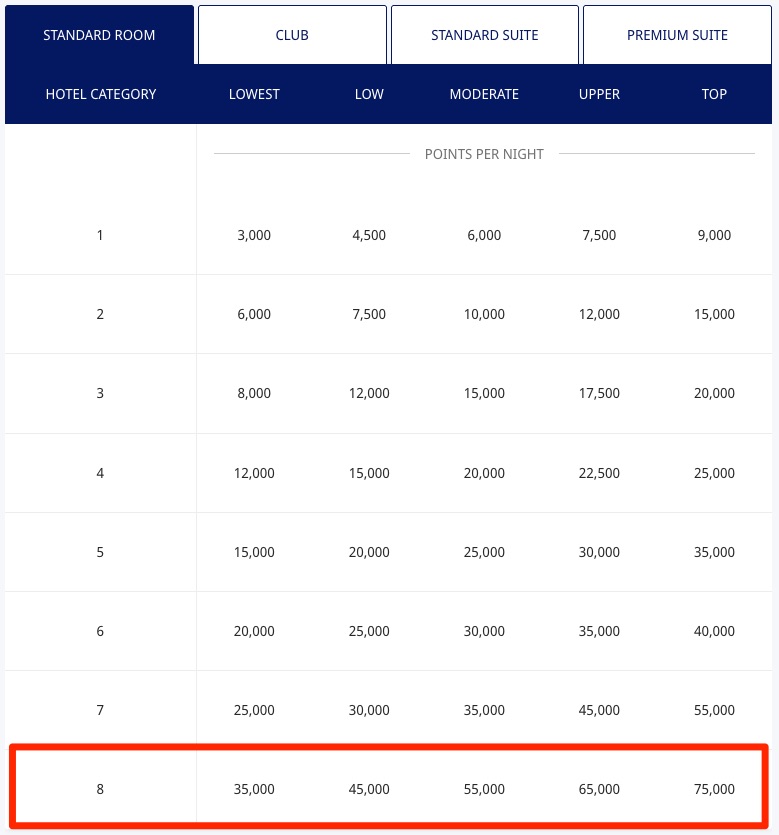
This change is most pronounced at the high end of Hyatt’s award chart. Top-tier Category 8 properties – think the Park Hyatts and Andaz of the world – will soon cost anywhere from 35,000 to 75,000 points per night. Considering Category 8 currently tops out at 45,000 points per night, that’s a drastic increase – and the new five-tier system gives some of the most sought-after properties 40,000 points of wiggle room to do what they like with prices.
Does Hyatt still deserve credit for keeping an award chart? Sure. But there’s no way to paint this move as anything other than a devaluation.
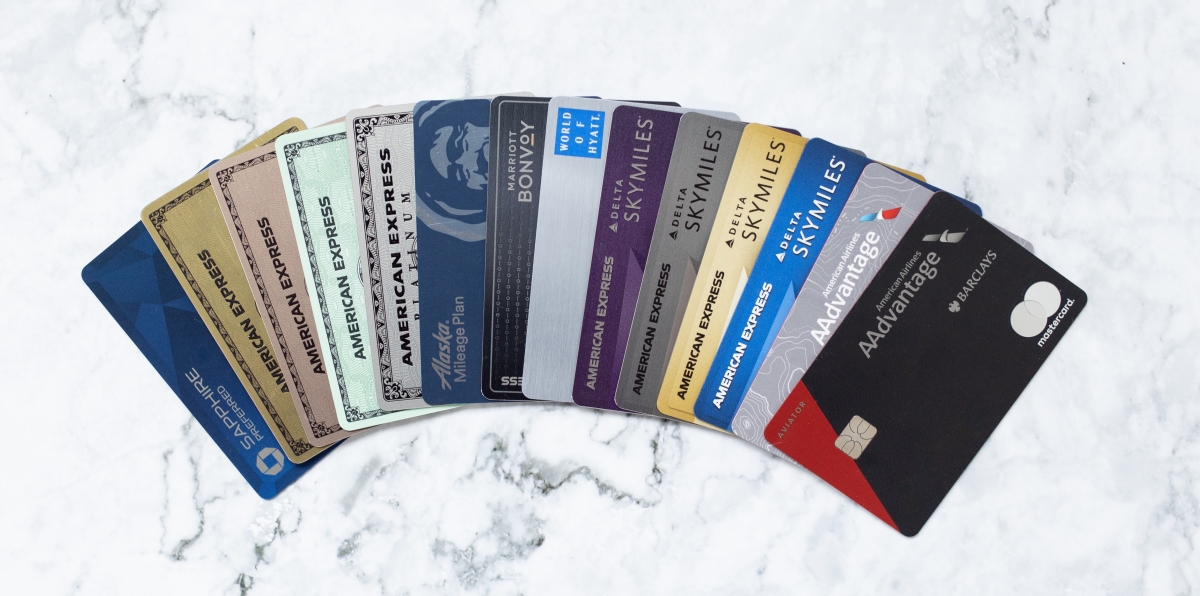
Higher award rates aren’t the only reason I’m leaning less heavily on hotel points lately – something new(ish) has filled the gap. These days, it’s not a question of if a premium travel card comes with a “money-saving” hotel credit, but how much and how often you get it.
I’ve carried the *amex platinum card* for a long time now and despite its hefty annual_fees annual fee (see rates & fees), think it’s worth it for the added perks and statement credits. One of the biggest credits is the up to $600 per year (up to $300 semi-annually) that I get for prepaid bookings at Fine Hotels + Resorts® (FHR) and The Hotel Collection properties through Amex Travel. The Hotel Collection requires a two-night minimum stay, while you can book a single-night stay at FHR locations.

On top of the Amex Platinum, I also have a *venture x* which comes with an annual $300 Capital One Travel credit. This credit can be used for hotels, rental cars, flights, vacation rentals, or anything else booked through Capital One Travel … but I sometimes rely on it for hotel stays.
On top of that, I have a *delta skymiles gold card* which comes with an annual $100 Delta Stays credit and my *csp* gets me an annual $50 credit for hotels booked through Chase Travel℠.
My wife also carries a Venture X, so that’s another $300 Capital One Travel credit that we have to use up every year, and she recently picked up the new Citi Strata Elite℠ Card, which comes with – you guessed it – an annual $300 hotel credit of its own.

Add it all up and that’s nearly $1,500 in hotel credits we have to use up each year – more than enough to cover a week-plus of hotels we’d ordinarily be using points on.
If you have a couple of these cards – or even the *chase sapphire reserve*, which comes with up to $500 per year in credit (split into two chunks of $250) for The Edit℠ hotel bookings – you’re likely in the same boat as me.
What About Status?
It’s not just hotel points I’m growing less fond of – I find myself caring less about hotel status, too.
For the past six years, I’ve held Marriott Bonvoy® Platinum elite status. That’s not a flex, it’s honestly kind of a sickness … but I have enjoyed some of the benefits that come with it, like free breakfast, late checkout, and nightly upgrade awards.
I’m not sure I’ll make the cut this year, though – and I think I’m OK with that. So far, I’m at 34 of the required 50 nights to renew my Platinum status … but only four of those are from actual stays – the rest are elite night credits I earn each year by carrying a pair of Marriott co-branded credit cards.

I do have some Marriott stays reserved for later this year that will push me closer to the 50-night threshold, but I’m not blindly booking Marriott hotels solely for elite night credits as I used to.
Why? Because I often get elite-like perks with many of those hotel credits that come with my travel cards. For example, FHR bookings through Amex come with a guaranteed 4 p.m. late checkout, daily breakfast for two, an on-property credit, and a room upgrade (when available). This means I’m not bound to Marriott when choosing a hotel, solely for elite benefits – and so far, it’s amounted to some pretty memorable stays I wouldn’t have otherwise considered.
With Capital One’s Premier Collection of hotels, I get many of the same benefits – so once again, status is becoming less of a “necessity” and more of a “nice to have.” If I can earn it naturally, great. But if not … oh well.
Where There’s Still Value
To be perfectly clear, I’m not giving up hotel points altogether. There’s still value to be had in the right situation.
It’s just getting harder to find.
The free night awards that come with many co-branded hotel cards are still valuable and make paying the annual fee a no-brainer (for me at least). Meanwhile, hotel points can still come in clutch, especially at lower- and mid-tier properties.
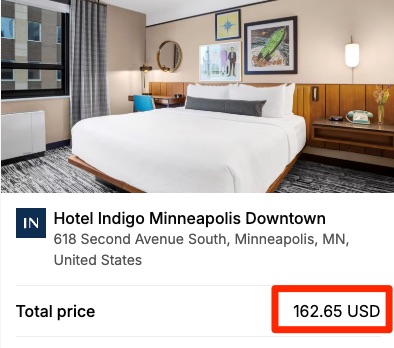
Take the Hotel Indigo in downtown Minneapolis, for example. A random Friday night in July can be yours for as little as 21,000 IHG points per night.
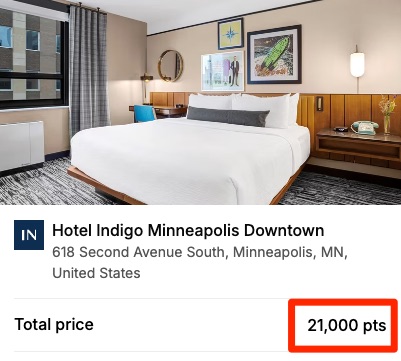
Meanwhile, the going cash rate for that exact same night is $165. Considering IHG points can often be purchased for a half cent each, those points are worth approximately $105 and provide a $60 discount off the rack rate.
Using points at airport hotels or roadside Hampton Inns, Hyatt Places, and Fairfield Inns across the globe can often lead to similarly outsized value. It’s at the top where things are getting squeezed tightest – and where I’m less likely to lean on my points going forward.
Bottom Line
Hotel points just don’t deliver the same value they once did – especially for luxury stays – as hotel chains keep raising award prices and shifting toward dynamic pricing.
Meanwhile, premium travel cards now offer generous hotel credits and elite-like perks that can replace the need for both points and hotel status. While hotel points still make sense for lower-cost stays and free night certificates still have value, I’m leaning on them less for aspirational hotel stays than ever before.



As someone who’s waiting for the other shoe to drop from the really harsh Hyatt devaluations coming this month – with much more promised for next year – and the valid points you bring up about status lite through other methods I’m debating not having high elite hotel status next year for the first time in many many years.