
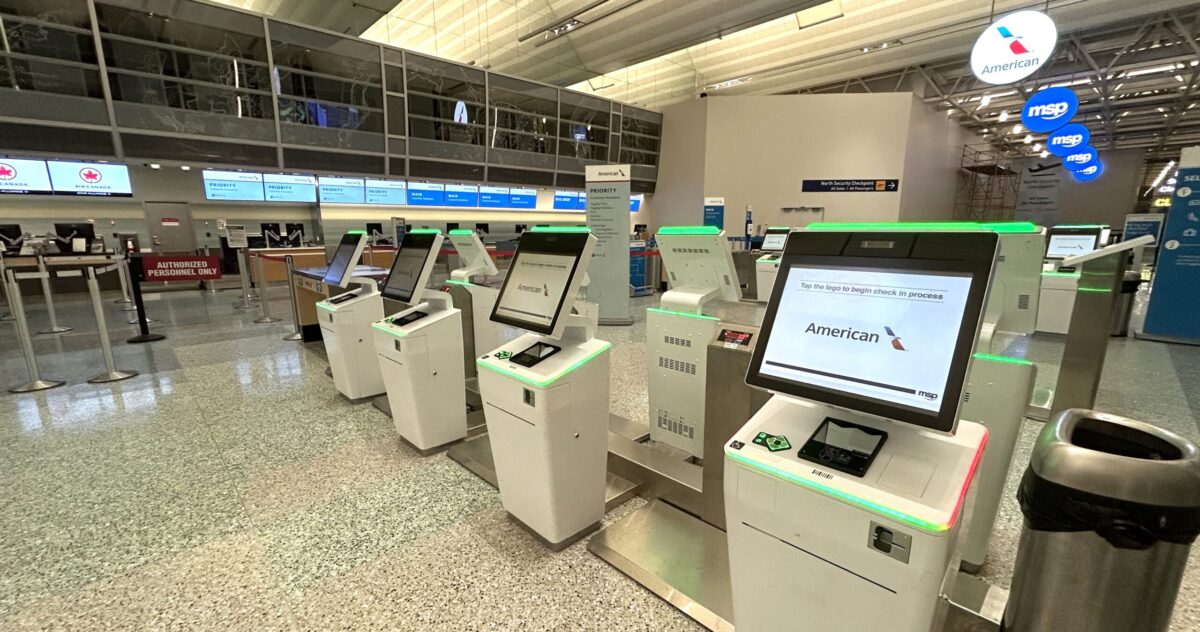



U.S. airlines won accolades – and convinced wary customers to keep booking flights – early in the pandemic by ditching dreaded change and cancellation fees. One major carrier has vowed they’re never coming back while another patted itself on the back for that move in a Super Bowl ad a few years ago.
But it's a mirage: Change fees haven't disappeared. They've merely rebranded … and arguably gotten even worse.
Airlines are still raking in that extra revenue (and likely more of it) by shifting the cost into fares that can actually be changed or canceled for free – pricier main cabin fares, not the cheapest basic economy tickets. And from simple domestic flights to transatlantic trips to Europe, airlines keep charging more and more for the fares that actually benefit from those free change and cancellation policies.
Oh, and then they still charge cancellation fees of as much as $200 on those basic fares. And the whole system has only gotten worse over time.
In just the last few years, we've seen changes like:
- Basic economy was once limited in scope (and it practically disappeared during the pandemic), but it's officially spread worldwide: You'll now find these restrictive fares even on the longest flights to Asia and Australia
- The price to avoid basic economy has steadily increased from an extra $50 or so roundtrip within the U.S. to an upcharge of $80 or more
- Heading to Europe, airlines are now charging another $200 to even $240 or more to avoid basic economy – up from $120 or so prior to the pandemic
- Meanwhile, the basic treatment is expanding even to pricey business class fares starting with United later this year – and soon, Delta Air Lines too
So sure, you no longer see $200-plus change fees listed with airlines like American, Delta, JetBlue, or United, those carriers haven't really given up on them. The reality is arguably worse: Anyone buying a standard fare is paying for that flexibility upfront … whether they ultimately need it or not.
What, you thought the airlines would simply cross out the $2.8 billion they made in change fees alone in 2019 out of the goodness of their hearts? No chance.
Instead, they're building that fee into the fare structure itself – a more opaque method that escapes travelers' notice, making it easier to quietly charge more and more. And since the vast majority of passengers don't buy the cheapest basic fares, it could be an even bigger money maker in the long run.
Before, just a small percentage of travelers would occasionally have to fork over $200 or more to change or cancel a flight. Now, (almost) everyone is paying more for the flexibility from the start.
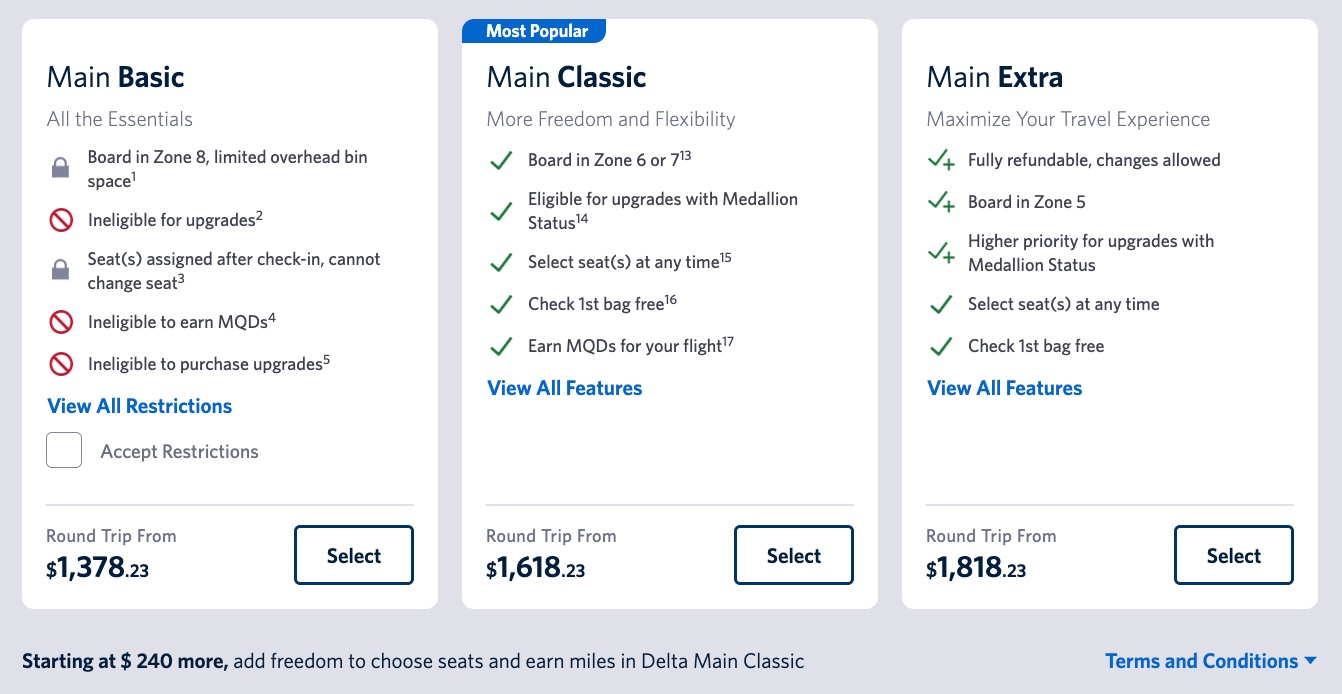
Originally, even the cheapest basic economy fares benefitted from the flexibility of free changes and cancellation. But those days are long gone: On most carriers, you can't change or cancel basic economy tickets, period. On airlines like United and Delta, you can cancel a basic economy ticket for a credit … but you'll forfeit $99 on domestic roundtrips (and $199 for international flights).
One way or another, you're still paying the extra money to change or cancel flights.
Read more: You Can Still Get Free Change & Cancellation on Flights (If You Pay For It…)
These main cabin upgrades aren't the only fees creeping up on travelers.
In just the past two weeks, every major U.S. airline increased its baggage fees by at least $10 each way. An extra $10 might not seem like a lot, but it will add a few billion dollars to the $7 billion-plus that airlines are already making in bag fees.
And even before those bag fee increases, a study from IdeaWorks and CarTrawler showed that airlines worldwide made a record $117.9 billion dollars in ancillary revenue in 2022! That money comes from baggage fees, seat assignment fees, co-branded credit card annual fees, and more.
While we all waved goodbye to change fees back in 2020, it turns out airlines were already working on finding ways to charge us more in other ways.
What Travelers Can Do About It
The sun rises in the east, sets in the west, and airlines charge their customers more. Yet there are some shockingly easy ways for travelers to avoid paying more.
There's one backdoor way to ensure you get a better, flexible main cabin fare: Using points and miles instead.
In 999 cases out of 1,000, any time you book with miles on U.S. airline programs, you're getting a standard economy ticket with free seat selection and free cancellation, leaving the painful restrictions of basic economy behind.
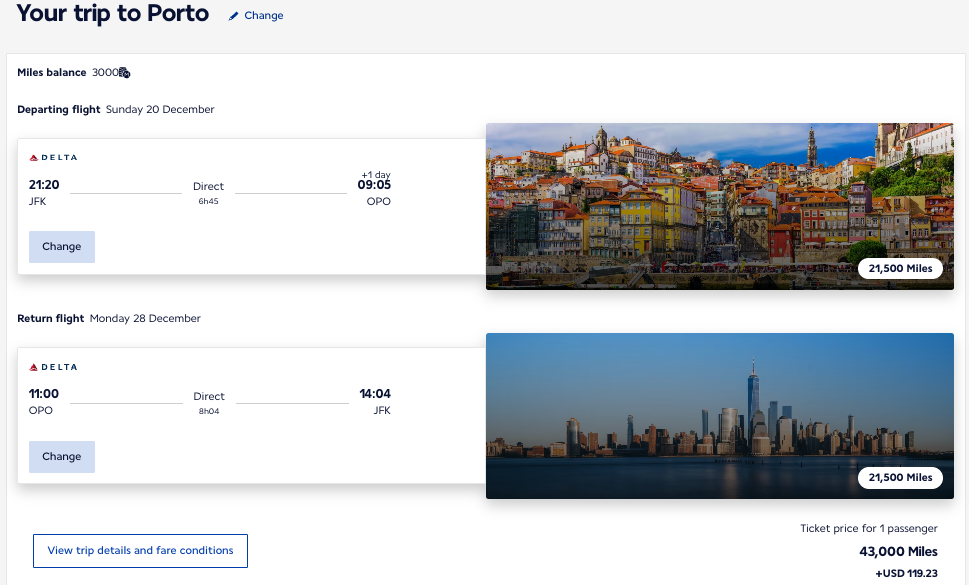
Sadly for loyal Delta flyers, SkyMiles are the exception to this rule. Delta was the first airline to roll out basic economy awards when using miles – and as of publication, they're still the only airline to do it. Worse yet, these pesky basic economy award tickets have now spread worldwide.
Just recently, we unearthed a ton of cheap nonstop Delta flights to Europe this summer. If you wanted to book these flights with cash, you're looking at forking over an offensive $1,100 or more per ticket or more than 100,000 Delta SkyMiles – and that only puts you in basic economy!
Instead, book those Delta flights via Virgin Atlantic or Air France/KLM Flying Blue for as low as just 40,000 points or so roundtrip … for a main cabin fare! That means you get a checked bag, seat assignment, and all the other main cabin perks we love. And while it's not quite free, both airlines charge reasonable cancellation fees of $50 to $75 to get your miles back.
With American Airlines, for example, you're always getting a main cabin fare when you redeem AAdvantage miles. That includes these fares to Europe for just 35,000 miles roundtrip.
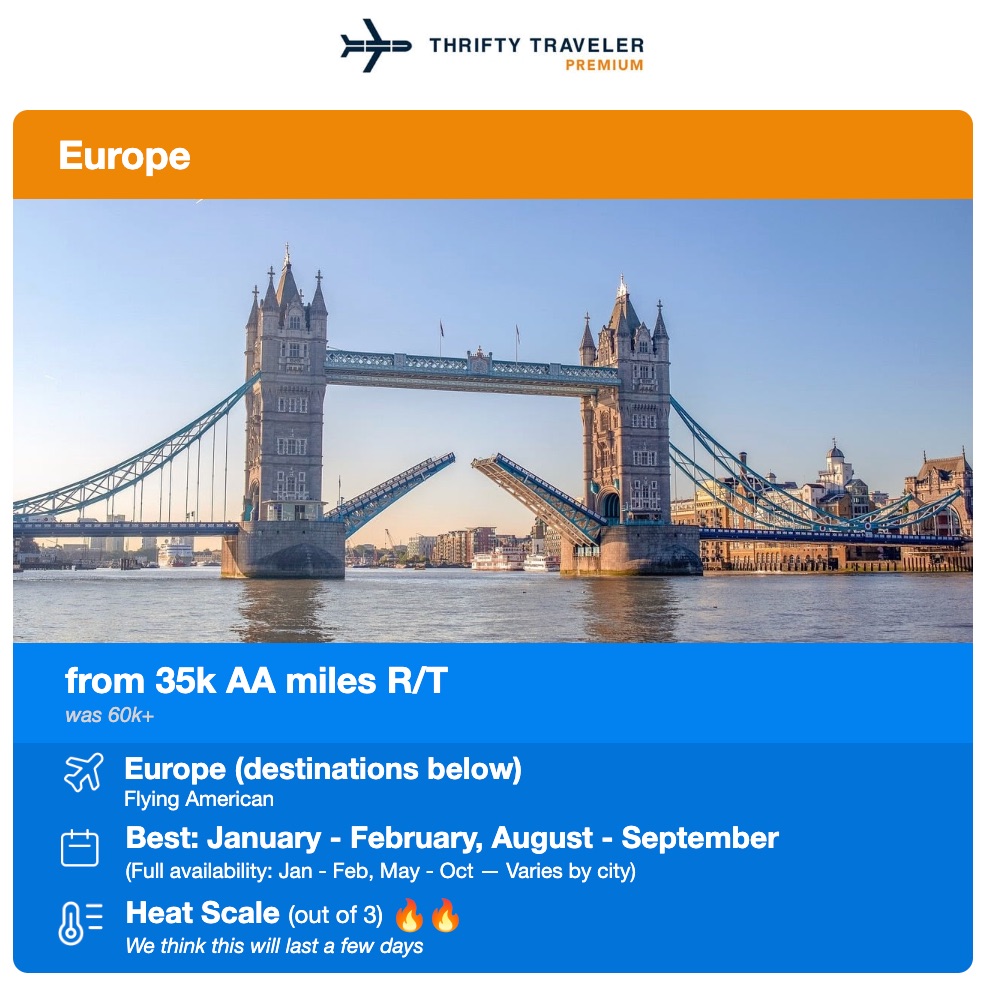
Best of all, you can cancel these fares at any time and get the points back into your account – plus have any taxes and fees you paid refunded to your credit card, too.
Save your cash, bring a bag, pick your seat, and beat the airlines at their own game when you use points and miles.
Bottom Line
Airlines launched a goodwill campaign when they ditched change and cancellation fees, supposedly for good. But the victory for travelers was short-lived – if it ever existed at all.
Fast forward to present day, and it's clear that airlines have found a way to make up the difference … and then some. They just don't charge them separately as fees anymore.

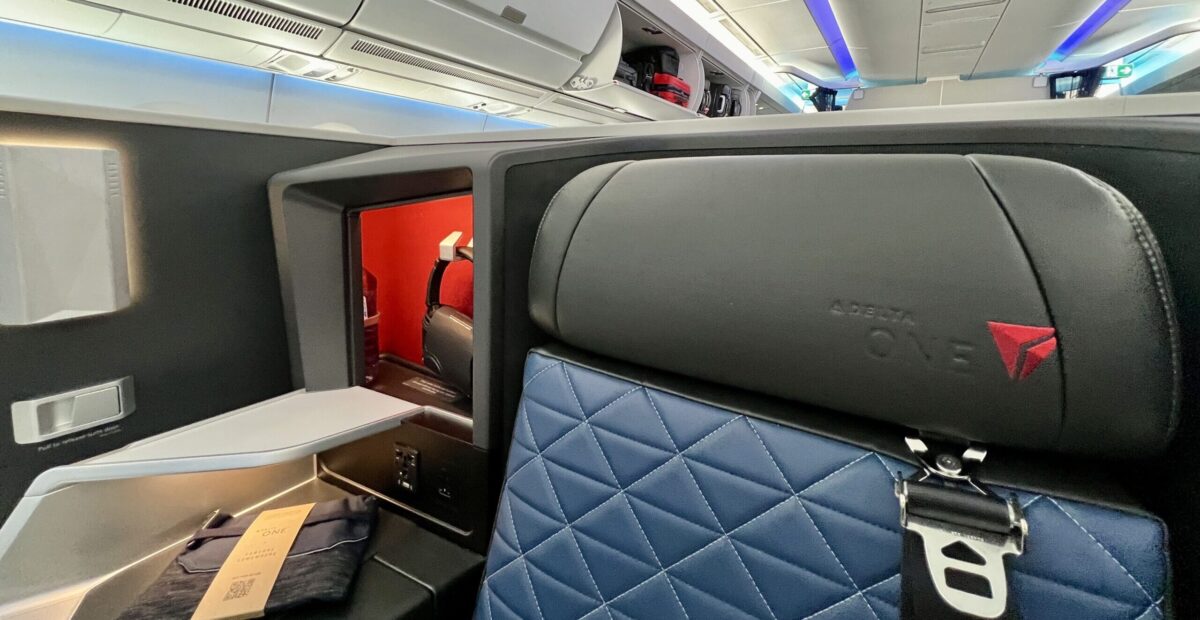


Sometimes you can get decent deal by purchasing airline miles and then using them to book an award ticket with more flexibility than purchasing the ticket with money! Each situation would have to be examined case by case to see whether it’s a good tradeoff.