




The *amex gold card* is a fan-favorite travel card – and for good reason. It earns valuable Amex Membership Rewards points and offers a best-in-class return on everyday spending at places like supermarkets and restaurants.
Oh … and there’s this: You can currently earn a big welcome offer as high as 100,000 Membership Rewards® points after spending $8,000 in the first six months. Exactly which offer (if any) you’ll get varies — you have to apply to see — but Amex will clearly disclose your bonus before you accept and your credit is pulled.
But its annual_fees annual fee (see rates & fees) has only gone up over the years, and the laundry list of statement credits you need to use to justify that price tag has only grown longer. So while we love the Amex Gold and keep it top-of-wallet for all our day-to-day spending, it might not be best for you and your travel goals.
When deciding whether this card is a must-have or a hard pass, it’s important to ask yourself a few questions first. From bonus eligibility to spending habits and the annual fee, there’s a lot to consider.
Read on for a full breakdown of what you should mull over … before you apply.
Learn more about the *amex gold*
Am I Eligible for the Bonus?
There’s a reason this question is first on our list. The Amex Gold’s current welcome offer – as high as 100,000 points after spending $8,000 in the first six months – is a big part of what initially draws so many travelers to the card in the first place.
Unfortunately, determining whether or not you’re eligible for that big bonus isn’t exactly cut and dry.
Let’s start with what we know for sure. Amex’s own terms and conditions clearly spell out who is and isn’t eligible for a bonus on the *amex gold card*.
“You may not be eligible to receive a welcome offer if you have or have had this Card the Premier Rewards Gold Card, the Platinum Card®, the Platinum Card® from American Express Exclusively for Charles Schwab, the Platinum Card® from American Express Exclusively for Morgan Stanley or previous versions of these Cards.”
This means if you’re a previous Gold cardholder – or if you’ve held any flavor of the *amex platinum card* – you likely won’t be eligible for the bonus. I say likely because data points suggest that Amex “forgets” about old cards approximately seven years after they’re closed. If it’s been several years since you last had one of these cards, it could still be worth a shot.

And thanks to Amex’s “Apply With Confidence” tool, there’s no risk in finding out. After completing your application – but before your credit is pulled and the application is officially submitted – Amex will let you know exactly what bonus (if any) you’re eligible for. With a variable welcome offer of up to 100,000 points, this is also how you’ll find out the exact bonus you’re eligible for.
The exclusion for current or former Platinum Cardholders is another (relatively new) wrinkle. Previously, you could earn a bonus on each Amex card “once per lifetime.” But a couple of years ago, Amex added new “family rules” to its terms and conditions, forcing cardholders to work their way up the annual fee ladder.
Is the Annual Fee Worth It?
That’s the annual_fees question. In exchange for that chunk of change, you’ll get over $400 per year in use-them-or-lose-them statement credits and earn some pretty significant rewards on your everyday spending.
In order to make the math work, you’ll need to use most (if not all) of the card’s monthly and semi-annual statement credits, and it can be a lot to keep track of. So much so that we built a tool to help travelers do just that.
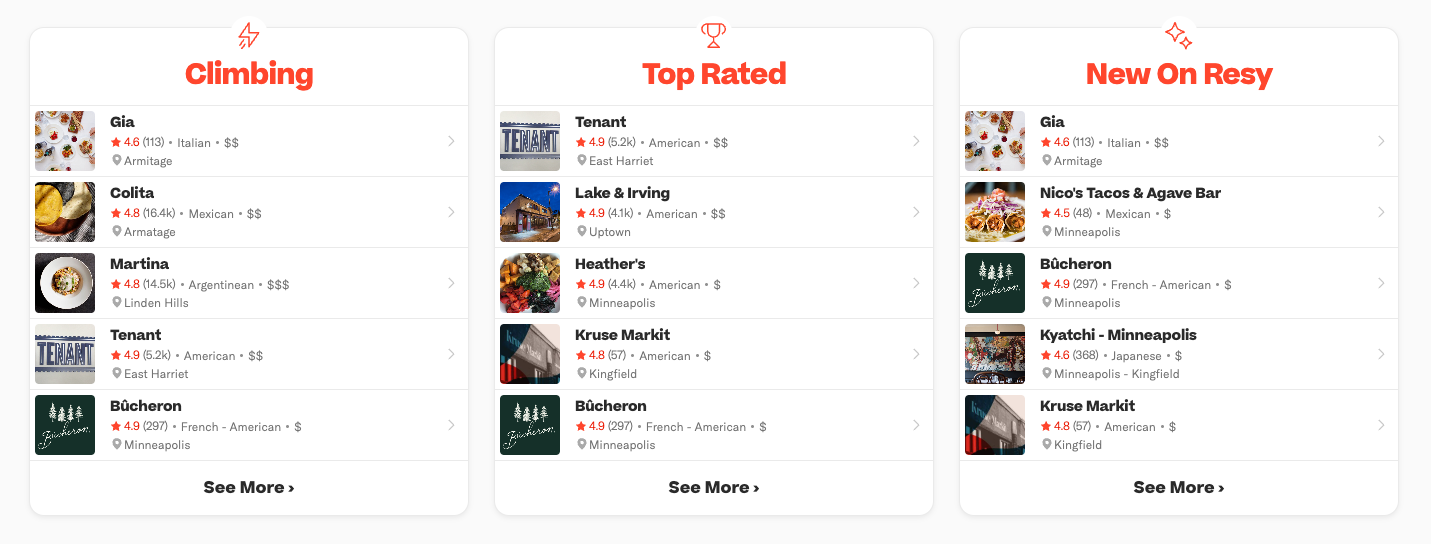
The easiest credit to use is no doubt the card’s up to $100 Resy dining credit. This one is broken up into two semi-annual chunks (January to June and July to December) of up to $50 each and is valid at any U.S. Resy participating restaurant. Simply use your Gold Card to pay the bill, and you’ll get credited back up to $50 twice per year.
There’s also a credit of up to $120 per year (up to $10 per month) for dining purchases made at select merchants: Grubhub (including Seamless), Buffalo Wild Wings, Five Guys, The Cheesecake Factory, and Wonder.

Since this credit is broken up into monthly chunks of up to $10 each, it’s far more cumbersome to get the full value out of it.
Similarly, you’ll get up to $120 per year (up to $10 per month) in Uber Cash to use on rides and Uber Eats orders in the U.S. If you take an Uber or order Uber Eats at least once per month, this is as good as cash. But for everyone else, you’ll likely have to go out of your way to make sure it doesn’t go to waste.
Finally, there’s a credit of up to $84 per year (up to $7 per month) for purchases made at Dunkin’. Simply swipe your Gold Card when you purchase your morning coffee at Dunkin’, and Amex will automatically reimburse you up to $7 per month.

With all those credits out of the way, there’s one other aspect to consider when deciding whether the annual fee is worth it: How many points you’ll earn. We’ll dive deeper into this topic below, but the Amex Gold has become so popular thanks in large part to the sheer amount of points you can earn by swiping it for your most common purchases.
Where Do I Spend Most?
We’ve said it once, and we’ll say it again: The *amex gold card* is one of the best options on the market for your day-to-day spending.
Here’s a look at what you can expect to earn:
- 4x points at U.S. supermarkets (up to $25,000 per year, then 1x)
- 4x points at restaurants worldwide (up to $50,000 per year, then 1x)
- 5x points on prepaid hotel stays booked through American Express Travel®
- 3x points on flights booked directly with airlines or through American Express Travel®
- 2x points on cruises, and car rentals booked through American Express Travel®
- 1x points on all other eligible purchases
If you spend a lot on food – either dining out or cooking at home – no other card on the market is as rewarding as the Amex Gold. If that’s not you (how do you live?), this card might not be the best option.
As an example, let’s say you spend $200 per week at grocery stores and restaurants. Since the card earns 4x points in both of these categories (at least in the U.S.), you’re earning north of 40,000 points per year on those purchases alone.
Even at a conservative value of 1 cent per point (more on that next), that’s over $400 in value each and every year – more than covering the card’s annual fee. If you also book a fair amount of flights or other travel through Amex, you can come out even further ahead … and that’s before taking any of the statement credits into consideration.
What Are the Points Worth?
It’s hard to put an exact value on any kind of points, but since you can redeem Membership Rewards at 1 cent each for flights booked through American Express Travel®, that should be your baseline.
You’ll also have the option to “cash out” points at a rate of .6 cents each for a statement credit, or maybe do a little better when exchanging points for certain gift cards, but these should be a last resort.
For anyone considering the Amex Gold, these points should be thought of first and foremost as travel rewards – that’s where you’ll get the biggest bang for your buck. And if maximizing the value of your points is the goal, using Amex’s stable of transfer partners is your best bet.

With 20 (or so) Amex transfer partners at your disposal between airlines and hotel chains, the ability to transfer American Express Membership Rewards points opens up a world of travel opportunities – with tons of outsized value to be had.
Here is the current list of options, along with how long it takes to transfer points from your American Express account to an airline or hotel brand.
| Program | Type | Transfer Ratio | Transfer Time |
|---|---|---|---|
| Aer Lingus | Airline | 1:1 | Instant |
| AeroMexico | Airline | 1:1.6 | 3-5 days |
| Air Canada Aeroplan | Airline | 1:1 | Instant |
| Air France/KLM | Airline | 1:1 | Instant |
| ANA | Airline | 1:1 | 1-2 days |
| Avianca | Airline | 1:1 | Instant |
| British Airways | Airline | 1:1 | Instant |
| Cathay Pacific | Airline | 5:4 | Instant |
| Delta | Airline | 1:1 | Instant |
| Emirates | Airline | 5:4 | Instant |
| Etihad | Airline | 1:1 | Instant |
| Iberia | Airline | 1:1 | Instant |
| JetBlue | Airline | 1.25:1 | Instant |
| Qantas | Airline | 1:1 | Instant |
| Qatar Airways | Airline | 1:1 | Instant |
| Singapore | Airline | 1:1 | Instant |
| Virgin Atlantic | Airline | 1:1 | Instant |
Are There Better Options?
If you’ve answered all those questions, and you’re still not sure the Amex Gold is right for you, maybe it’s time to look at your alternatives. While we think the Amex Gold is a practical must-have card for most travelers, it’s not without (cheaper) competition.
Its closest competitor is most likely the $95 per year Citi Strata Premier℠ Card.
This card earns 3x ThankYou Points in several common categories, such as dining, supermarkets, gas stations, air travel, and hotels. Earning 3x points at gas stations (and EV charging) is especially notable as not many other travel rewards cards offer a bonus in this category, and it can help take some of the sting out of higher prices at the pump.
Beyond those bonus categories, the card also comes with an annual $100 hotel credit. But there’s a hitch. This $100 hotel credit is only valid when you book a single hotel reservation of at least $500 through the Citi Travel portal.

If you’re looking for a no-annual-fee option, the *Capital One Savor* is a solid choice.
This card earns an impressive 3% cashback at grocery stores (excluding superstores like Target and Walmart), on dining, entertainment, and select streaming services. You’ll also earn 5% cashback on hotels, vacation rentals, and rental cars booked through Capital One Travel, plus 1% cashback on all other purchases.
While the Savor Rewards Card technically earns cashback, that’s not the case if you’ve got any of the Capital One Venture cards, like the *capital one venture card* or the *venture x*, in your wallet. That way, you can turn your cashback into Capital One miles to cover travel purchases or get even greater value out of them by transferring to one of Capital One’s travel partners.
Bottom Line
The Amex Gold Card can be a powerhouse for earning points on everyday spending – especially dining and groceries – and it comes with an incredibly valuable welcome offer (if you’re eligible).
For us, the card is a clear winner – but its higher annual fee and growing list of use-them-or-lose-them credits mean it’s important to ask yourself a few key questions before you apply.
Learn more about the *amex gold*




Would Delta Reserve disqualify you?
No, there isn’t any restrictions on holding the Delta Reserve and getting the Amex Gold.