


Google Flights is practically a household name for finding cheap flights, but Google Hotels should be in the conversation for finding a cheaper place to stay … or rebooking your property
The search behemoth announced on Friday it had rolled out price tracking for individual properties, allowing Google users to get an email when prices go up or down at tens of thousands of hotels and resorts worldwide. It’s a huge advance from last year, when Google first introduced price tracking for hotels – but only at the city level. That meant you couldn’t track prices at the one or two select properties you were actually eyeing.
Now, that’s possible. The process works much the same as Google Flights price alerts – which we (and millions of travelers) have been using for years to book when prices drop … or rebook existing reservations to save even more.
Search a property by name at google.com/hotels on desktop, scroll past the current list of prices, and you should see the option to toggle on price alerts for that hotel. For example, I quickly began tracking rates at The Langham in Hong Kong for an upcoming stay.
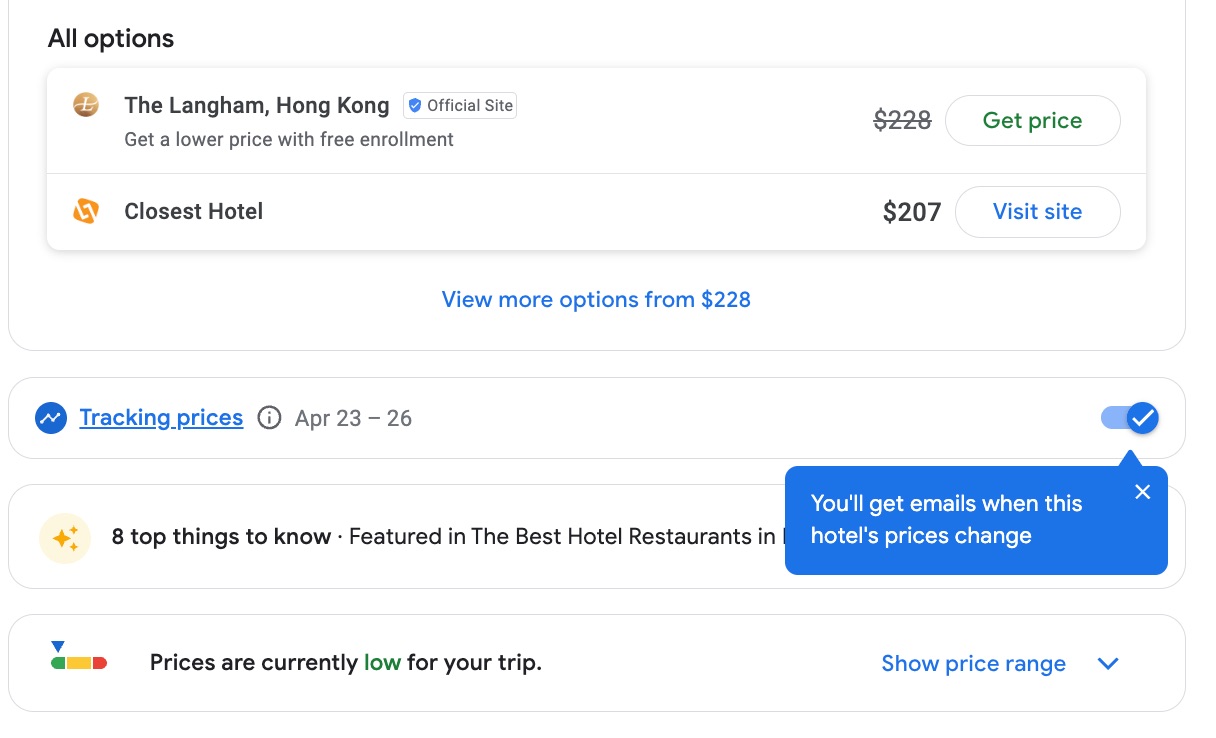
With that activated, you’ll get an email if the price drops “significantly” – though Google doesn’t say exactly what that means. Just as with price alerts for flights, you’ll need to be logged into a Google account in order to toggle on price alerts.
On the surface, this move seems like it could be an absolute game-changer for scoring cheaper hotel nights. But there’s a big problem that could severely limit its effectiveness: Google Hotels pulls in tons of pricing through online travel agencies (OTAs), in addition to showing rates when booking directly with the hotel. And there’s no option to select which booking channel you want to track.
I never (OK, very rarely) book hotels through an OTA – and I know I’m not alone here. In general, we warn travelers to steer clear of these bookings for a variety of reasons:
- You won’t earn hotel points or credit towards elite status.
- If you already have status, it almost certainly won’t be recognized and you’ll miss out on benefits like a potential room upgrade, free breakfast, and more.
- When you book through an OTA, they service your reservation. This means if you need to make any changes, you’re inserting an unnecessary third party into the process … and that often leads to complications.
- Finally, if you have to cancel or if something goes wrong during your stay, it can be a real nightmare trying to get a refund or compensation through some (but not all) OTAs.
Knowing all that, let’s say I’m planning to stay at the Waldorf Astoria Los Cabos Pedregal, and set up one of these price alerts to keep an eye on things.
Google Hotels lists dozens of different booking options for this hotel. But since I only want to book direct with Hilton, getting an alert every time one of these sketchy OTAs raises or lowers the price isn’t all that helpful. No matter the savings, I’m unlikely to book it.
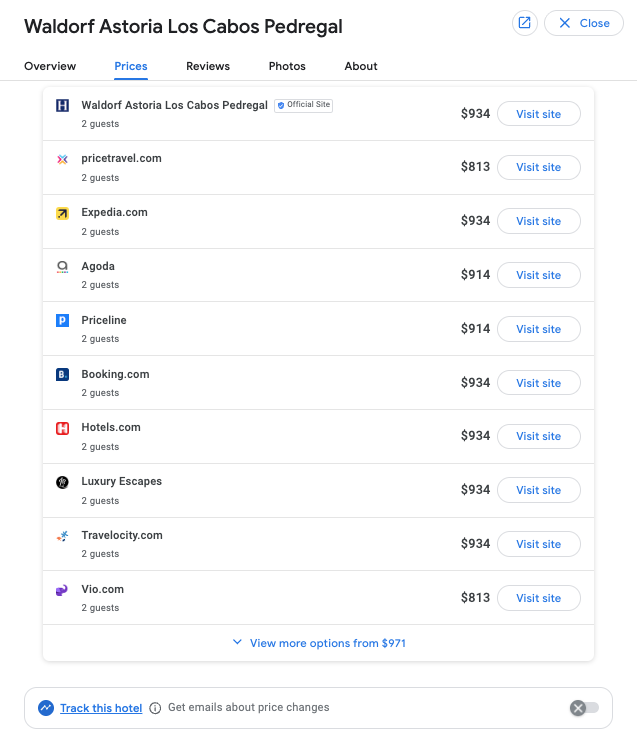
Unlike flights, hotel prices can vary wildly from site to site. If you’re willing to take a chance and book with one of these third parties, you could save $120 (or more) per night – but for the rest of us, getting notified every time Vio or Price Travel changes the price isn’t all that useful.
Now, it’s not all doom and gloom. There is a good chance that many of these OTAs mirror the direct rate. If they’re consistently undercutting the rate you really care about, a price drop with any one of them could signal that it’s a good time to book (or rebook) the rate you’re most comfortable with.
Google says it has both automated and manual safeguards in place to ensure that third-party sites send it accurate pricing data and to take action when necessary. At the very least, that means you shouldn’t have to worry about getting an alert for an unbelievable price only to click through and find out it was falsely advertised.
It’s probably going to take a little trial and error to see how big of news this really is, but I’m cautiously optimistic that this could make saving on hotels easier than ever before. And for travelers already booking the lowest possible rate – no matter the source – it truly is a game-changer.
Bottom Line
Google just made its hotel search tool much more powerful, adding price tracking for specific properties – much like Google Flights’ price alerts. It could help travelers time bookings or rebook for a better deal, but there’s a catch: Alerts include prices from third-party booking sites, which many travelers avoid.
Still, it’s a promising new way to keep tabs on hotel rates and potentially save.