


Airfare is a black box to everyday travelers, with prices that constantly and mysteriously change. It can delight flyers with a low fare one minute, frustrate them with a higher price the next, and lead to cries of price-gouging and unchecked corporate greed.
This example falls firmly in the latter category. The folks in the r/Delta subreddit unearthed one of the craziest examples of nonsensical fare pricing – precisely what drives many frustrated flyers to questionable tools like Skiplagged in the name of savings.
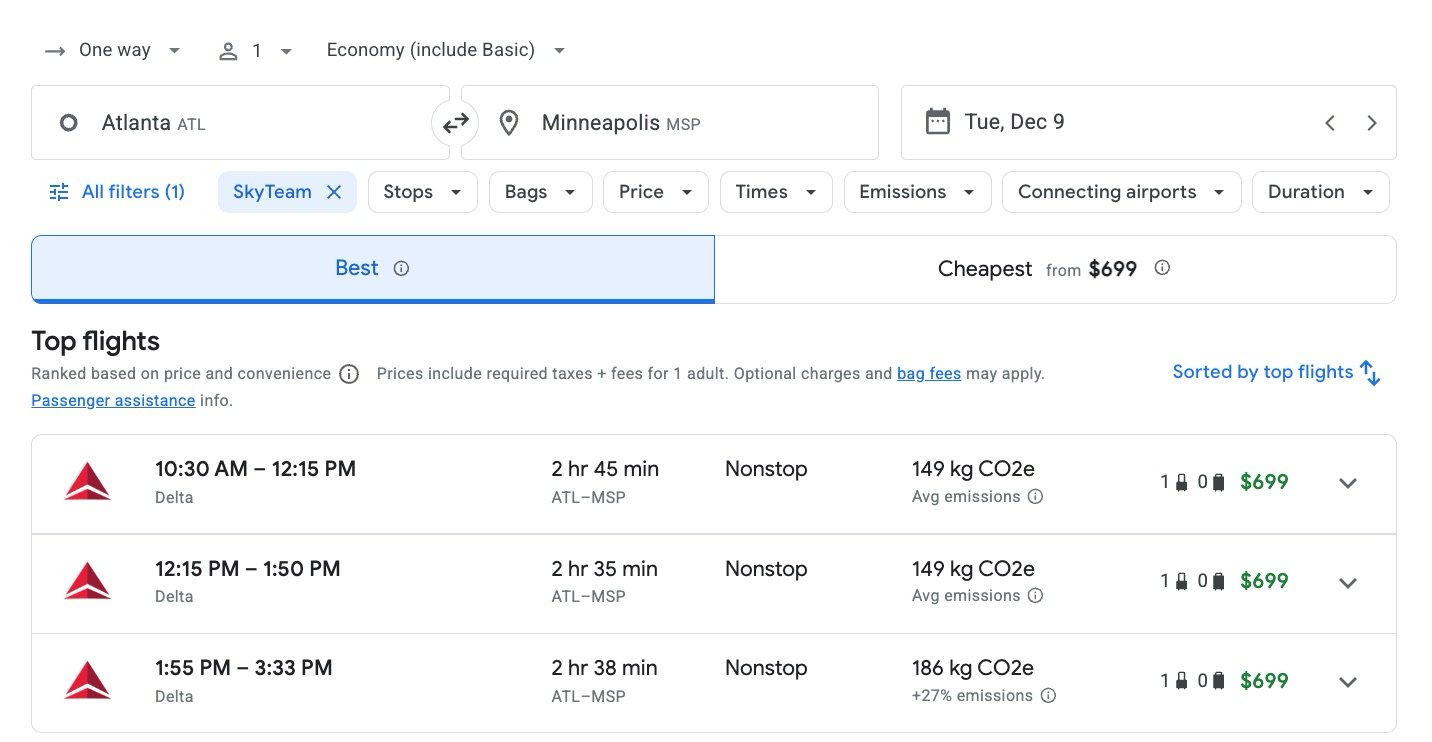
A one-way flight from Atlanta (ATL) to Minneapolis-St. Paul (MSP) this week would set you back a whopping $699.
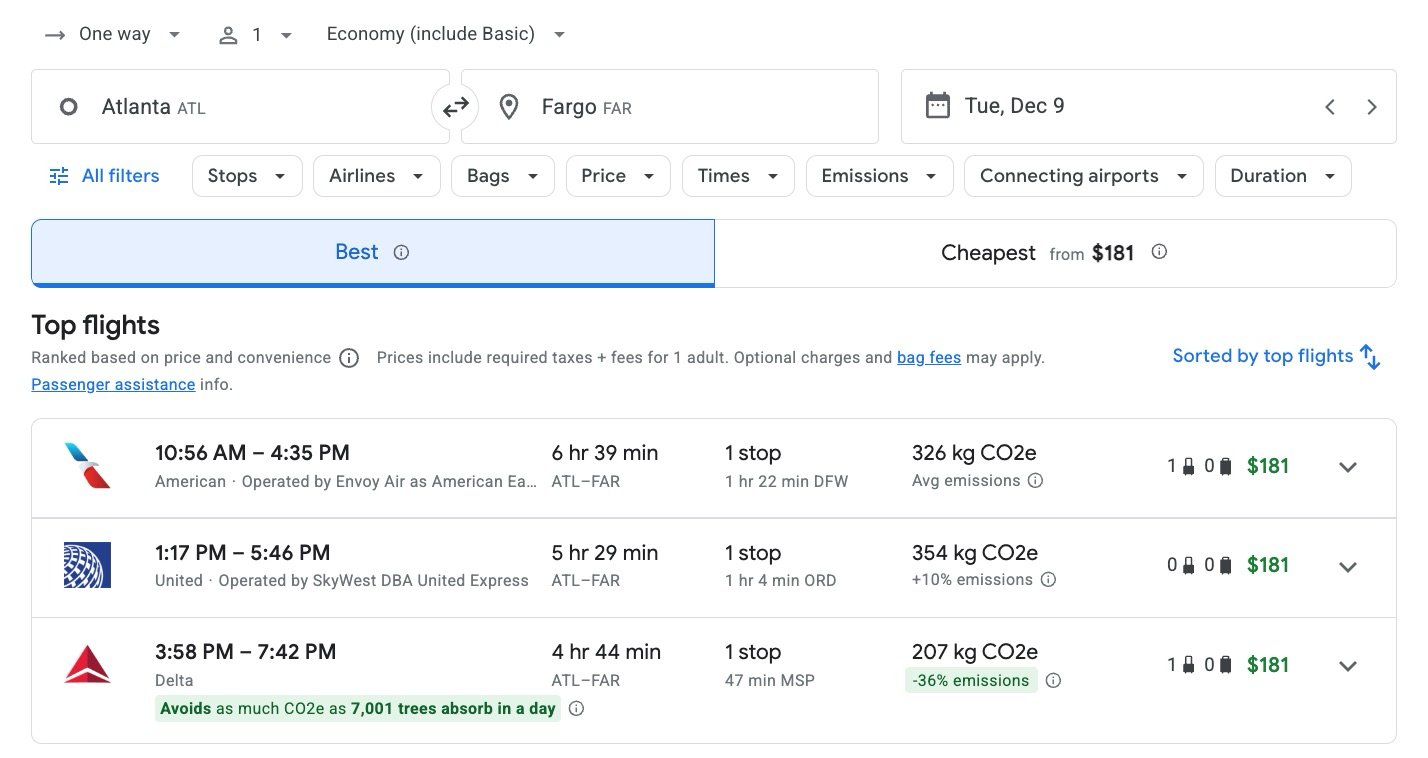
But fly Delta from Atlanta to Fargo (FAR) in eastern North Dakota – on those same hub-to-hub flights, mind you – and the fare drops … to as low as $181.
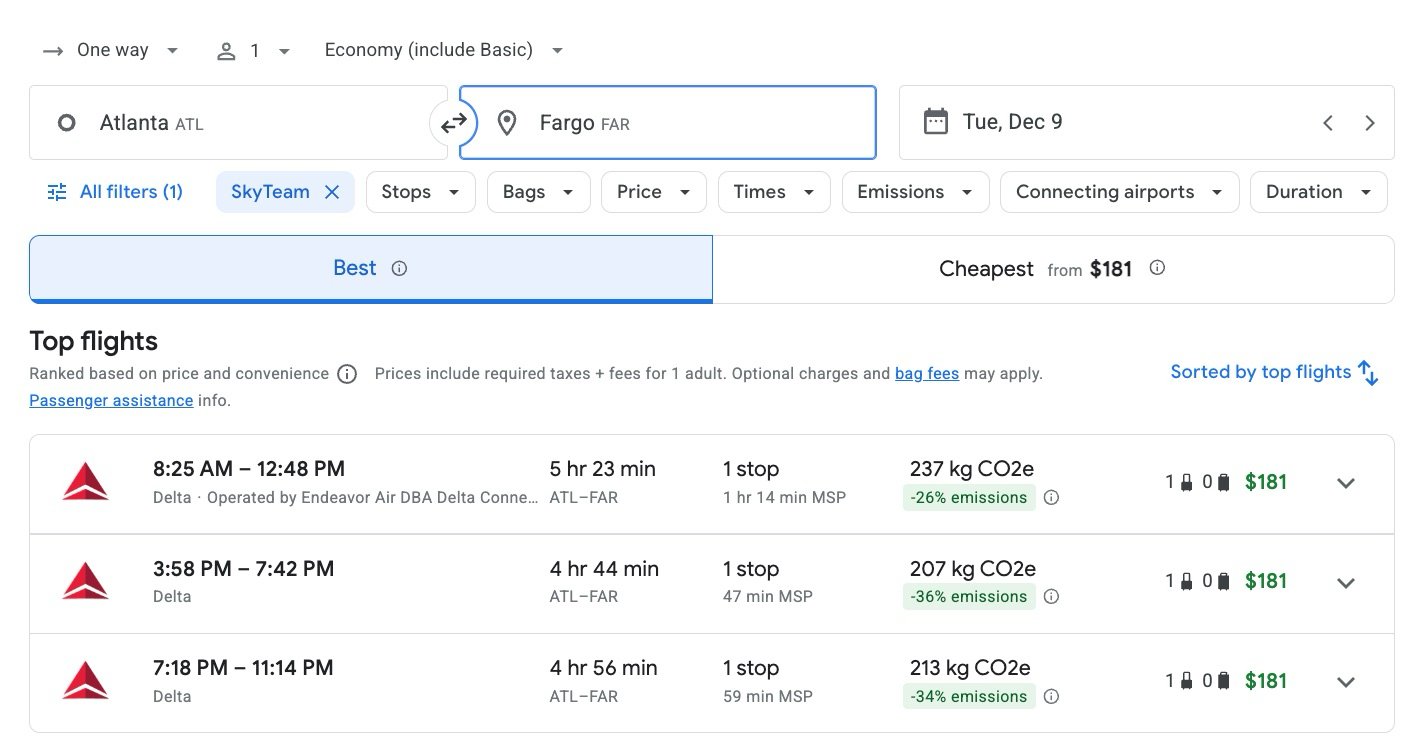
On its face, it's counterintuitive: Longer flight. Higher costs. A quarter of the price.
So what gives? Delta can get away with charging significantly higher fares on the nonstop from Atlanta to Minneapolis because it has a near-monopoly on that route. But a handful of airlines can get you from Georgia to North Dakota with one connection, so Delta has to compete on price.
But why?
Dissecting Airline Pricing
Welcome to the infuriating world of hub penalties, where airlines charge their most loyal flyers at major hubs higher fares. It's not price-gouging and not (necessarily) anything nefarious, but business as usual for the airline industry: Charging exactly as much as the market will support, and not a penny less.
And while Delta might be the poster child of that practice – check on your friends in Minneapolis, Atlanta, and Salt Lake City, travelers – this phenomenon spreads far beyond just the Atlanta-based airline. It's industry-wide.
No matter the airline, they all know the majority of their best customers simply don't have a realistic alternative in the heavily consolidated U.S. airline industry, where carriers have carved out near monopolies at their biggest and most important hubs. Swear you'll constantly take one-stop flights with United, Southwest, or Delta? American will gladly call your bluff.
That's why American is charging $519 for a nonstop flight from Charlotte (CLT) across the country to Los Angeles (LAX)…
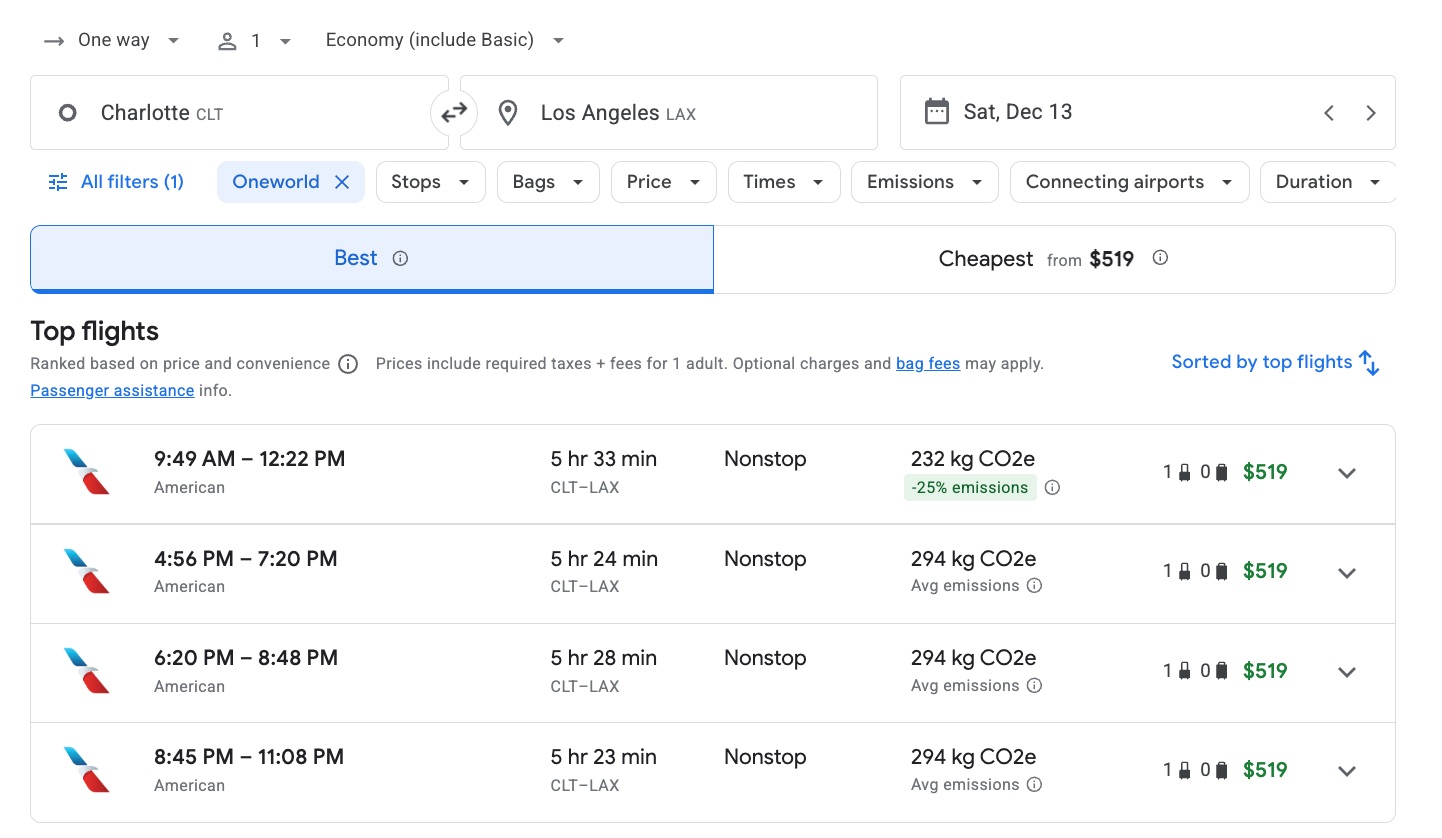
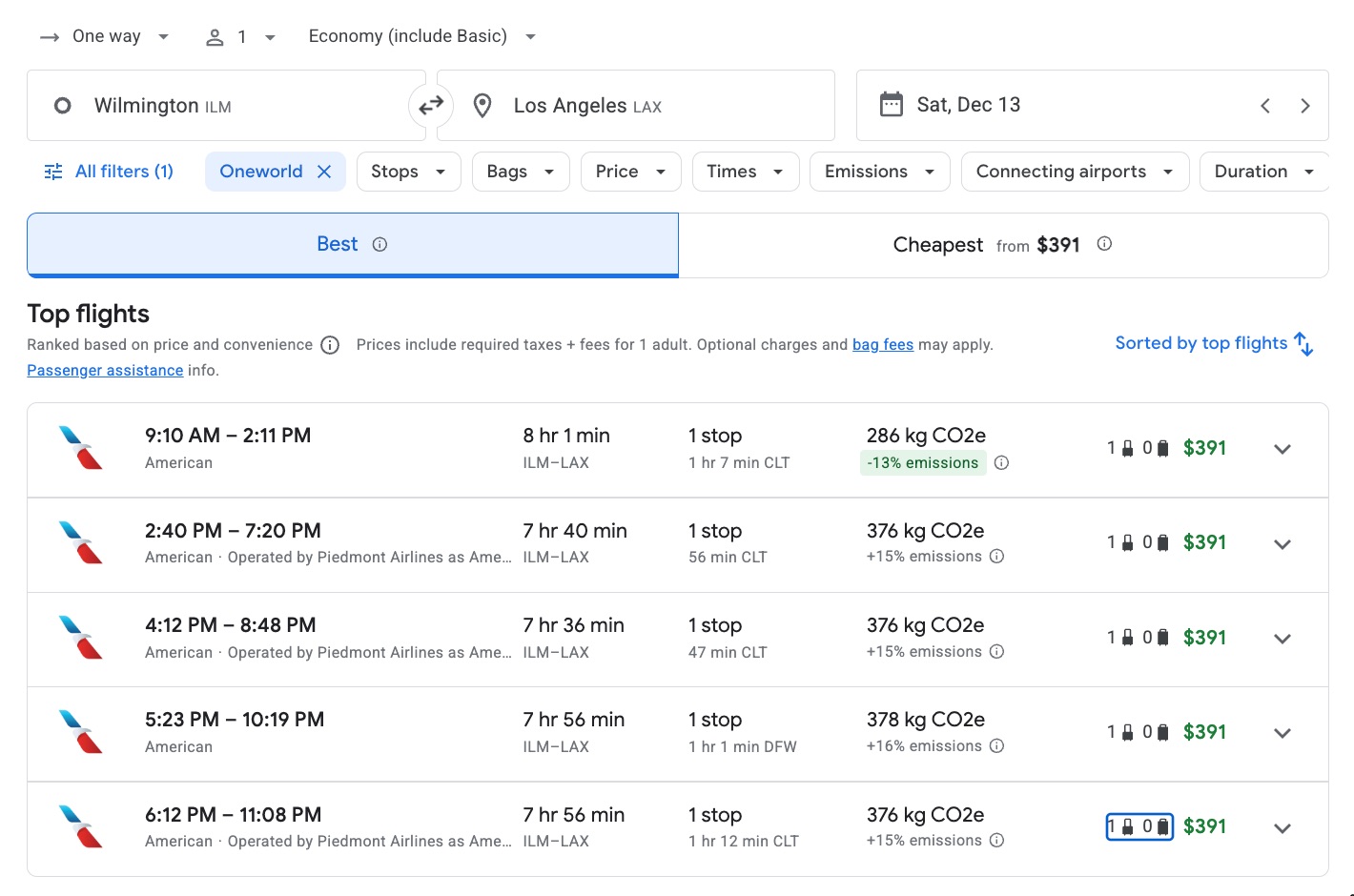
But if you start from Wilmington (ILM), North Carolina and make a pitstop in Charlotte on your way to California, that fare drops by more than $100 to $391 – with a seat on the exact same transcontinental flight.
Higher costs can drive flight prices up, of course – there's a reason why your typical transatlantic flight will often set you back twice as much (or more) as a domestic trip. But the simple law of supply and demand does more: When demand for a flight exceeds the supply of seats, fares increase … and when demand falls short, airlines cut fares to fill those seats.
But competition is the real x-factor. Airlines competing for your dollar, undercutting one another on price in hopes of poaching each other's customers, is what leads to the airfare deals we all know, love, and want.
Competition & Skiplagged
Airlines have entire departments whose sole purpose is to leverage that system to fill planes at the highest possible ticket prices. Without competition, that floor is higher – often, much higher.
There's a reason why the Atlanta-to-Minneapolis example is so jarring: Spirit Airlines. The flailing ultra-low-cost carrier exited Minneapolis altogether as of early December, cutting daily nonstop flights to Atlanta as well as Detroit. Frontier also flies that route, but only once or twice a week – not enough to move the needle or truly threaten Delta. The same goes with Sun Country, whose nonstop service is sporadic throughout the year.
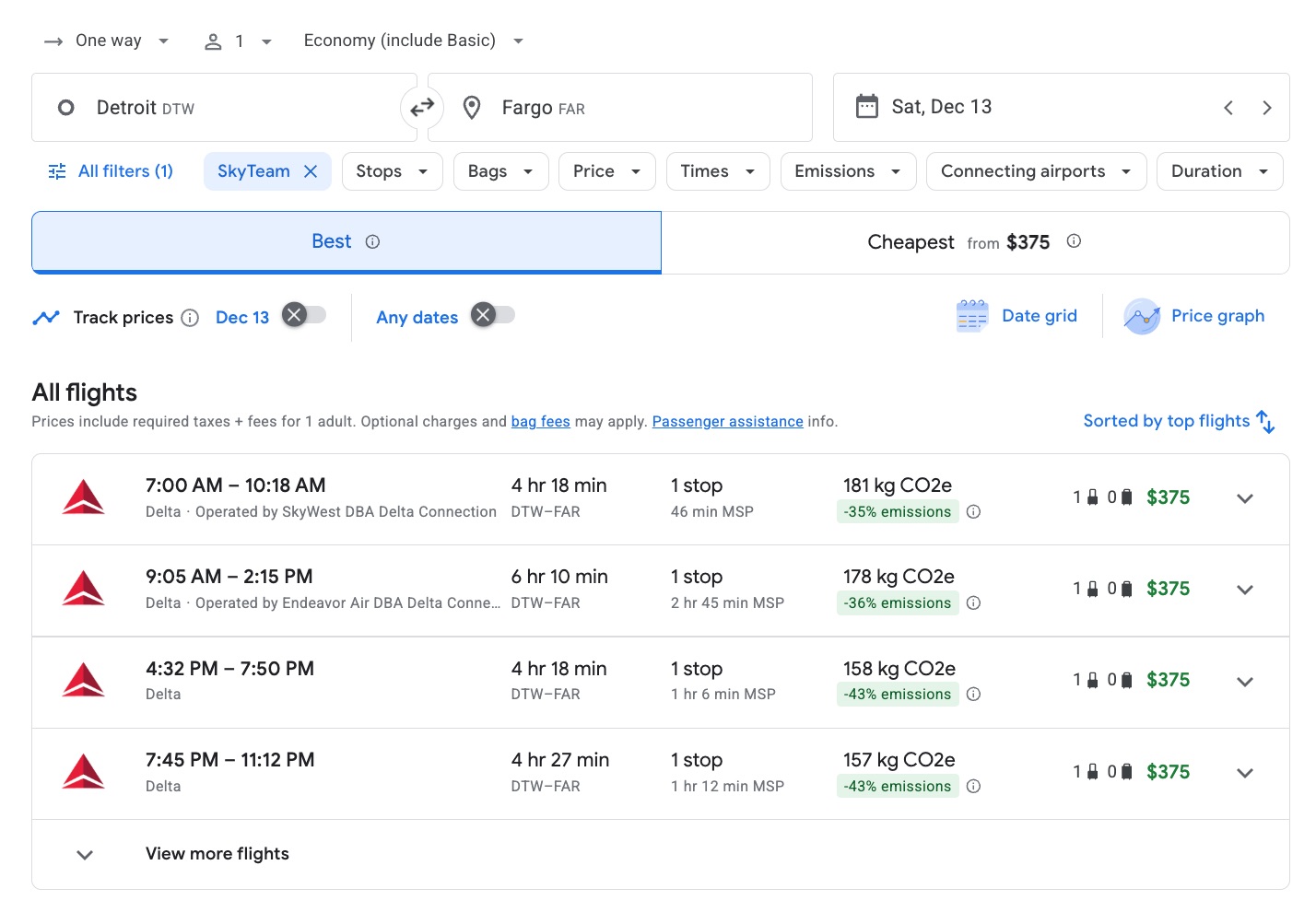
Case in point: Delta is charging $549 for a one-way flight from Detroit to Minneapolis next weekend. But connect onward, again to Fargo, and that fare clocks in at just $375.
Airlines don't talk about how they set fares, period. Aside from the occasional marketing blast, they won't publicly discuss what determines the final price of a flight – whether it's a mistake fare or an eye-popping example like one of the above.
But these pricing discrepancies are exactly what lead to conspiracy theories that airlines are tracking your searches or that clearing your cookies or using a VPN is the key to savings. And perhaps more importantly, it's precisely what drives frustrated flyers into the arms of platforms like Skiplagged, which popularized the practice of finding fares that take advantage of these quirks … so much so that it's now practically synonymous with the terms “hidden-city ticketing” or “throwaway ticketing.”
Let's spell it out with that same Detroit-to-Fargo example. Rather than paying $549 for the nonstop route you really want, you'd book that $375 one-stop fare to Fargo … but simply leave the airport in Minneapolis.
Skiplagged and a handful of competitors automate the process of finding these hidden-city savings. But we rarely recommend turning to them because they're filled with potential pitfalls:
- You can't check a bag, because your luggage will continue all the way to Fargo. Even a carry-on bag is no sure thing: What if it gets gate checked?
- You can't book roundtrip fares (which are increasingly cheaper these days) because the moment you skip a segment of your trip, the rest of your reservation is canceled – you won't have a return flight anymore
- Airlines hate it … and can punish offenders (especially repeat offenders) by charging the fare difference, freezing frequent flyer accounts, zeroing out mileage balances, and even outright bans
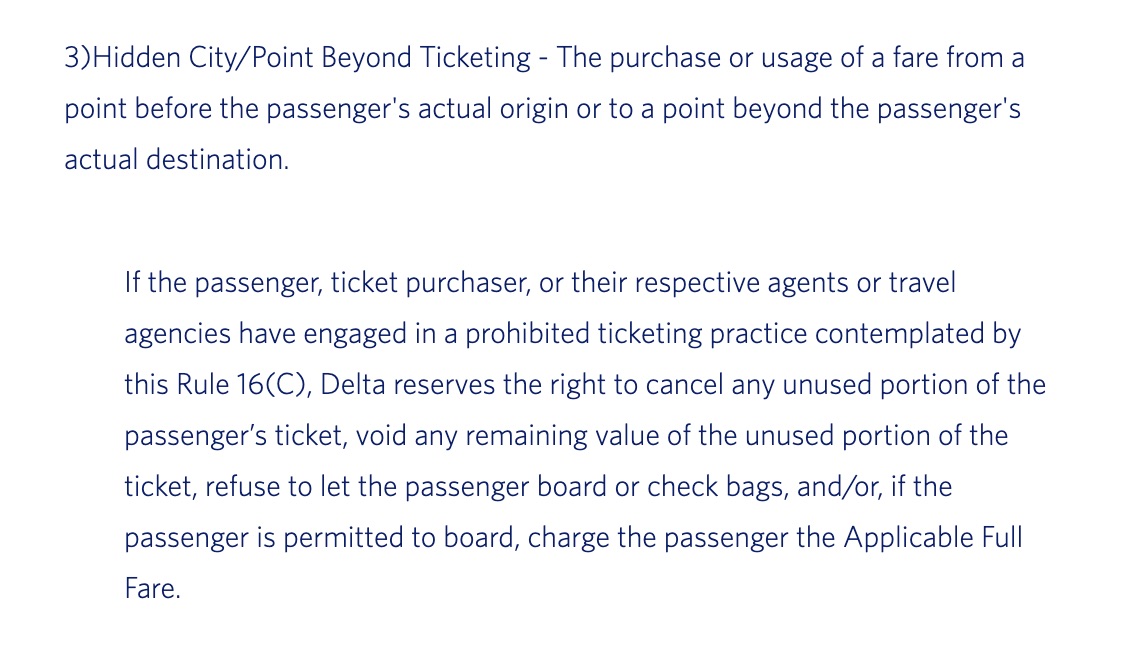
It's not illegal, but it does clearly violate airlines' terms and conditions. Delta's contract of carriage, for example, explicitly forbids throwaway or hidden-city ticketing … and says it could cancel the ticket, refuse boarding or checking bags, or charge the full, published fare price. Get this: Even the company itself warns against using this method often.
There has been a lot of back-and-forth about the legality of airlines enforcing these policies, especially in Europe. Still, for many travelers, it's not worth the risk.
Yet it's also a problem of the airlines' own making.
After decades of nickel-and-diming travelers, everyday Americans trust airlines and their opaque pricing systems just about as far as they can throw a Boeing 737. A nationwide backlash earlier this year, when airlines began charging some solo travelers significantly higher fares than groups of two or more, proved that fact.
That was a new pricing tactic. This one is decidedly not. Still, airlines that boast about building lifelong relationships with their customers could consider being transparent with those customers about why their ticket prices are higher – or sometimes, lower. Then again, maybe there's a reason why I don't work for an airline…
Until then, you might be better off hopping in the car for a few hours in pursuit of a cheaper – and sometimes, drastically – cheaper deal.

The system is the opposite for us. Until ATL raised the price of parking to $35 per day, we flew out of Atlanta. We have learned that flying out of Chattanooga is much cheaper, both airfares and parking. In the fall of 2024, our Delta flight to Berlin was $1223 from ATL; $880 from CHA. We now have a new home airport!
I have been leveraging the ULCC pattern of pricing 1 way flights. I will book a 1 way to a city that may not be my final destination and shift the variable to a rental car that has no return penalties.
Example, a ULCC flies from A to B, but it’s return flight is not on the day you want to return. However airport C which is around 100 miles away does have a return on the desired day. So I drive the rental to airport C and return back to A.
The (2) 1 way fares plus the car rental in many cases is less expensive than the mainline carrier fare for a round trip. What I give in return is a little of my time.
Preach. More proof that the domestic airline industry has been substantially overconsolidated.