


Airlines introduced no-frills basic economy fares more than a decade ago to compete with the likes of Spirit and Frontier – not to cut you a better deal, but to lure you in with a lower price … only to convince you to pay more to avoid the pain of a random middle seat, no change or cancellation, and even no carry-on bags allowed.
But just because Spirit went out of business and other low-cost carriers are pivoting away from their low-fare, high-fee business model doesn’t mean major U.S. airlines are giving up on basic economy. Just the opposite.
What was previously a $60 or $70 upcharge to book a standard economy fare on domestic roundtrip flights just a few years ago is now regularly $100 or more on most major U.S. carriers, according to our recent review of domestic fares. Flying over to Europe, Asia, or beyond, you can safely expect to pay $240 or more to avoid basic fares …
Plus, that upsell is stronger now. Airlines have recently rolled out additional restrictions to make basic tickets even more painful: eliminating mileage earning, nixing lounge access, and more. Heck, even Southwest is now selling basic economy – long a non-starter for the Texas budget airline.
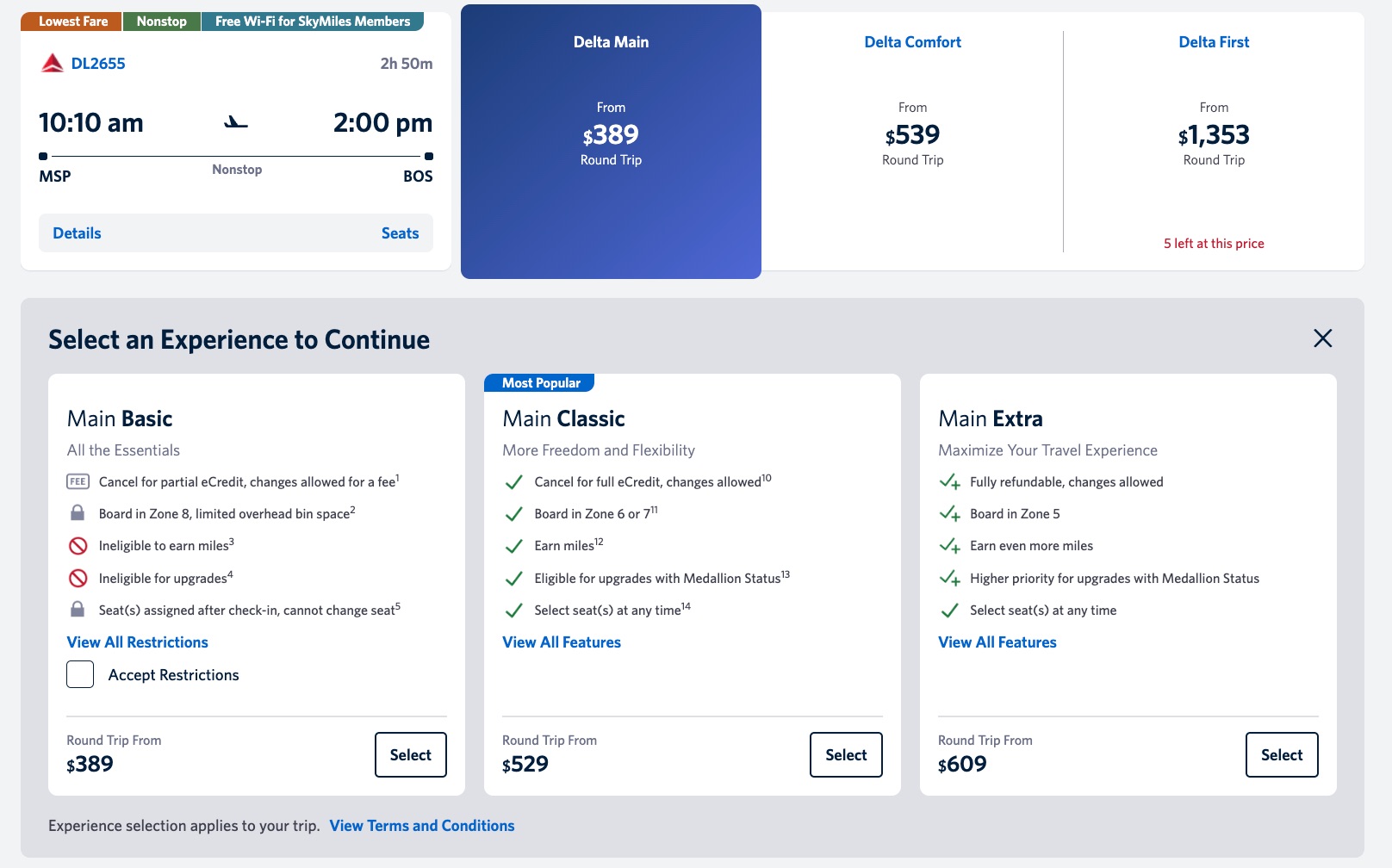
Flying Alaska, American, Delta, JetBlue, or United within the U.S., paying an extra $100 or more for a main cabin fare is now the norm – even on relatively short routes.
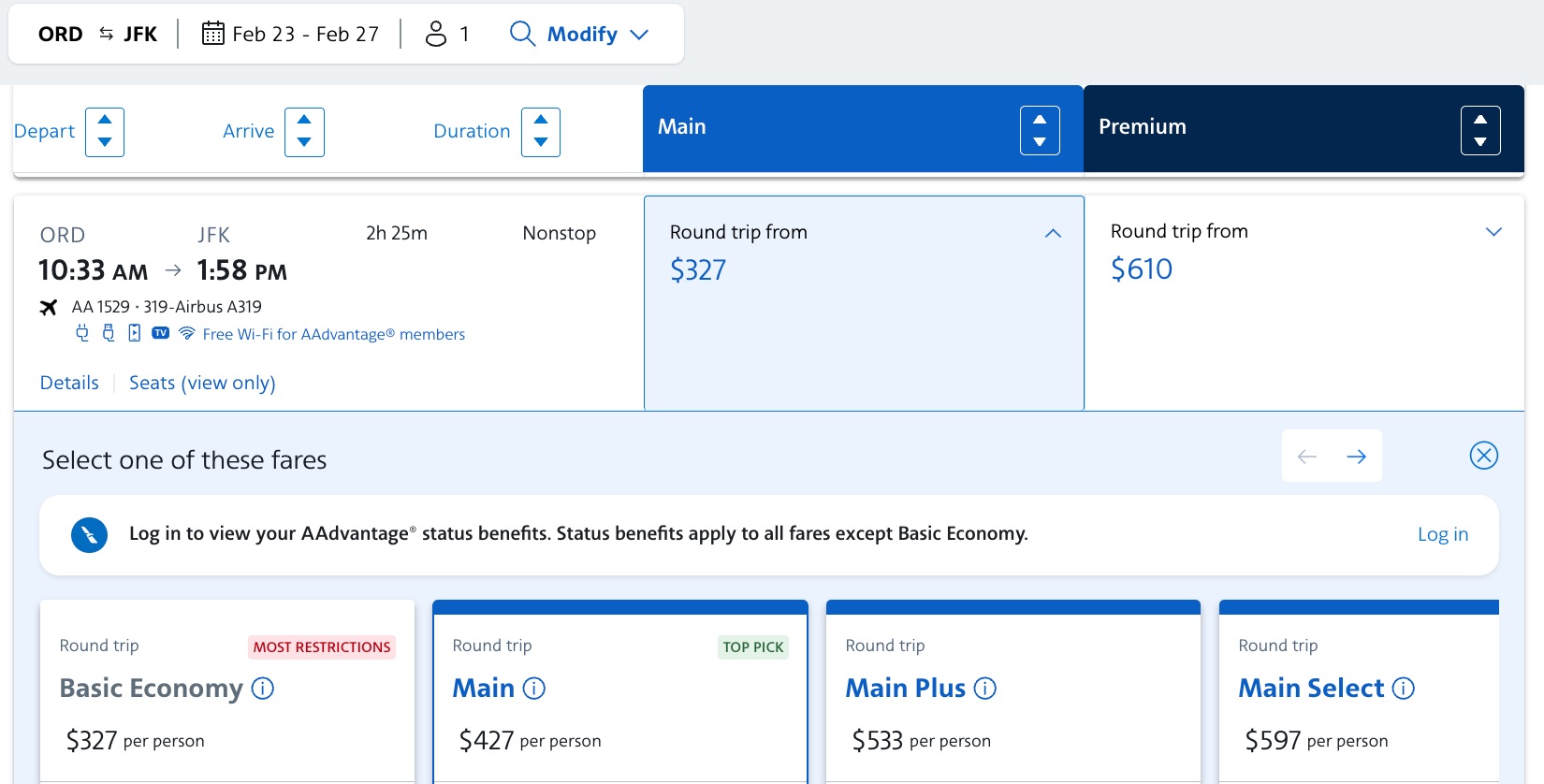
Occasionally, that soars closer to $150 or more – especially on Delta. If you want to pick your seat, hit the Sky Club, or cancel and rebook if prices drop on these spendy flights from Minneapolis-St. Paul (MSP) to Boston (BOS) in December, it’ll cost you an extra $140 per passenger.
Only Southwest routinely charges under $100 to avoid basic economy on its flights – and only on shorter routes, like this $35 premium each way ($70 roundtrip) for a standard “Choice” fare flying from Nashville (BNA) to Chicago-Midway (MDW).
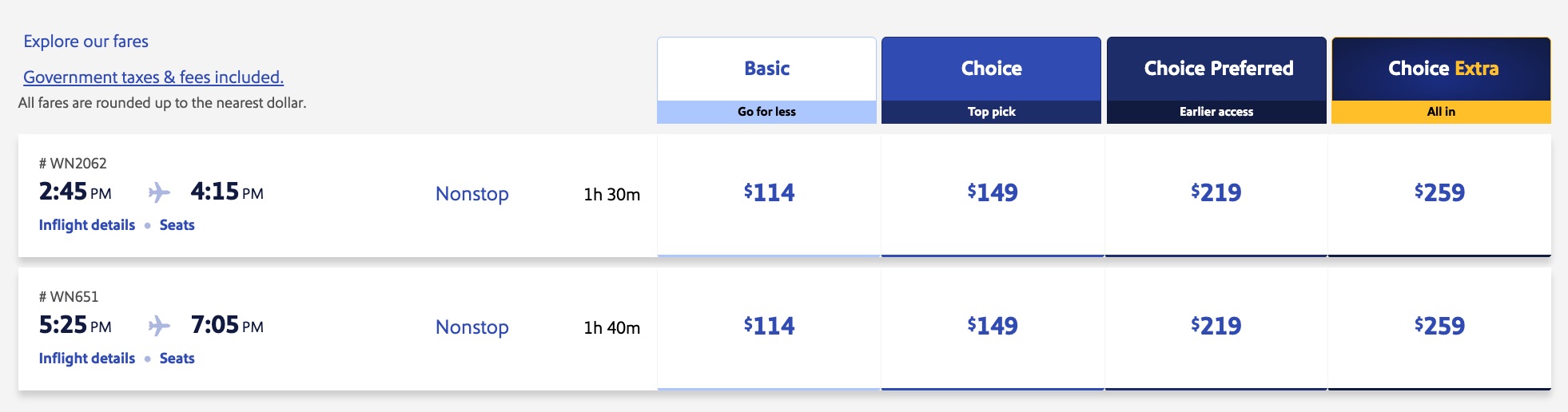
But whether you’re flying across the U.S. or just a two-hour hop, airlines are now typically charging another $100 roundtrip for a main cabin fare, give or take $10.
It gets even worse flying across the Atlantic and beyond, where you’ll now pay more than twice that sum …
Even Steeper Upcharges Abroad
Basic economy first cropped up in the U.S. before eventually spreading to routes to Europe and even to ultra-long-haul routes to Asia and Australia.
Just a few years ago, avoiding basic economy on the seven-plus hour flights over to Europe would cost you an extra $150. That has steadily increased post-pandemic … to a new norm of a whopping $240 “upgrade” today, whether you’re flying nonstop to London, connecting in the States, or onward throughout Europe.
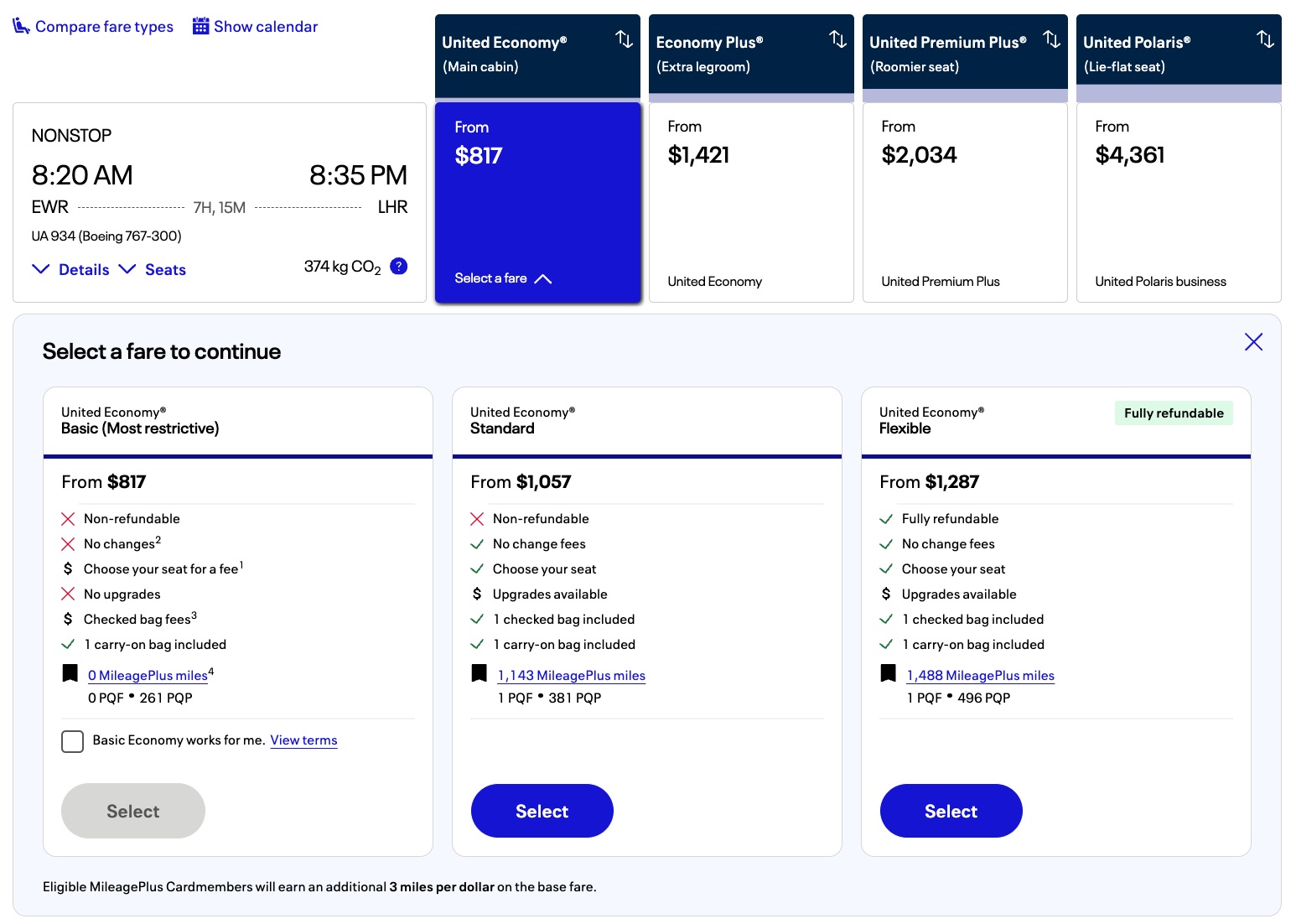
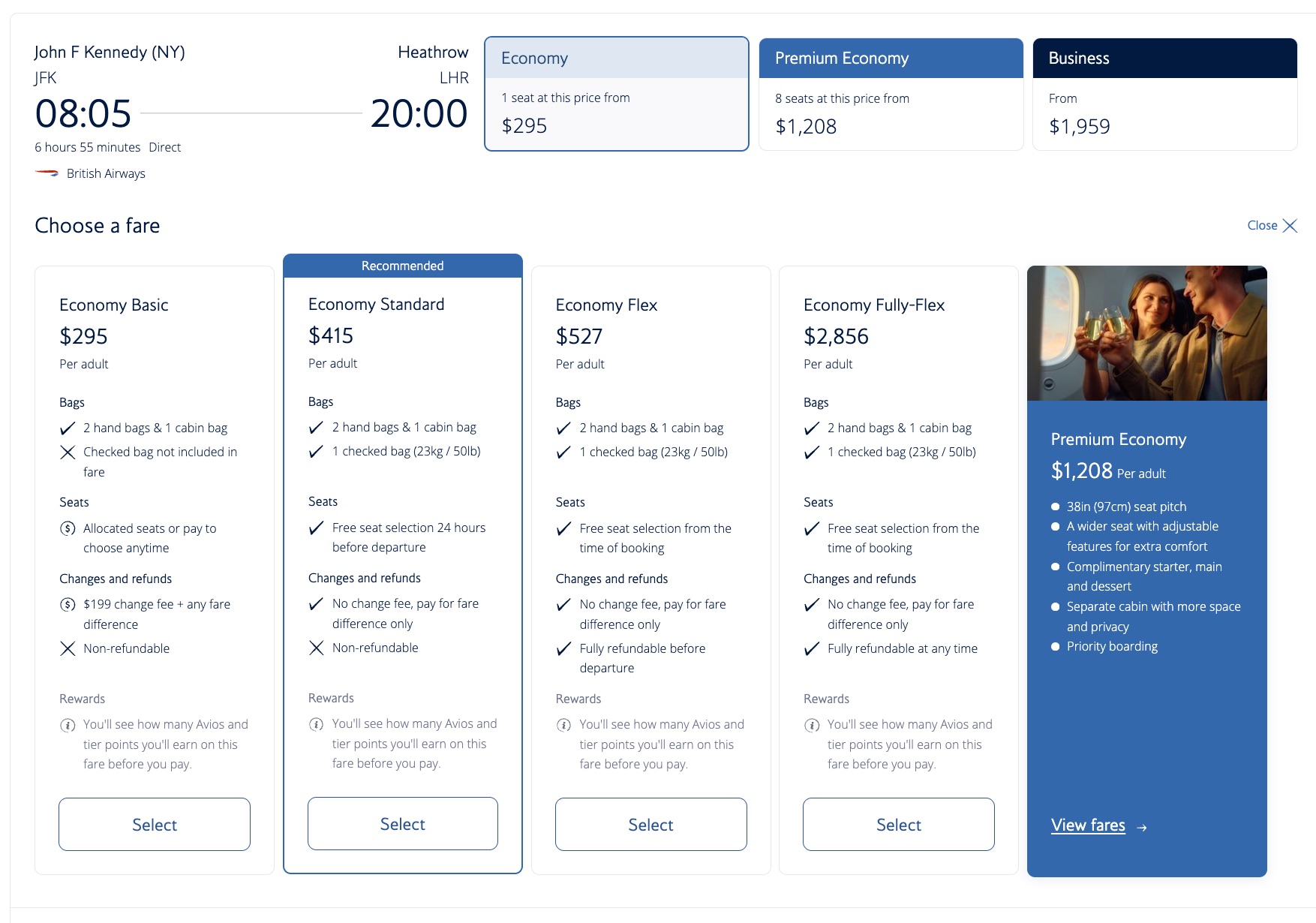
That $240 premium holds true whether you’re flying a major U.S. airline or one of their foreign partners like British Airways, Lufthansa, or Air France/KLM. For example, British Airways is charging another $120 each way for a standard economy fare on this flight from New York (JFK) to London (LHR).
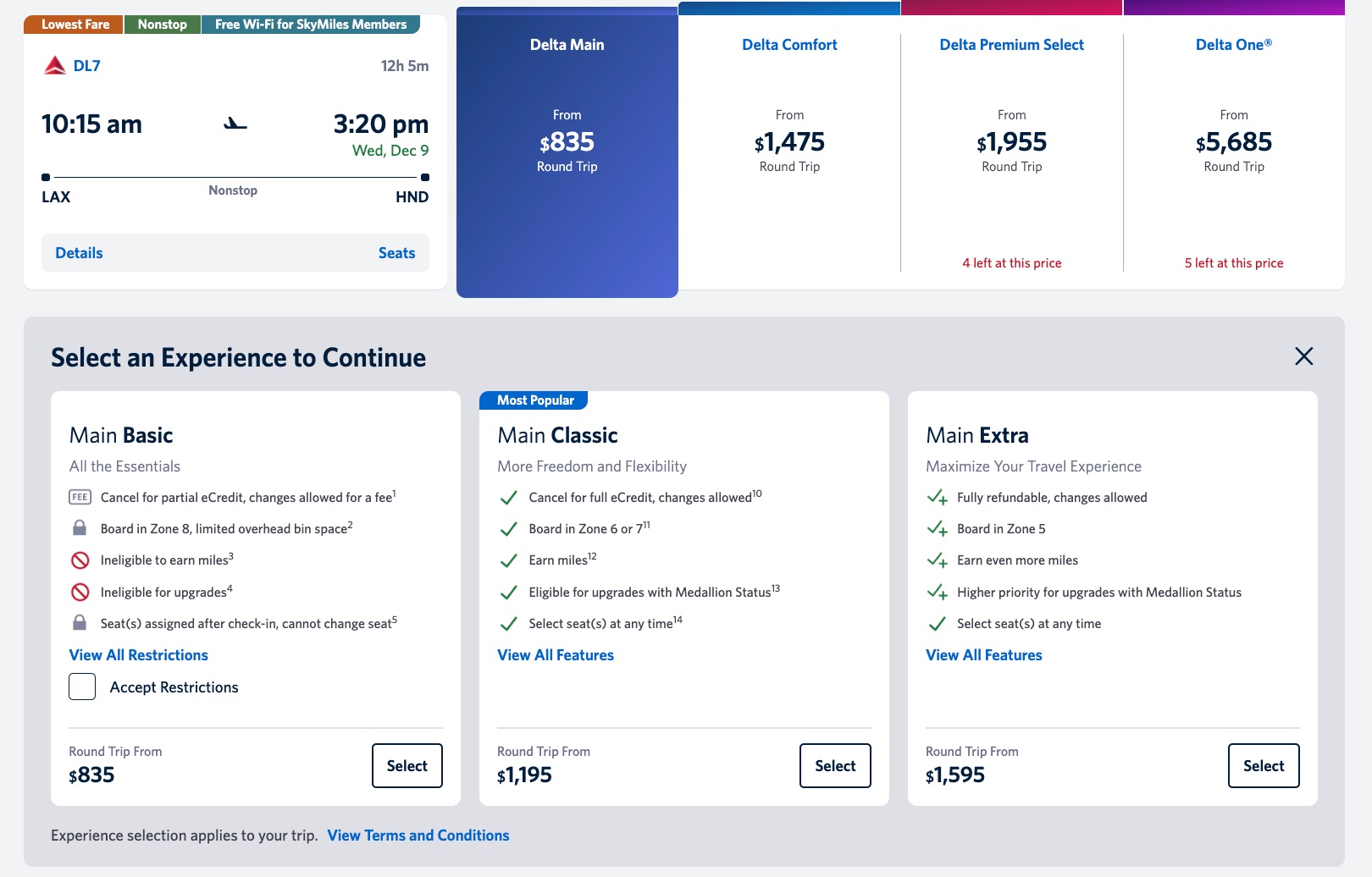
Heading across the Pacific, it’s harder to pin down a pricing pattern. You may see main cabin fares for another $150 or so above the basic economy entry rate … while other routes and carriers may charge an extra $300 or more.
Check out this Delta fare from Los Angeles (LAX) to Tokyo-Haneda (HND), where the airline is charging a whopping $360 to avoid its “Main Basic” fares.
No matter where you’re going or how much it costs, airline executives and industry leaders love to paint these fares as if they’re truly cheaper. They use buzzwords and cute phrases like “Pay for the fare you want” and “We’re giving customers more choice.”
That’s spin, plain and simple.
The reality is that airlines don’t actually want you to book these cheapest fares. They’re designed to get you in the door with a cheap fare, then hit you with a bunch of restrictions to convince you to pay even more.
And unbundling fares has been a major windfall for airlines. For travelers who do book the skimpy basic tickets, they collect extra fees on bags, seat assignments, and more – all revenue that, unlike airfare itself, they don’t need to pay federal excise taxes on.
By constantly upping the ante with pricier rates to avoid basic fares, they’re winning on both ends. No matter what fare you pick, you’re paying more.
The timing here is no coincidence. In addition to raising fares and baggage fees across the board, these steeper upgrade rates to avoid basic economy are just another way airlines are passing more of their higher fuel bills on to consumers.
If there’s one silver lining, it’s that there are new ways to avoid getting sucked in by a seemingly cheap basic economy fare:
- Google Flights finally answered our prayers last year and rolled out a filter to exclude basic economy altogether – though, as of publication, it still only works for flights within the U.S. and up to Canada.
- A handful of airlines (namely, Delta and United) have added their own toggles to exclude basic economy, too.
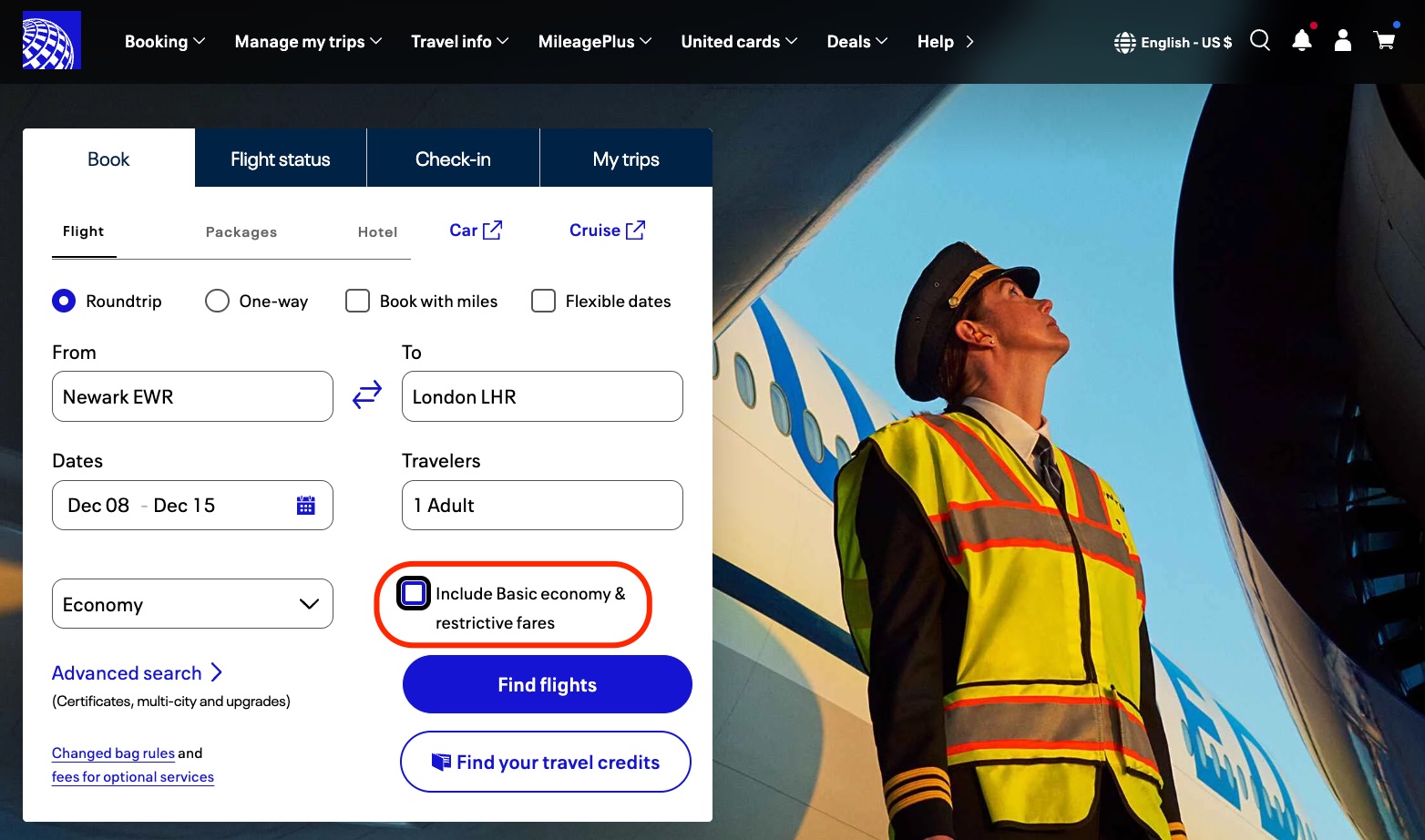
But there’s one big reason why these ever-increasing basic economy upgrade rates stand out.
Basic Upgrades Are the New Change Fees
Airlines won accolades during the worst of the pandemic for a move that was once unthinkable: doing away with change fees.
That ushered in an exciting new era of rebooking flights to save when prices drop, as well as new tools like our free FareTracker.
But those fees have, in fact, returned – just to basic economy. After exempting them for the first few years, airlines will now charge a fee of $99 or more to cancel a basic economy fare. When flying abroad, you’ll forfeit $199 if you cancel a basic fare.
So it’s clear now that “no more change fees” was just a rebranding exercise – a marketing flourish. Airlines haven’t given up on that revenue: Basic economy fares have replaced those change fees.
Look at it this way.
Pre-pandemic, airlines would occasionally collect $200 or more in change fees for those 10% or so (OK, maybe more) of travelers who needed to change flights or cancel altogether. That’s a meaningful amount of money for airlines to give up on … but these are airlines, remember? They never met extra revenue they didn’t like.
But the vast majority of passengers don’t buy basic economy. Airlines have said as much: A few years back, United executives shared that just 16% of domestic passengers were buying basic tickets. Other carriers have shared similar figures over the years.
So airlines are using the allure of additional flexibility – along with escaping other painful restrictions on baggage, seating, mileage, and more – to push more customers into those pricier standard economy fares.
Add it all up, and more passengers are booking standard economy tickets … and with these increases, they’re paying more than ever for it. I’d bet that easily offsets whatever revenue airlines “gave up” from change fees.
Read more: Airlines Didn’t Really End Change Fees – They Just Rebranded
Bottom Line
The true cost of avoiding basic economy keeps going up and up.
While there are exceptions, a standard economy fare will now cost you another $100 or more above the basic economy rate for even quick domestic roundtrips. Heading to Europe or Asia, those standard economy fares are now often another $240 or more.