


We've already recapped the most popular stories on our site from the last 365 days, but this is different. Now, let's dissect the news, stories, and emerging trends that shaped the year of travel … and what that might mean for the New Year.
After years of harping on the importance of “premium” travel, 2025 was the year it became clear just how much that is dominating everything airlines, hotel chains, and banks are doing … while budget airlines steadily suffer. Full-service carriers showed there's no bottom when it comes to getting travelers to cough up more money. And Hilton and Delta traded places in a surprising way.
Let's take a look back at some of the biggest stories from the past year – good and bad – for travelers.
The Premium Travel Boom is Here to Stay
Airlines and banks have been chasing after “premium” travelers for years, introducing fancier new business class cabins, pouring pricier champagne, and building lounge after lounge after lounge.
Premium travel isn't just the biggest story of 2025. It'll be the biggest story in 2026, 2027, and beyond. It's the driving force of virtually everything in the travel industry right now.
It might not be new, but the emphasis on all things premium travel is a drastic change. For decades, dating back to the deregulation of the airline industry (when the late Jimmy Carter was president – yes, it's been that long), travelers and the airline industry as a whole were laser-focused on lower costs and lower fares. Nothing moved the needle more than a cheaper ticket.
But fast forward to present day, and that has flipped. From their planes to their credit cards and rewards programs, airlines are now obsessed with luring in the wealthier Americans who are traveling more than ever. Case in point: United's newest Boeing 787 Dreamliners will sport nearly as many Polaris business class suites as standard economy seats. Heck, even Spirit and Frontier are installing bona fide first class cabins.
That says it all. The entire travel industry is reorienting around all things premium, premium, premium.
And combined with the ongoing struggles of low-cost carriers, that could reshape budget travel as we know it in the years ahead.
Spirit Survived 2025 … Barely
Budget airlines in the U.S. have been on the ropes for years, none more than Spirit. And while rumors of its demise may have been slightly exaggerated, it's clear as the year ends:
Spirit Airlines cannot survive. At least not like this.
Following a failed bid to get swallowed up by JetBlue a few years back, Spirit filed for chapter 11 bankruptcy last year … then refiled for bankruptcy for a second time in 2025, slashing routes all across the country as it shrank into survival mode. As the year ended, the airline was scrambling for financial lifelines to keep the lights on and planes in the air as fellow beleaguered budget carrier Frontier resumed merger talks.

While loathed by many travelers for high fees and knee-crunching legroom, Spirit was once among the most successful, stable, and fastest-growing airlines in the country. So how'd we get here?
Ultra-low-cost carriers need ultra-low costs, and that’s much harder to pull off with higher fuel prices and especially richer pilot contracts coming out of the pandemic. Bigger, full-service airlines have figured out how to use their own, stingier basic economy fares to poach passengers that previously flew Spirit. While those major carriers have turned their frequent flyer programs and credit card relationships into an economic engine that dwarfs the revenue they make from selling tickets, smaller budget airlines don’t have that same luxury.
And perhaps most importantly: Americans increasingly want to fly abroad … in an extra legroom or even business class seat. That’s just not in Spirit’s DNA, so it missed out completely.
But diehard Delta, American, and United flyers can't afford to cheer for Spirit's slow death. For years, Spirit and other ultra-low-cost carriers forced even major airlines to lower their fares compete on price.
Regardless of if you’re a diehard Spirit fan or you've sworn you'll never set foot on one of its bright yellow jets, you’ve benefitted from its cheap fares. With Spirit out of the picture, fares will go up – period.
Southwest's Terrible Transformation
May 28, 2025 marked the end of an era.
After five-plus decades of setting itself apart from the rest of the airline industry by doing things differently, Southwest did the unthinkable: It officially ended its beloved “Bags Fly Free” policy and began charging virtually all customers to check a bag.
Two free checked bags for all customers was supposed to be untouchable at Southwest. Just last year, the airline swore this policy wouldn't be going away. “This makes us unique. It places us in a category of one,” a top executive said.
But those days are over. And charging $35 a bag – unless you buy the priciest fare, have Southwest status, or a co-branded Chase card – was just the most jarring change in what has been a total transformation for one of the country's most loved brands. Southwest also:
- Killed off its signature “Wanna Get Away” fare branding in favor of the same, stingy “Basic” fares as other airlines
- Reversed a post-pandemic decision to make flight credits good for life, re-instituting a one-year (or just six months, on those cheapest basic fares) expiration window
- Slashed how many Rapid Rewards points you'll earn on all but the two top-tier ticket types while shifting to unpredictable dynamic award pricing for redemptions
- Unveiled plans to end its (admittedly divisive) open-seating policy in favor of assigned seating, with an eight-group boarding process to boot
- Began installing extra legroom seats across its fleet … at the expense of everyone else on the plane
- Raised annual fees on its entire suite of co-branded Chase credit cards
The airline's hand was undoubtedly forced by an activist investor, Elliott Management Group, which has been hounding Southwest for the last year to make more money … by doing what its competitors have been doing for years. It's a sad but predictable turn … and what's even sadder is that it might work.
Southwest Airlines first took flight in 1971 as a true pioneer, eventually reshaping the entire airline industry and winning diehard loyalty for decades by holding true to its roots: Simplicity and care. In 2025, the airline joined the rest of its competitors in nickel-and-diming travelers in the race to the bottom – not in pursuit of profitability but more profitability.
An Historic Shutdown
Remember this fall? October and November? Forever ago, when the longest federal government shutdown in U.S. history led to tens of thousands of flight cancellations and an unprecedented federal mandate for airlines to reduce their flying as air traffic control centers across the country were woefully understaffed?
Me neither. Honestly, I'm ready to forget about it.
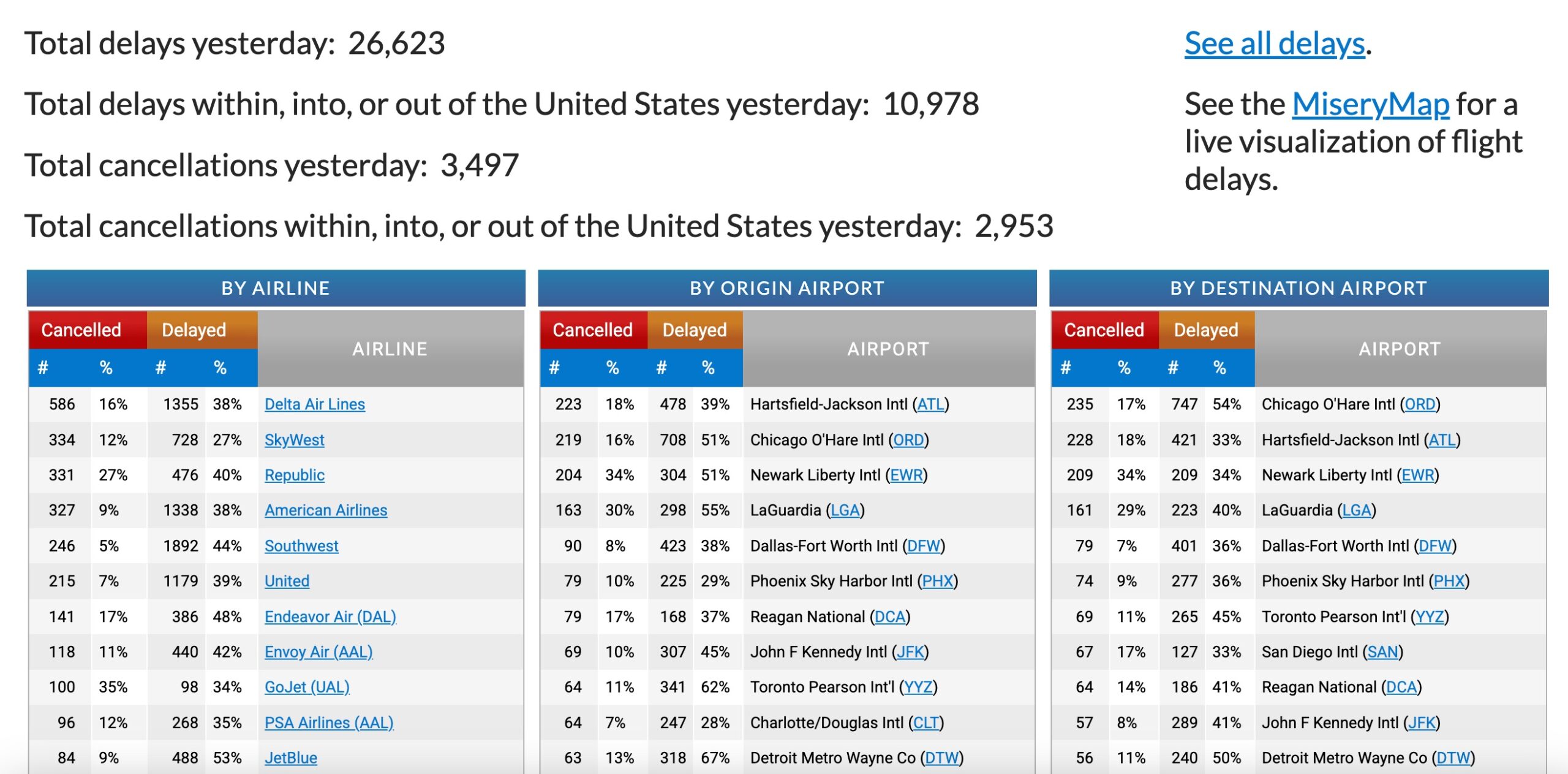
As the shutdown dragged on from October into November, it led to the one of the worst weeks of disruptions in American travel in years as unpaid air traffic controllers skipped work. Days before the federal government reopened, U.S. airlines canceled nearly 3,000 flights and delayed another 10,000-plus in a single day.
Ready for a jump scare? We could be living through a replay in a month's time.
The deal to reopen the government in November only provided funding through Jan. 30, 2026. And despite constant talk of making a change to ensure air traffic controllers' paychecks continue, shutdown or not, that hasn't happened yet.
Gulp.
Solo Traveler Penalties Put a Spotlight on Pricing
I had to triple-check I wasn't seeing things.
A one-way flight for one passenger to Miami (MIA) cost $199. But add a second passenger, and the price per ticket … dropped to $118 apiece?
In late May, we broke the news that the nation's three largest carriers – American, Delta, and United – had begun quietly charging some solo passengers significantly higher fares than groups of two or more. While it was hit-or-miss, it was a new and questionable pricing tactic.
Within hours, the story hit mainstream news, triggering a nationwide backlash that led to all but one of the airlines to drop that pricing dynamic. As of publication, American Airlines still occasionally charges solo travelers more.
This story struck a chord, precisely because it reinforced how many travelers already feel about the companies that fly us across the country and even around the globe. The intricacies of airfare are like a black box and, after decades of nickel and diming travelers, everyday Americans trust airlines about as far as they can throw a Boeing 737.
Turns out that was just a primer for what airlines have in mind.
What Are Airlines Really Doing with AI?
Delta dropped a metaphorical bomb into the travel world this summer when executives let slip that they were using artificial intelligence (AI) to set 3% of domestic fares … with plans to ramp that up to 20% by the end of the year. Cue yet another nationwide backlash about flight pricing.
The Atlanta-based airline has since gone radio silent about all things AI, but not before swearing up and down that they were not – and would not – use consumers' personal data to adjust pricing. That was technically true at the time … yet the very firm Delta was entrusting to help set its airfare previously bragged about the potential of using AI for “hyper-personalization that drives revenue growth” … before scrubbing that from its website as the story hit national news.
And Delta's own president has indicated that personalized pricing is where the airline is heading.
“What we're really trying to do is to get inside the mind of our consumer and present them relevant, something that's relevant to them at the right time with the right price,” Glen Hauenstein said last fall during the airline's annual investor day presentation, pointing to AI as a critical component of eventually making that a reality. “We will have a price that's available on that flight, on that time to you, the individual.”
Months later, the debate over AI and airfare has faded from the headlines. Maybe all the talk about using AI to set prices was just a trial balloon – a way for Delta to test consumers' appetite for personalized pricing … and one that Americans promptly shot down. Or maybe Delta just learned its lesson to keep quiet about its ongoing effort to revolutionize the way flight prices are set – an effort, which, by the way, goes far beyond just one airline headquartered in Atlanta.
Personally, I don't trust the silence. Stay vigilant, travelers.
Read more: ‘Are Airlines Already Using My Data?’ And Other FAQs About Airfare & AI
SkyMiles Deals are Better than Ever
Alright, time to give Delta some credit for something in 2025 … and it's a surprise.
Just two years after penning The Sad State of SkyMiles, opining the lack of solid flash sales and insultingly high business class award rates, SkyMiles has turned things around … big time.
Discounted deal after discounted deal have us rethinking SkyMiles as a whole – and we think you should too.
- A nationwide SkyMiles flash sale to Europe for under 26,000 SkyMiles (or as low as 18,600) … roundtrip!
- A recent Delta One sale to Europe for as low as 98,000 SkyMiles – the first one-way discount on business class awards to Europe that we've seen in at least six years
- Roundtrips to Cabo (SJD) or Puerto Vallarta (PVR) in Mexico for under 9,000 SkyMiles … or Cancún (CUN) as low as 7,000 SkyMiles total
- One-ways in Delta One Suites on the airline's upcoming route to Hong Kong (HKG) from 94,000 SkyMiles each way
- All the way to Australia in a business class suite from 102,000 SkyMiles each way on the new route to Brisbane (BNE)
- Sale after sale to Taipei (TPE), including 25,000-mile roundtrips in economy and 85,000 miles each way in business class
- Ditto for the new route to Marrakech (RAK), which sold as low as 25,000 SkyMiles roundtrip or 170,000 SkyMiles roundtrip in Delta One
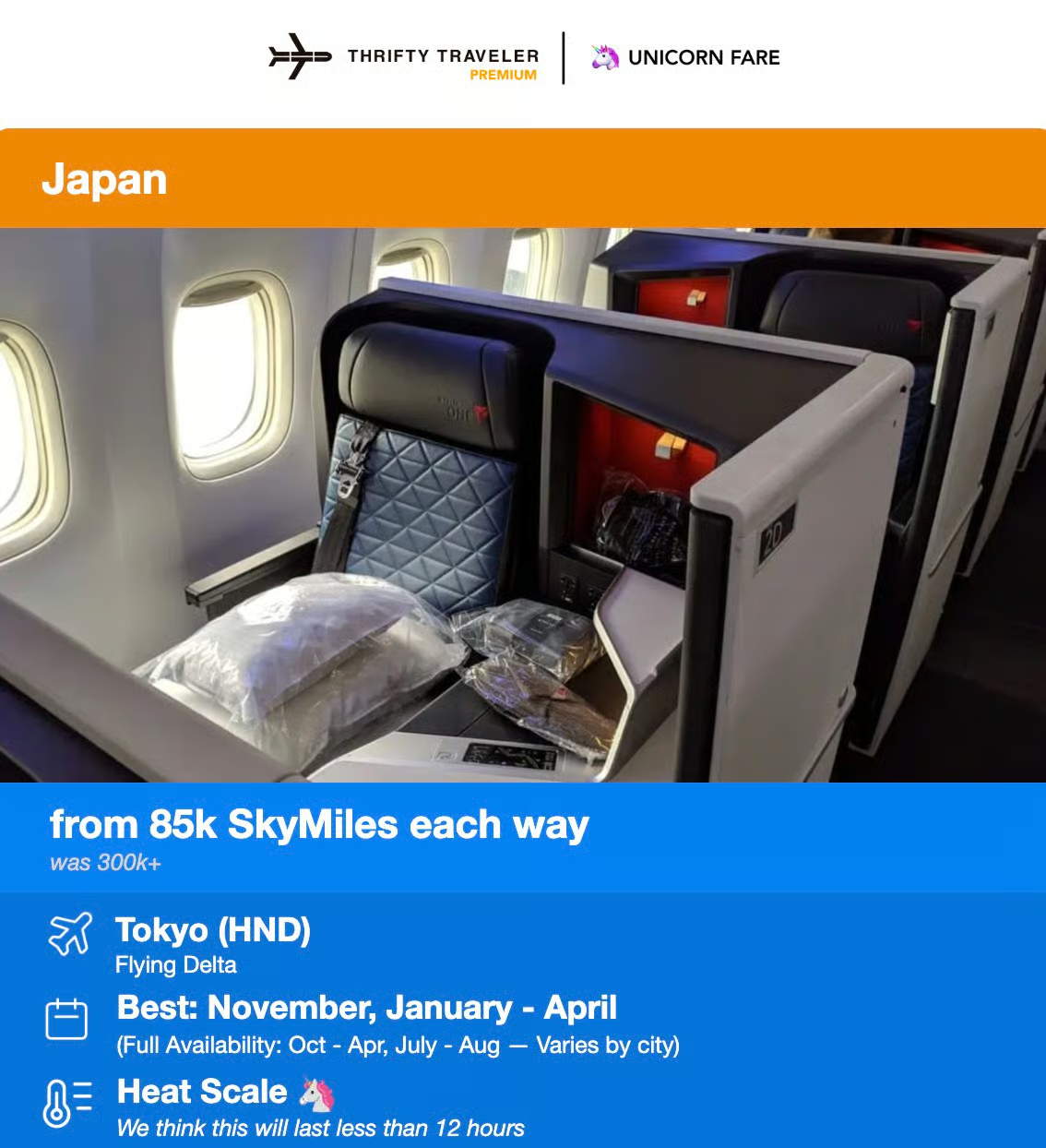
Those deals aren't just “good for Delta” – many of them are just straight-up good, period. And all signs point toward them getting even better in 2026.
Hilton's Rapid Decline
Just one year ago, Hilton was on the rise after stealing Small Luxury Hotels of the World (SLH) away from Hyatt, folding in hundreds of excellent properties all around the globe – all bookable with Hilton Honors points.
We wondered whether Hilton could seriously challenge Hyatt for the crown as the best hotel loyalty program.
That take aged like airport sushi, because 2025 was a different story.
After not one, not two, but three devaluations over the last year, Hilton has nuked much of the value in its program – and not just for those SLH properties, but across the board.
What was once a 150,000-point-per-night cap for the top-rated luxury properties has ballooned to 250,000 points – yes, a quarter of a million points for a single night stay. While the fanciest resorts got hit the hardest, even properties in the middle and bottom tiers have seen increases.
Hilton has since rolled back a handful of those increases, but it's not enough to reverse the clear story from 2025: Hilton Honors took a serious turn for the worse this year.
A Tale of Two Cards
In the span of just a few months, two titans in the world travel credit cards overhauled their flagship cards, adding more and more money-saving credits while increasing annual fees by $200 or more a year.
One was a clear winner … and the other, it seems, was a flop.
The disconnect between the home run refresh of the American Express Platinum Card®'s refresh this fall and how Chase fumbled its new Chase Sapphire Reserve® just a few months prior still fascinates me. It could be a case study: Despite making borderline identical changes, why did one work and the other seemingly fall flat?
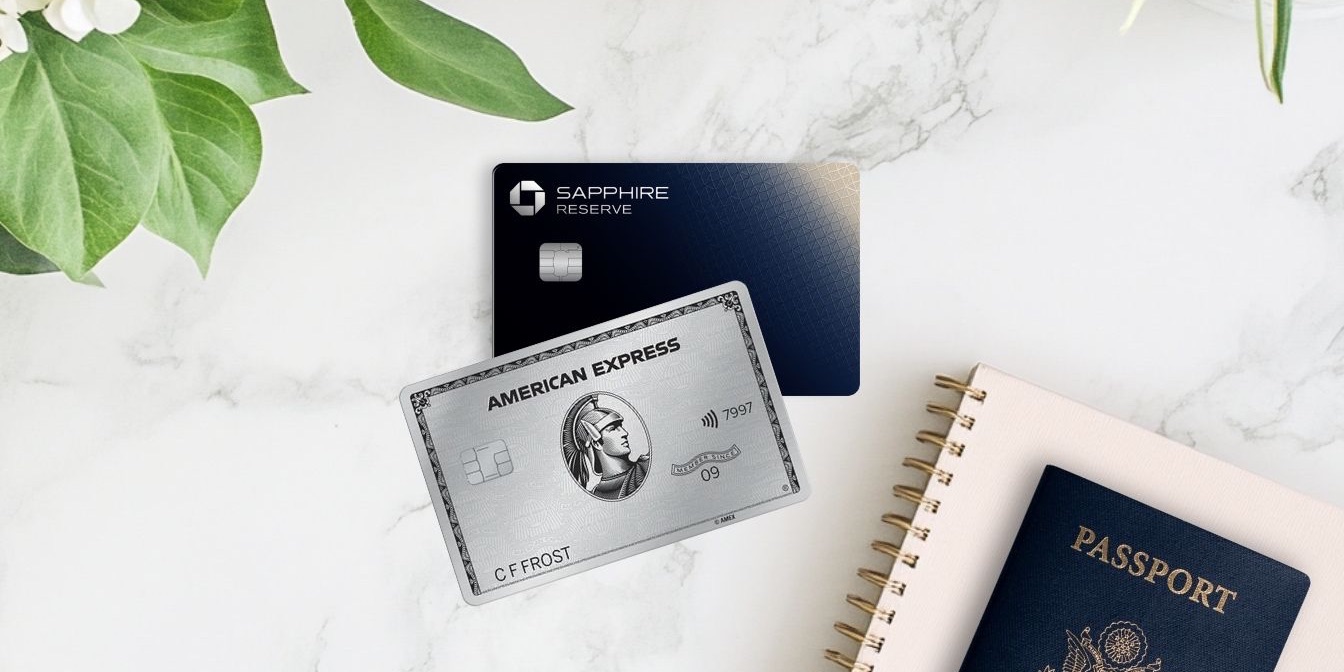
To be clear, Chase still insists that the new Reserve Card – complete with a new $795-a-year annual fee and a series of use-them-or-lose-them credits that could make even American Express blush – has been a success. But ask yourself: If that were the case, why would Chase be doling out $400 retention offers to keep cardholders from canceling?
At its core, the average American Express and Chase customer may just be drastically different.
While they may still gripe about the “Extreme Couponing” mentality required to use their cards, American Express has conditioned its customers to expect it – especially the younger Millennials and Gen Zers the bank is increasingly courting. Odds are, they've never known a world without tracking which monthly or quarterly benefit to use next.
The value proposition for Chase's top Reserve Card was always simpler. A lower annual fee with an incredibly easy-to-use $300 travel credit right off the bat. Second-to-none travel insurance built right into the card. A great card to swipe (almost) everywhere, earning a flat 3x points on all dining and travel purchases.
But now, Chase has clearly borrowed a page from Amex's playbook: forcing cardholders trying to use their benefits into its own ecosystems and branded partnerships with companies like Stubhub and Peloton. So while the bank can tout $2,700-plus in credits, are those hoops Sapphire Reserve cardholders really want to jump through?
As 2025 draws to a close, the answer appears to be a resounding “No.”