




The big banks each have their own rules for determining who is (and isn't) eligible for a new credit card that goes well beyond the usual credit check. Whether you're angling to get a massive bonus on the *chase sapphire preferred* or any other Chase card, no rule is more important than the bank's 5/24 rule.
In short, Chase won't approve you for a new card if you've opened five or more personal cards in the past 24 months with any bank – not just Chase. This rule is a big reason why we recommend getting started with Chase before moving on to cards from other banks.
For most travelers with just one or two credit cards in their wallet, the Chase 5/24 rule isn't something to be concerned about. But if you're looking to build up a points and miles fortune, you'll need to be a bit strategic with which cards you apply for … and when.
Here's why the Chase 5/24 rule matters, and a few of our favorite tips and tricks for tracking your own 5/24 status.
Read next: Everything You Need to Know About the Chase 5/24 Rule
Should You Care About the Chase 5/24 Rule?
Sure, there are plenty of ways to keep earning points beyond a big welcome offer … but nothing's quite as quick. Simply sign up for a new card, meet the minimum spending requirement, and bam: You've got a big stash of points or miles ready to fuel your next vacation.
OK, but if the 5/24 rule only applies to Chase cards, what's the big deal? Can't you just open a card from another bank instead? The answer is yes, you can. But that could potentially mean forgoing some of the best travel rewards cards on the market.
Chase not only has a stable of its own Ultimate Rewards-earning cards but also offers co-branded cards from major travel companies like United, IHG, Hyatt, Southwest, and more. By disregarding Chase's 5/24 rule – at least at the start – you could wind up missing out on some of the best cards and the big bonus offers that come with them.
Take the bank's flagship Sapphire Cards, for example: Right now, Chase is offering a big sign-up bonus on the Sapphire Preferred. The *chase sapphire reserve*, meanwhile, is one of the best premium cards on the market, period.
- *chase sapphire preferred*: bonus_miles_full
- *chase sapphire reserve*: bonus_miles_full
These are two awesome cards with great bonus offers. Being able to track your 5/24 count and stay eligible for new Chase cards is an important component of using points and miles to travel more for less. Understanding this rule can help you plan your credit card applications strategically, especially if you're aiming for specific Chase cards that offer valuable rewards or benefits.
That said, we've made the case before that the 5/24 rule gets more attention than it deserves. If you're not planning to open more than a couple of cards a year, or you're leaning on business cards (which don't count toward 5/24 at all), it may be worth ignoring altogether.
But remember: Credit cards are serious business. As tempting (and efficient) as a big sign-up bonus may be, no amount of points or miles is worth digging yourself into debt. If you can't afford to pay off your balance in full, each and every month, Chase's 5/24 rule shouldn't even be a consideration right now.
Related reading: The Best Balance Transfer Credit Cards for Eliminating Debt
How to Track Your 5/24 Status
Now that we've covered the basics of Chase's 5/24 rule and why it makes sense to keep an eye on it, let's discuss how to track your own status.
For some, keeping track will be easy – if you open one or two cards a year, you've got nothing to worry about. For others who are really invested in earning and redeeming points and miles, it gets a bit more complicated … and unless your memory is like a steel trap, that's where using additional tools and resources comes in.
Thrifty Traveler's Card Benefit Tracker
We might be a little biased (OK … very biased), but we think our new (and free) Credit Card Benefit Tracker tool is the best option out there for keeping tabs on your Chase 5/24 status. Not only does it track credits, annual fees, and points balances across more than 120 travel cards, but it also has a built-in 5/24 module that does the math for you.
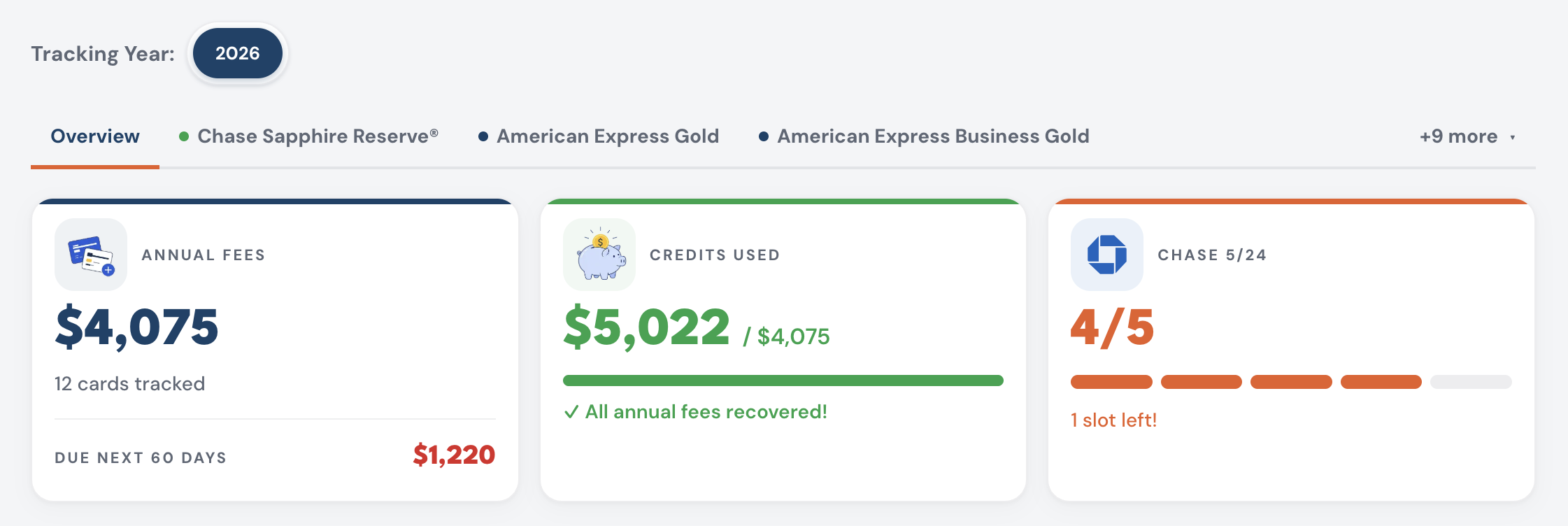
As long as you enter the date you opened each card you're tracking (and even the ones you've already closed), the tracker keeps a running tally of your 5/24 status automatically, no need to count manually or cross-reference a spreadsheet. It'll show you exactly how many slots you have open and how close you are to your next eligible application.
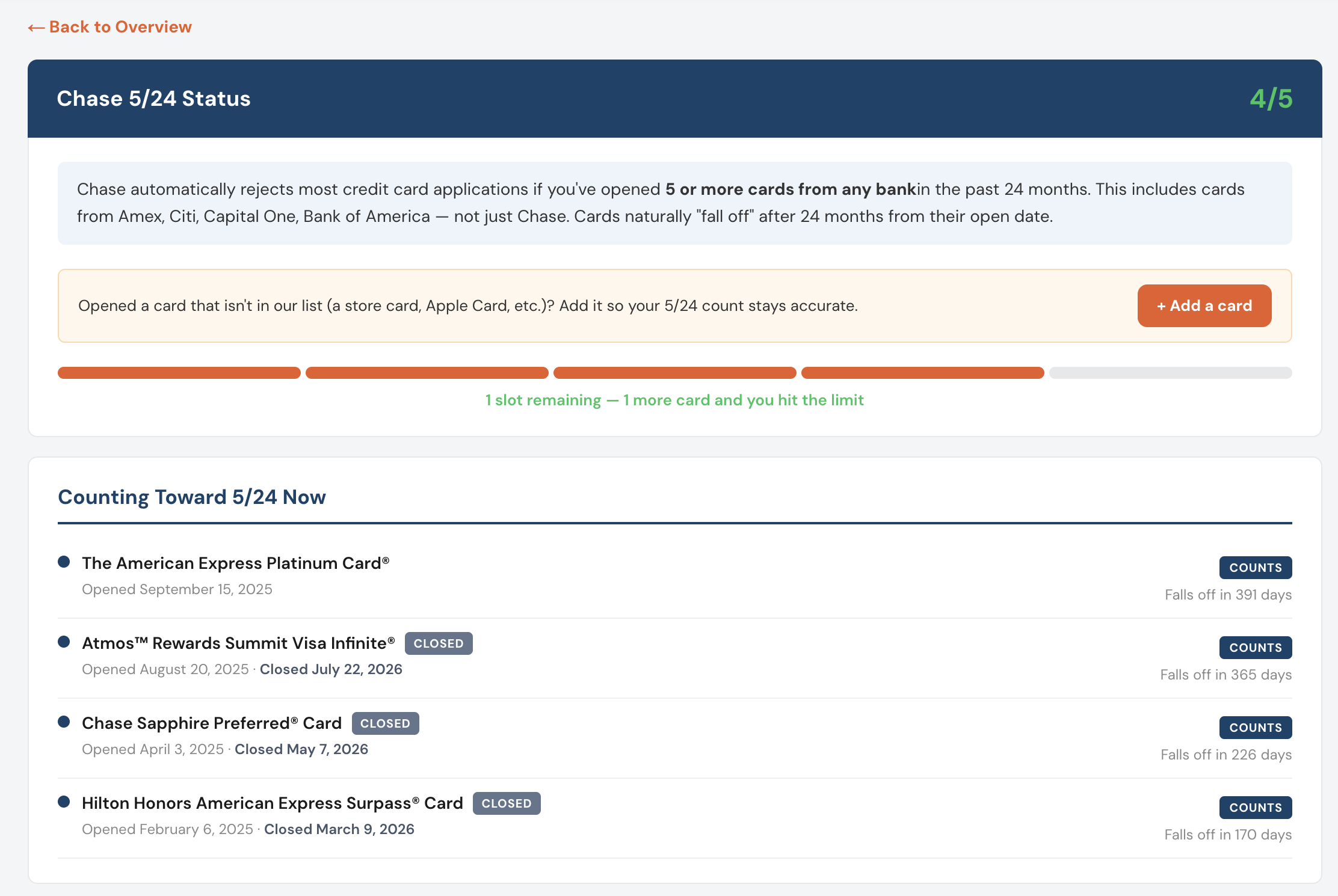
Like the rest of the tool, it doesn't ask for a bank login, card numbers, or your credit score. You're entering your own open dates, the same way you'd log anything else in the tracker – but once it's in, it's automatic from there. It also supports up to four people on one account, so you and a partner can each track your own 5/24 status separately.
Try our Credit Card Benefit Tracker … for free
Annual Credit Report
Another great option for staying on top of things is to use a service like Credit Karma or Experian to get a big-picture look at your credit.
Either service should show you a list of all your open credit accounts and when they were opened. From here, you should be able to calculate which ones will count toward your 5/24 status. Although our Credit Card Benefit Tracker will do that math automatically.
You can also access a free copy of your credit report every 12 months from each credit reporting company at AnnualCreditReport.com. This will not only give you an idea of your 5/24 status but also be a great way to monitor for any instances of identity theft and ensure your credit report is accurate.
Build a Spreadsheet
Some people are better with Microsoft Excel and Google Sheets than others. If that's you, maybe you'll find it best to keep track of all your accounts on a spreadsheet.
Like using our Credit Card Benefit Tracker or another tool, the data will only be as good as you make it. If you want to track your card sign-ups this way, you'll need to enter details for all your credit card accounts. Remember to include information such as the open date and when you earned the bonus (if possible). It's also a good idea to have a column for any changes to your account, such as a downgrade or closure.
Bottom Line
If you understand the restrictions of the Chase 5/24 rule, you should be able to navigate it without much issue. The key here is having a system to keep track of it all.
With tools like our Credit Card Benefit Tracker, staying on top of your accounts doesn't have to be a chore.




Would you happen to know if a Chase Sapphire (basic – NOT preferred/reserve) counts against signing up for a new bonus?
I am outside the 48m window.
Nope, only have to worry about the Preferred/Reserve!