




In today’s newsletter, we take a deep dive into the convoluted world of airfare and AI-pricing … or lack thereof (for now). Plus, we highlight a reader’s trip to New Zealand, take a look at JetBlue’s new first class recliners, put the Capital One Venture X under the microscope, and much more.
- 🧐 What’s Going on With Airfare & AI Now?
- 🤝 Deal of the Day: Huge Savings on Award Flights to Europe!
- 📖 Gettin’ Booksy: Sagy’s Biz Class Journey to New Zealand
- 🔵 JetBlue Unveils New ‘BlueFirst’ Cabin & … Meh?
- 🎙️ Starter Kit, Vol. 2: The Keys to Earning Points & Miles
- 💳 The Venture X Is Still Criminally Underrated
- ✈️ Other Travel Tidbits
🧐 What’s Going on With Airfare & AI Now?
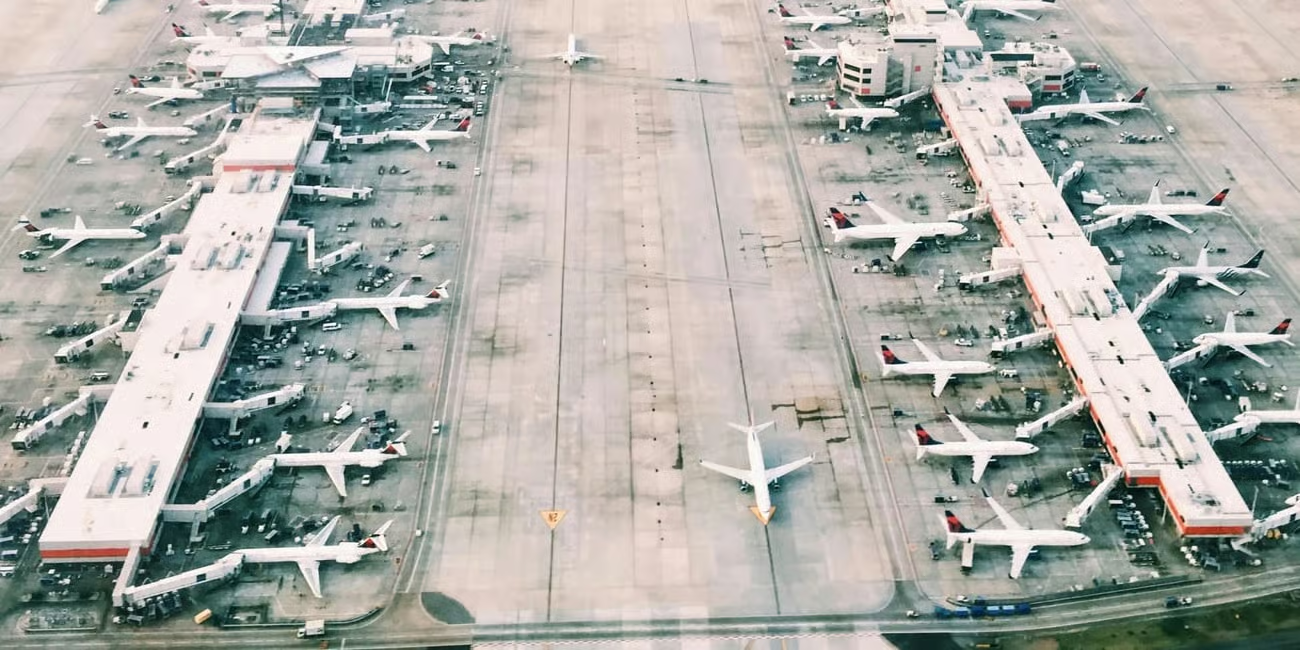
Delta dropped a metaphorical bomb in the travel world last summer when top executives let slip – well, they actually bragged – they were using AI to set 3% of domestic airfare with plans to expand that to 20% by the end of 2025.
Cue yet another national backlash about corporate greed, AI, and price gouging. Within a matter of weeks, members of Congress introduced legislation to ban “surveillance pricing.”
In the year since, it’s been shockingly … quiet? After starting an uproar, Delta seems to have learned its lesson: Don’t brag about using AI to determine how much to charge for flights, people don’t like that.
But AI isn’t going anywhere – you can bet Delta is still working on it, and you can bet even more that Delta isn’t alone. So what’s going on now? What’s actually happening with flight prices? Are airlines tracking your searches and adjusting prices accordingly? Is that why so many fares are so gross right now?
I talk about this regularly with folks in the airline industry who are far smarter than I am (low bar). Here’s my read on where things stand.
Are airlines using personal data & AI to set fares?
No. At least not yet. Whether they will in the future remains to be seen.
But these days, the two letters “AI” are a real boogeyman – it’s practically synonymous with price gouging, at least when it comes to major corporations. So when travelers heard Delta was handing over airfare pricing to AI, they (understandably) assumed the worst: That Delta would start charging flyers different prices based on their search history, past purchases, or something else – anything to charge customers more.
But you still don’t need to clear your cookies, search incognito, or fire up a VPN in pursuit of a better deal. Today, as always, that does nothing.
OK, so then what’s actually going on?
Even without AI, airfare is constantly changing. Those frustrating price jumps of $50 or more when you go back to purchase a flight aren’t evidence that your searches are being tracked.
They’re the hallmarks of a strangely outdated system for setting airfare.
There’s an alphabet soup of 20-plus different fare classes available on every flight, each with its own price. A series of algorithms and airline analysts spend their days adjusting those fares on the fly in order to fill planes at the highest fares possible. Millions of other flyers gobble up fares throughout each day.
Constant price changes ensue.
Delta has referred to AI as its “super analyst,” replacing thousands of manpower hours with technology to tweak those fares even faster.
But that’s still built on antiquated system of fare buckets that can hardly support “dynamic” pricing – let alone folding in data on your search history or prior purchases to individualize your fare.
AI can do a lot, but the technology still isn’t there yet. Whew.
So what do airlines want to do with AI & flight pricing? Could this nightmare scenario happen?
It depends on who you trust.
Do you trust American Airlines from last year, which said using AI is “not about bait and switch”? Do you trust Delta, which promised Congress last summer that there is no fare product Delta has ever used, is testing, or plans to use that targets customers with individualized prices based on personal data”?
Or do you trust the Delta of 2024, when then-president Glen Hauenstein said they were working toward “a price that’s available on that flight, on that time to you, the individual”? Or Fetcherr, the AI startup Delta enlisted to set its fares, which bragged about its role in the future “hyper-personalization” of airfare … before scrubbing those mentions from its website last summer as the backlash against Delta began?
Let’s be clear: Airlines absolutely want the ability to personalize airfare. The entire industry has been working toward the kind of technological improvements necessary to make that possible for more than a decade.
When that happens – and just how far they go with personalized pricing – is still up in the air.
To be honest, I’m not sure on either question. That feels very much in flux right now.
What have Delta & other airlines said recently?
Not much. Like I said, they all seemed to have learned their lesson from stepping in it last year.
Most airline executives stick to a safer script these days when asked about how they’re using AI. It can help them set smarter schedules or recover faster when things go wrong, they say.
Asked about the airline’s evolving use of AI on a recent Airlines Confidential Podcast, Delta CEO Ed Bastian played it (mostly) safe. He said AI could:
- Assist with “managing the daily operations or what’s happening in the maintenance realm and with our engine.”
- Unearth “predictive data that has the intelligence to anticipate before issues become issues and try to make decisions better.”
- Reduce “two, three, four points of our cost down from making smarter, better decisions over a series of several years” to improve Delta’s profits by as much as 50% over time.
- Or “make better revenue decisions on how you manage different buckets” to increase ticket revenues.
But the genie is out of the bottle when it comes to airlines’ potential misuse of AI. Some other media outlets read those final two points and concluded something like: “Delta wants to use AI to charge 50% higher fares!”
That’s … not what Bastian said. But airlines have no one to blame but themselves for the lack of trust.
What now?
A year after everything hit the metaphorical fan, it still feels like we’re at a standstill.
Are airlines using personal data to determine flight prices? They are not.
Will they? I’m not sure.
My hope is that Delta and other airlines learned their lesson – that a nationwide backlash and potential scrutiny from Congress has shown them not to go too far with whatever version of “personalized” pricing they might have originally envisioned.
But I also trust airline executives about as far as I can throw a Boeing 737.
– Kyle Potter, executive editor
🤝 Deal of the Day: Huge Savings on Award Flights to Europe!
Heat scale (out of 3): 🔥
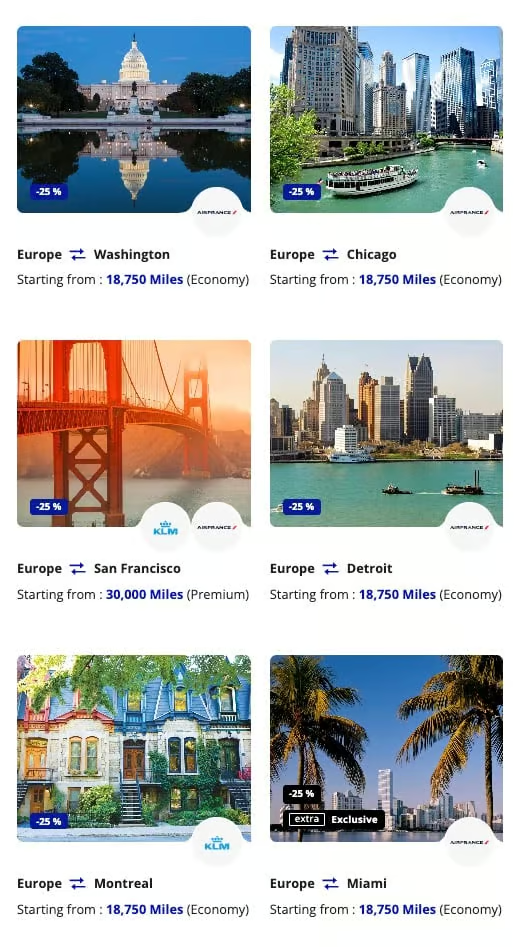
Why we love it: Every month, Air France/KLM Flying Blue runs a promo with discounted award flights on select routes to Amsterdam (AMS), Paris (CDG), and beyond.
This month, look for cheaper economy flights (18,750 miles each way) from D.C. (IAD), Chicago (ORD), New York (JFK), Detroit (DTW), L.A. (LAX), Montreal (YUL), and Miami (MIA). Look for premium economy discounts (30,000 each way) from San Francisco (SFO) and JFK, and even business class discounts (45,000 each way) from Minneapolis (MSP), too!
Search for fares on the Promo Rewards website!
– Gunnar Olson, Thrifty Traveler Premium deal analyst
📖 Gettin’ Booksy: Sagy’s Biz Class Journey to New Zealand
Welcome to Gettin’ Booksy, a celebration of our favorite feeling: Booking something awesome! Book something lately? Let us know at [email protected]!
What Did Sagy Book?
Sagy booked Qantas and Fiji Airways Business Class flights roundtrip from Austin (AUS) to Auckland (AKL) thanks to Thrifty Traveler Premium flight deal alerts!
How’d Sagy Book It?
Sagy had a solid stash of American AAdvantage miles that they used to book. It cost just 80,000 AA miles each way and about $110 in taxes and fees roundtrip!
What Makes it So Awesome?
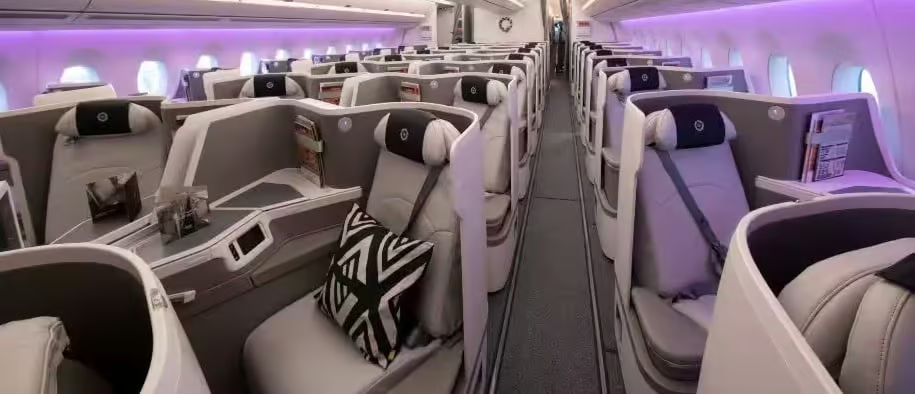
The connections are what make this such a sweet booking. Sagy’s routing was AUS to New York (JFK) in AA First Class, then JFK to AKL in Qantas Business class … all for 80,000 miles!
On the way home, the routing was AKL to Fiji (NAN) to Dallas (DFW), all in business class, with the connection home to AUS also in American’s First Class recliners.
That means, of course, that Sagy had lounge access the whole way, too! 🥂
(Oh, and Sagy used just 18,000 Chase points to book the short flights to the South Island of New Zealand!)
From Sagy:
The trip to AKL was 80K AA miles and $39.20 in taxes, the return was 80K AA miles and $70.33 in taxes. I had the needed AA miles in my account so no need to transfer points or make any special arrangements!
That’s about as convenient a booking to New Zealand as you can find … and you did it for the full roundtrip! Awesome booking, Sagy. I’m jealous.
– Gunnar Olson, flight deal analyst and travel reporter
🔵 JetBlue Unveils New ‘BlueFirst’ Cabin & … Meh?
It’s almost like Oprah is in charge of the airline industry lately.
“You get a first class cabin! And you get a first class cabin! Even Allegiant gets get a first class cabin!”
And soon it’s JetBlue’s turn.
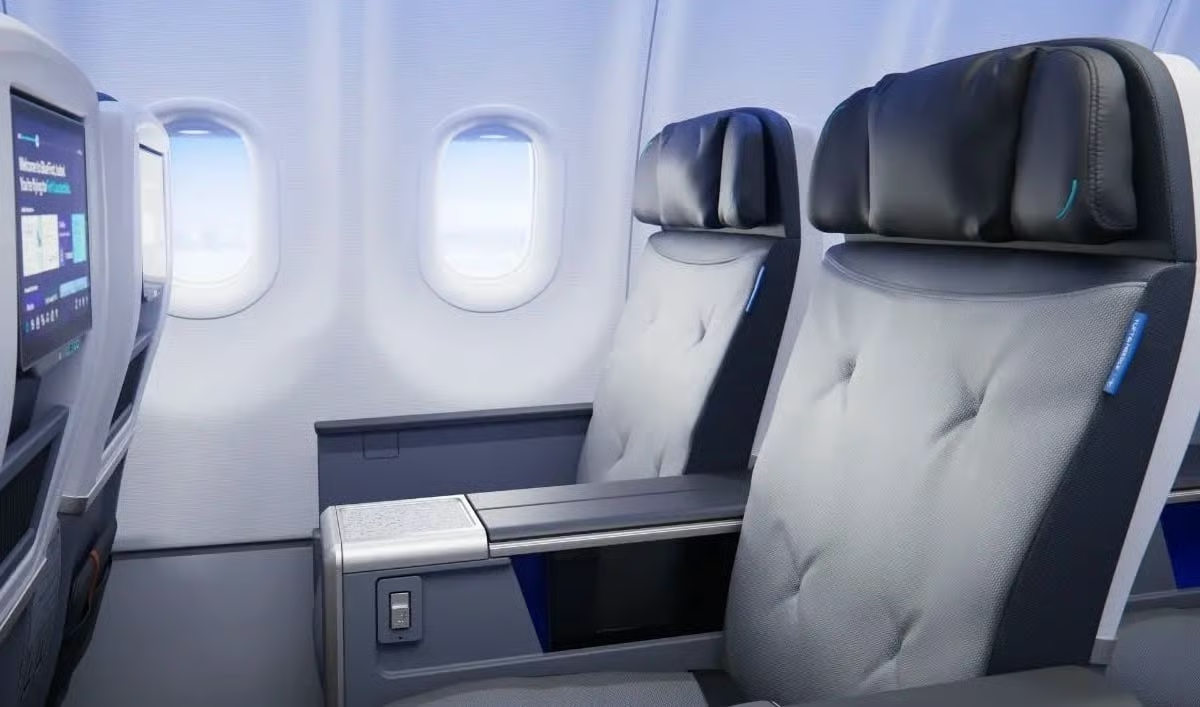
The New York-based airline unveiled its long-awaited domestic first class cabin this week, which it’s calling “BlueFirst” … because everything at JetBlue must have the word “Blue” in it, apparently. Serious marketing miss not to call it “Junior Mint” – a nod to both the airline’s business class cabin and also the minty chocolate candy.
Anyway, here’s what to expect:
- Standard first class recliners at the front of the cabin arranged in a 2-2 configuration
- The airline’s Airbus A220s and A320s will have three rows of first class
- While its A321s – the ones without Mint cabins – will have four rows
- Each seat will have an extra seven inches of legroom and five inches of recline, with special Tuft & Needle foam padding for extra comfort
- There’s a 13.3-inch screen with Bluetooth connectivity for headphones as well as USB-A and USB-C charging – plus a standard power socket
- Wi-Fi – as it always has been on JetBlue – remains free
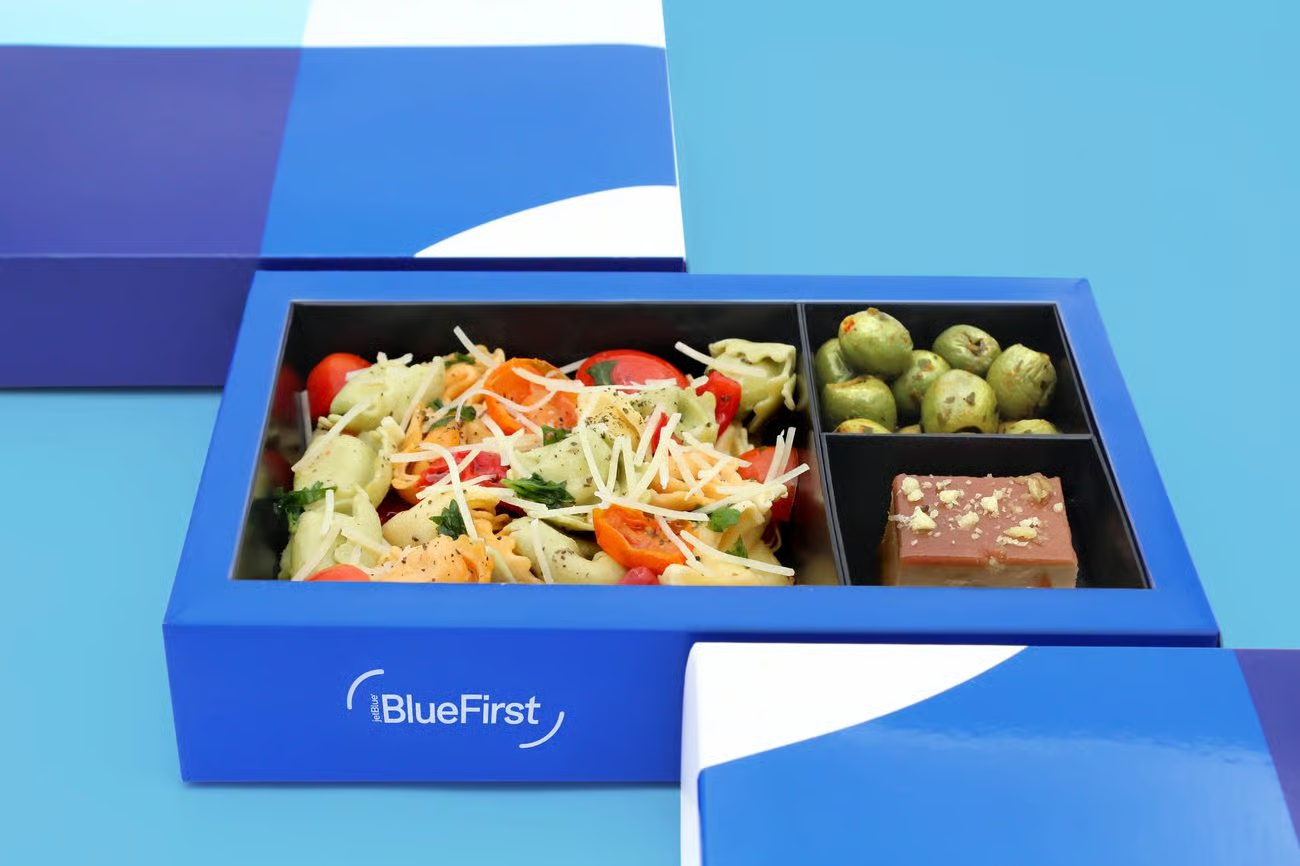
- These JetBlue planes won’t have ovens (really), so on flights 899 miles or longer, the airline will serve cold “bento-inspired FirstFare boxes” with an entree, side, and dessert.
BlueFirst seating is expected to debut sometime later this year as the airline retrofits its existing fleet over the next year and change.
JetBlue calls it “a fresh take” on first class. I’d call it “just another first class seat.”
And that’s fine. I’d just expect more from an airline like JetBlue, which has been a disruptor since it first took flight 26 years ago.
But the entire airline industry has something close to a mandate with this stuff. “Premium, premium, premium” is basically all they talk about. It’s where the money is in travel nowadays, and they’re all chasing it … at the expense of economy flyers.
🎙️ Check out our podcast diving deep into the “premium” travel boom!
Case in point: In order to install these first class cabins, JetBlue is shrinking the rest of the seats to make room. Goodbye, industry-leading legroom. Hello, 30 inches of pitch.
– Kyle Potter, executive editor
🎙️ Starter Kit, Vol. 2: The Keys to Earning Points & Miles

⭐ If you want to get into redeeming points and miles, you need to earn them first. So in the second installment of our Starter Kit series, Gunnar and Kyle break down the best strategies for earning tons of travel rewards.
Watch it now on YouTube, Apple Podcasts, Spotify, or wherever you get your podcasts. And stay tuned for another installment next week!
💳 The Venture X Is Still Criminally Underrated
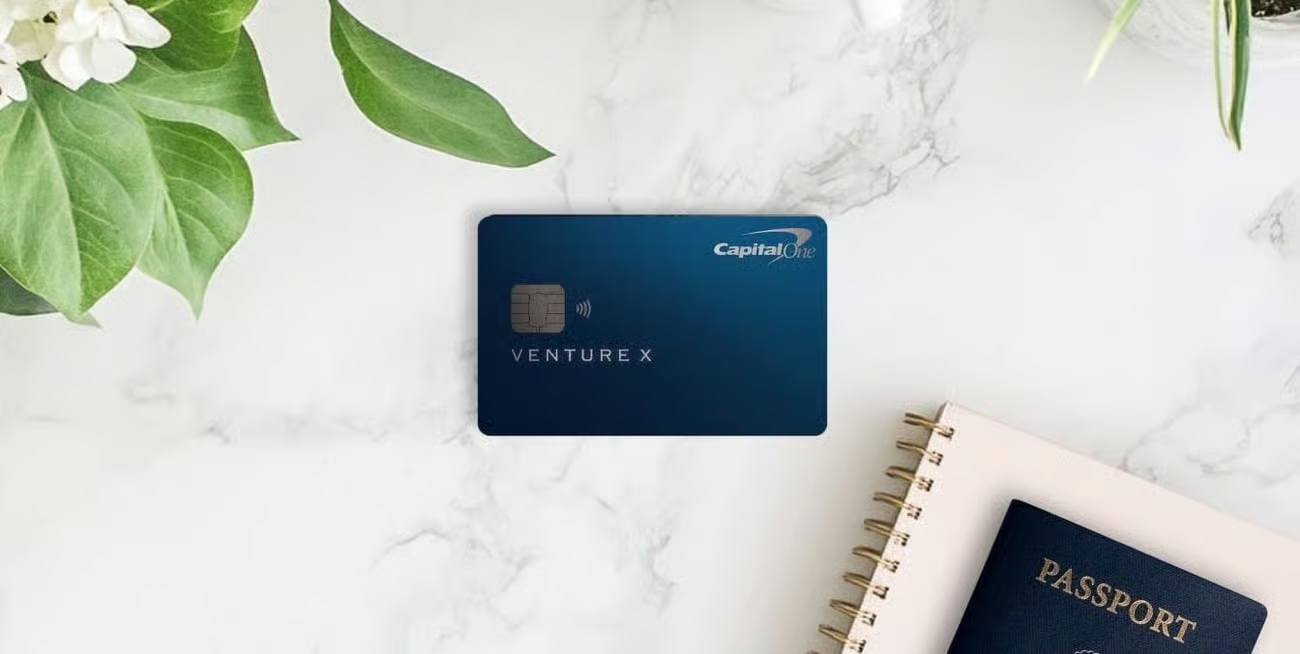
While Amex, Chase, and Citi spent the last year and change piling coupon-book credits onto their premium cards and jacking up annual fees, Capital One made a different bet with its flagship card: leave the annual fee well below its primary competitors and keep the card simple.
The *capital one venture x* still costs $395 … the same number it launched with back in 2021.
That gap was the whole point from the start. When the card launched in 2021, Capital One’s Lauren Liss explained the thinking behind it in an interview with Thrifty Traveler:
“There is a gap in the market as travelers are looking for the right travel card. They don’t want to pay $600 for a card that has travel benefits. And they don’t want to have to take the time to continue to track a laundry list of benefits that they have to remember to register for.”
The dollar figures on competing cards have only gone up since then, but that idea hasn’t aged a day. In a world where premium cards keep getting more complicated, Capital One is still winning by keeping things simple.
We get how real that “laundry list” problem is. It’s a big reason we built our own Credit Card Benefit Tracker.
Between monthly, quarterly, semi-annual, and annual credits, keeping tabs on every card in your wallet had started to feel like a full-time job. And Capital One’s restraint to increase the annual fee on the Venture X stands out more than ever right now.
The latest Amex Platinum refresh, which added a ton of new benefits and hiked the annual fee up to $895 (see rates & fees), has many cardholders (myself included) feeling like they’ve joined a membership club instead of holding a card that earns and redeems points for travel.
Chase also leaned into lifestyle credits with its Sapphire Reserve overhaul last summer, and Citi also jumped into the fight with its new Citi Strata Elite card, which launched with a $595 annaul fee.
Against that backdrop, the Venture X’s straightforward approach looks less like a card that got left behind and more like the last one still built for actual travelers.
And the Venture X’s everyday value hasn’t gone anywhere, either. It still earns a flat 2x miles per dollar spent on every purchase. There are no categories to track or rotating bonuses to remember, which makes it a go-to for spending that wouldn’t earn a bonus anywhere else.
Pair that with Capital One’s excellent list of transfer partners, and it remains one of the easiest premium cards to justify carrying.
Read our full review of the Capital One Venture X
– Nick Serati, Thrifty Traveler co-founder
✈️ Other Travel Tidbits
- 🛍️ United Airlines is testing a new mobile app feature for travelers in Terminal C at Newark: The ability to order food, drinks, and other essentials and have them waiting at the gate. (United)
- 🔵 One-week warning: Flying Blue’s new three-tier award chart rolls out next week with higher prices and fewer benefits – book now to save!
- 🇨🇦 Air Canada teased five new routes set to be revealed on Thursday, Sept. 3. The best part? If you can guess the destinations, you could win a trip for two anywhere Air Canada flies. (Air Canada)
- 💳 Rumor has it, the Chase Sapphire Reserve Card is getting a new $15/month DoorDash credit that can be used for restaurant and non-restaurant purchases – a big improvement over the current setup. (Doctor of Credit)