
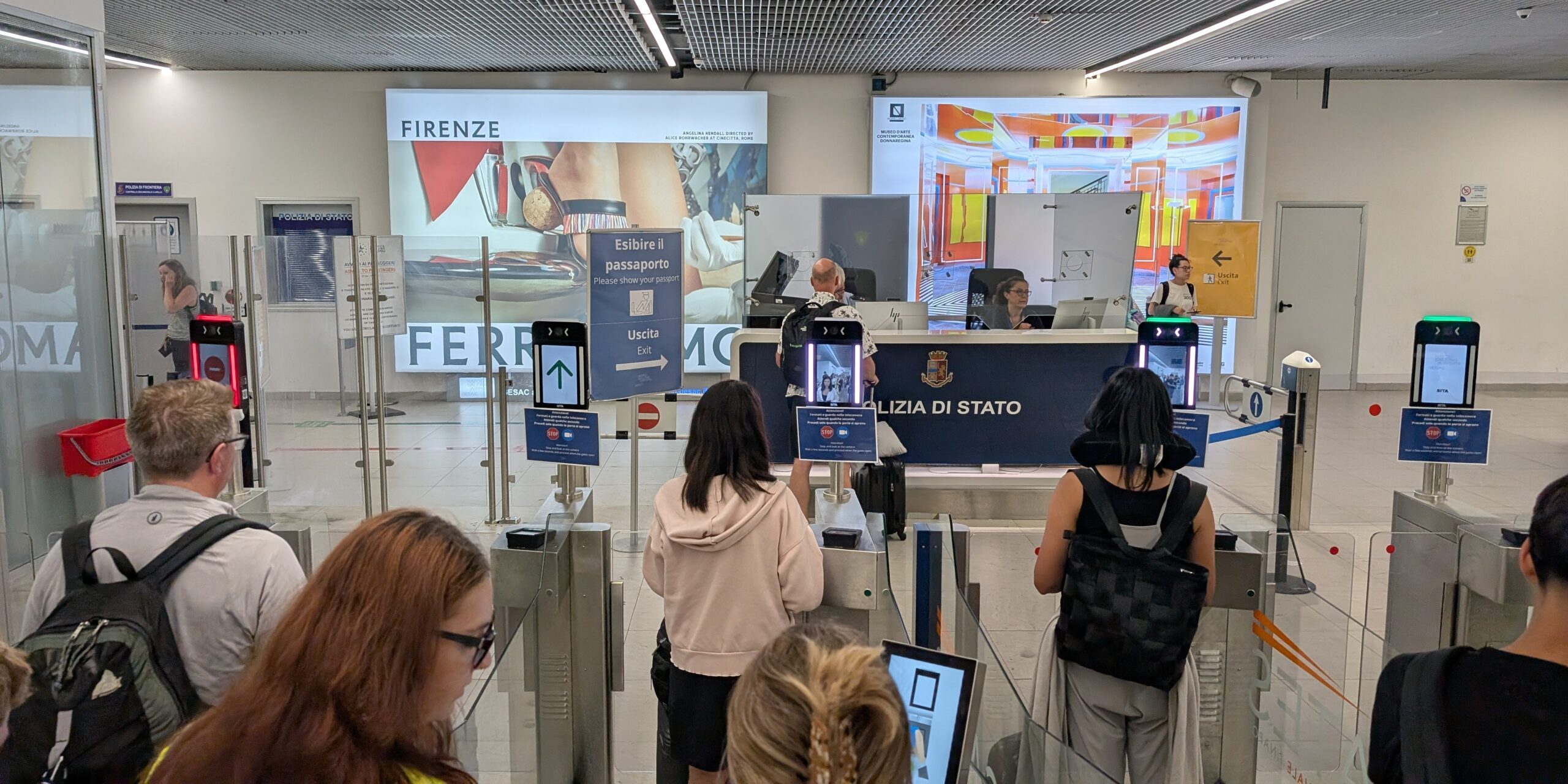



Last month, the European Union fully rolled out its new Entry/Exit System (EES) for non-EU nationals visiting Europe for short stays of up to 90 days within any 180-day period. Gone are the days of getting your passport stamped, replaced instead by a new automated digital system.
In theory, the system should make border checks more modern, secure … and eventually, more efficient. In practice, the rollout has been anything but smooth.
After a gradual introduction, EES is now fully in effect (as of April 10, 2026), but it is not working as seamlessly as officials had hoped. Some passengers have reported lengthy immigration lines, missed connections, and confusion at airports as both travelers and border officers adjust to the new process.
With peak summer travel season nearly upon us, here’s what travelers should know about EES, why it’s causing delays at some airports, and how to prepare before heading to Europe.
What is EES?
EES is the European Union’s new digital border-control system for most non-EU travelers entering or leaving the Schengen Area for short stays. That includes U.S. passport holders, travelers from the United Kingdom, Canadians, and other non-EU nationals who previously had their passports manually stamped when entering or exiting Europe.
Under the new system, travelers must have their passport details and biometric information registered in the EES database. Depending on the traveler and the border crossing, that may include a facial image and fingerprints.

The system applies at external Schengen borders, meaning the first airport, seaport, land border, or rail terminal where a traveler enters or leaves the Schengen Area.
For example, if you fly from New York to Amsterdam and connect onward to Rome, you clear immigration in Amsterdam. If you fly from Chicago to Paris and then connect to Milan, you clear immigration in Paris. That distinction matters because the EES check happens where you first enter the Schengen Area, not necessarily your final destination.
Here’s the full list of countries where you’ll find EES currently in use:
- Austria
- Belgium
- Bulgaria
- Croatia
- Czechia
- Denmark
- Estonia
- Finland
- France
- Germany
- Greece
- Hungary
- Iceland
- Italy
- Latvia
- Liechtenstein
- Lithuania
- Luxembourg
- Malta
- Netherlands
- Norway
- Poland
- Portugal
- Romania
- Slovakia
- Slovenia
- Spain
- Sweden
- Switzerland
Despite being EU member states, passports will still be stamped manually in Cyprus and Ireland … at least for now.
Why EES is Causing Long Immigration Lines
The biggest problem travelers are encountering is the first-time enrollment process. For travelers who are not already in the EES database (most everyone … for now), border authorities must collect and verify biometric data before they can proceed. That is a much more involved process than a border officer simply checking a passport, asking a few questions, and stamping a page.
Thrifty Tip: Sweden and Portugal are the only two countries that allow you to submit any of this information in advance using the Travel to Europe mobile app.
Combined with biometric records expiring after several years and thousands of first-time visitors arriving in Europe every day, the bottleneck is unlikely to disappear anytime soon – especially as border officers process families, large tour groups, and travelers who may need additional assistance.
If you are traveling through an airport already known for long immigration lines, the best advice is simple: Arrive earlier or plan a longer layover than you normally would.
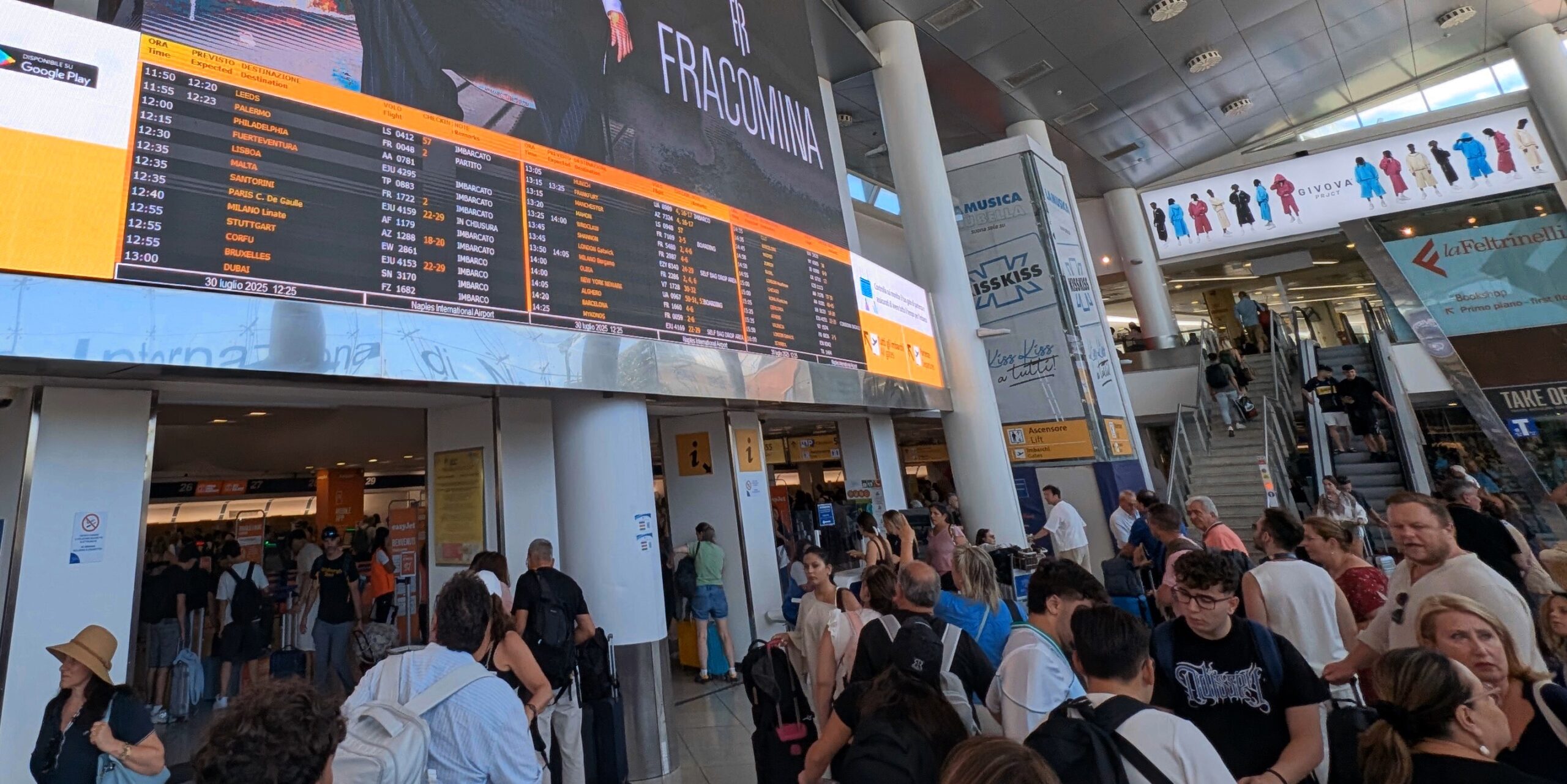
Missed flights or connections caused by long immigration delays are generally not considered the airline’s responsibility. While airlines may still rebook passengers, travelers are not always protected by travel insurance, credit card protections, or passenger-rights laws such as EU261.
The good news? If you are traveling on a single ticket and miss a connection, you should be safe. Head directly to the airline’s transfer desk or customer-service counter and ask to be rebooked to your final destination. If you are stranded overnight, it’s even worth inquiring about meal vouchers, hotel accommodations, and getting written documentation explaining the delay for a potential travel insurance claim.
Travelers on separate tickets may have far fewer protections. The second airline likely isn’t required to rebook you for free … even if the immigration delay was entirely outside your control. If you find yourself stuck in a long EES immigration line and risk missing a flight, it’s worth politely asking an airport employee whether assistance is available. Some travelers have reported being escorted to the front of the line in urgent situations like this.
How Travelers Can (& Should) Prepare
The best way to avoid EES-related disruptions is to plan for immigration to take longer than expected, at least while airports and travelers continue adjusting to the system.
For flights departing Europe to the U.S. or another non-Schengen destination, consider arriving at least three hours early – and even earlier at airports already warning of longer wait times.
Some airports – Porto (OPO), Lisbon (LIS), Athens (ATH), and others – have reportedly seen immigration waits stretch to several hours. Major international hubs such as Paris (CDG), Amsterdam (AMS), Frankfurt (FRA), and Rome (FCO) are also prime suspects for longer wait times during the peak summer travel season – especially on flights with large numbers of non-EU passengers, like those to and from the U.S.
For trips connecting into the Schengen Area, avoid tight layovers whenever possible. A one-hour connection that seemed reasonable last year may now carry much more risk if you need to clear immigration and complete EES enrollment before continuing.
For separate-ticket itineraries, build in a much larger buffer or consider an overnight stop. EES delays are exactly the kind of disruption that can turn a cheap self-transfer into an expensive missed flight.
When you reach immigration, have your passport ready and remove any passport covers before approaching the checkpoint to help speed up processing.
Bottom Line
EES is intended to make Europe’s border checks more efficient … but for now, the system is creating a new bottleneck at airports across the continent.
For travelers, the takeaway is straightforward: Build in more time, avoid tight Schengen connections, be especially cautious with separate tickets, and do not assume EU261 protections or travel insurance will automatically cover a missed flight caused by long immigration lines.
Until EES is running more smoothly, a longer layover may be the best insurance policy you can buy.



My wife and I arrived in FRA a couple of days ago and had our fingerprints scanned and before our passports were stamped and our digital picture taken it took an unusually long time for the system to pass us through.
Does that mean we’re now good for future visits? Is there a way to find out?
Moving forward, you should be able to skip right to the e-gates for verification; however, there is still a chance that your fingerprint scans in the future might not be recognized, and you will have to submit your data again. Data is usually held for 3 years from your last visit; after that, you will need to start the process over again.
We are traveling June 15, SAN=>SEA=>LHR=>PRG (Delta/BA). I suspect we should have no problems after arriving at PRG? We have a position flight heading to SEA with a 3:30 layover in LHR on a single ticket.
Over two weeks, we fly from (every 3 nights):
PRG=>BRU
BRU=>ARN
ARN=>MUC
MUC=>LHR=>PHX=>SAN
Although, my daughter will head home:
BRU=>LHR (stay overnight on a position flight)
LRH=>SEA (Virgin Atlantic)
You see any problems here?
Should my daughter get early to BRU when flying to LHR?
Should we arrive early at MUC when heading back to SAN?