



American Express Membership Rewards have been a must-have currency for travelers … for decades. Thanks to a robust list of transfer partners and rewarding cards like the *amex gold* and the *amex platinum*, I’ve earned and redeemed more Amex points over the years than any other transferable currency.
But again and again, I’m increasingly finding them harder (and more costly) to use when I turn to actually redeem them. In just the last year, Amex has:
- cut transfer ratios to a couple of airline partners – meaning you need to send even more hard-earned Amex points to get the miles you need
- dropped another altogether – with one more on the way out the door
- Eliminated the once-reliable transfer bonuses to start off the year … while the two transfer bonuses that cropped up in May were much weaker (or shorter lived) than we’re used to.
Add it all up, and travelers with Amex points can clearly no longer bank on the same value they’ve gotten for years. And Amex isn’t alone here – we raised similar questions about Chase recently. What’s going on here?
While I’m not ready to write Amex points off completely, I’m starting to have some doubts. Here’s why I’m worried.
Reduced Transfer Ratios
In the world of transferable points, 1:1 transfer ratios are the gold standard. If you’ve got Chase Ultimate Rewards, the conversion is simple: Every single one of them can be converted to airline miles or hotel points on a clean 1:1 basis. That means you can turn 1,000 Chase points into 1,000 United miles, Hyatt points, or Flying Blue miles – simple.
But with Amex, you might need to do some math first. And there’s more math than ever to be done.
While Membership Rewards used to transfer to most programs at the same 1:1 ratio, Amex reduced the transfer ratio to a pair of international airline partners in the past year. When moving points to both Emirates Skywards miles and Cathay Pacific Asia Miles, you’ll now get a sub-par 5:4 conversion.
If you’re not the math type, that means transferring 1,000 Amex points to either of those airlines would net you 800 miles. This means if you’ve got a stash of Amex points and dreams to fly Emirates vaunted first class (or even business class) or Cathay Pacific business class, it’s going to cost you more than it did just a year ago.
Add JetBlue to the list of sub-1:1 conversions (though that isn’t exactly new) and the takeaway is clear: Your Amex points don’t go as far as they used to.

In fairness, Amex isn’t alone in cutting back on transfers to Emirates. Capital One and Citi did the same thing last year, while Chase dropped the Dubai-based airline altogether – likely to avoid the confusion of different transfer ratios among its own list of partners.
Maybe a little grace is in order here: Emirates clearly went to all of its bank partners and tried to play hardball. The upstart Bilt Rewards remains Emirates’ only 1:1 transfer partner to this day.
But the same can’t be said for Cathay Pacific. Other transferable points from the likes of Citi, Capital One, and Bilt all transfer to Cathay Pacific at a 1:1 ratio. Heck, newcomer Rove and Wells Fargo just recently added Asia Miles at the same even conversion level. For now, Amex is an unexpected outlier.
So what’s driving this change? We don’t know for sure, but the most likely answer is that Amex is pinching pennies. For years, foreign airlines have wanted a slice of the lucrative loyalty program pie we have here in the U.S. The credit card industry is heavily regulated in many of the countries in which these airlines are based, making it much harder for them to fully monetize their programs without a little help from U.S. banks.
But as points and miles have gone mainstream, more travelers than ever are taking advantage of foreign airline programs to get outsized value from their points. What was once a niche hobby, confined to the dark shadows of the internet, is now plastered all over social media … and admittedly, sites like ours. It’s not unthinkable that the Emirates and Cathay Pacifics of the world have seen enough and decided that they no longer want to sell points to Amex at rock-bottom rates.
A Declining List of Transfer Partners
Last year, Amex cut ties with Hawaiian Airlines … though that news hardly came as a shock.
When the DOT cleared the way for Alaska to acquire Hawaiian Airlines back in 2024, we saw this development coming from a mile away. The Seattle-based airline has long partnered with Bank of America for its co-branded credit card lineup – and aside from Bilt, no other transferable currency had been able to wedge its way into the valuable Alaska Mileage Plan (now Atmos Rewards) ecosystem.
This created a short-lived window to transfer points to Hawaiian and then move them over to Alaska. It was a sneaky workaround while it worked – one I took full advantage of – but nonetheless, Amex lost an airline partner, and that’s bad news for travelers.

What we didn’t see coming was the news that Amex will soon drop Etihad Airways from its lineup of transfer partners: effective June 1, 2026. Considering you can still transfer points to Etihad from Capital One, Citi, Bilt, and Rove, Amex is once again alone here.
Is Etihad the most valuable program in Amex’s slew of partners? No. But it still adds to the undeniable trend that these points aren’t as valuable as they once were.
Fewer (& Less Lucrative) Transfer Bonuses
American Express transfer bonuses used to be one of the biggest reasons travelers loved Membership Rewards points.
Every month or so, Amex regularly offered 20% to 40% bonuses – and sometimes even more — when transferring points to airline and hotel partners, making already-cheap award flights even cheaper. But after years of frequent promotions, those bonuses slowed to a crawl in early 2026, raising concerns that Amex may be deliberately pulling back on one of the program’s most valuable perks.
The drought stood out even more because competing banks continued rolling out regular transfer offers while Amex stayed mostly silent. And when Amex did start offering bonuses again, they weren’t nearly as compelling as many of the airline-focused deals travelers had grown accustomed to. Instead, Amex launched a 20% transfer bonus to Hilton Honors and briefly offered a modest 10% bonus to JetBlue – neither of which delivered the kind of outsized value that made prior Amex bonuses so exciting.
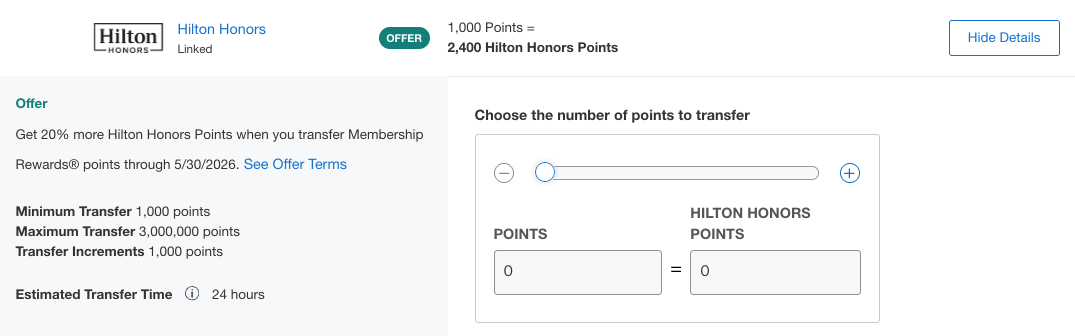
That doesn’t mean transfer bonuses are completely dead. Amex is still offering them selectively, but the trend suggests a shift away from the lucrative, frequent promotions that once helped Membership Rewards stand apart from rival transferable points currencies. The change also follows Amex experimenting with targeted transfer bonuses in late 2025, where only some cardholders were eligible for certain offers.
Taken alongside Amex’s recent transfer ratio cuts and shrinking list of transfer partners, the slowdown in valuable transfer bonuses is another sign that Membership Rewards points may not stretch as far as they once did. Travelers can still find value with Amex points, but the days of reliably squeezing massive extra value out of transfers appear to be fading.
Other Pitfalls of Amex Membership Rewards
As shocking as it may sound, Delta SkyMiles has been the rare bright spot in Amex’s stable of transfer partners. Many travelers are quick to write SkyMiles off as worthless – or even use a derogatory term to describe them – but not me.
Amid all of Amex’s recent changes, I’ve leaned more heavily on transfers to Delta than any other partner over the past few months, thanks to the frequent flow of SkyMiles flash sales. I’m talking roundtrip economy class flights to Europe for 22,000 SkyMiles and one-way business class redemptions as far as Hong Kong (HKG) for as few as 85,000 miles.
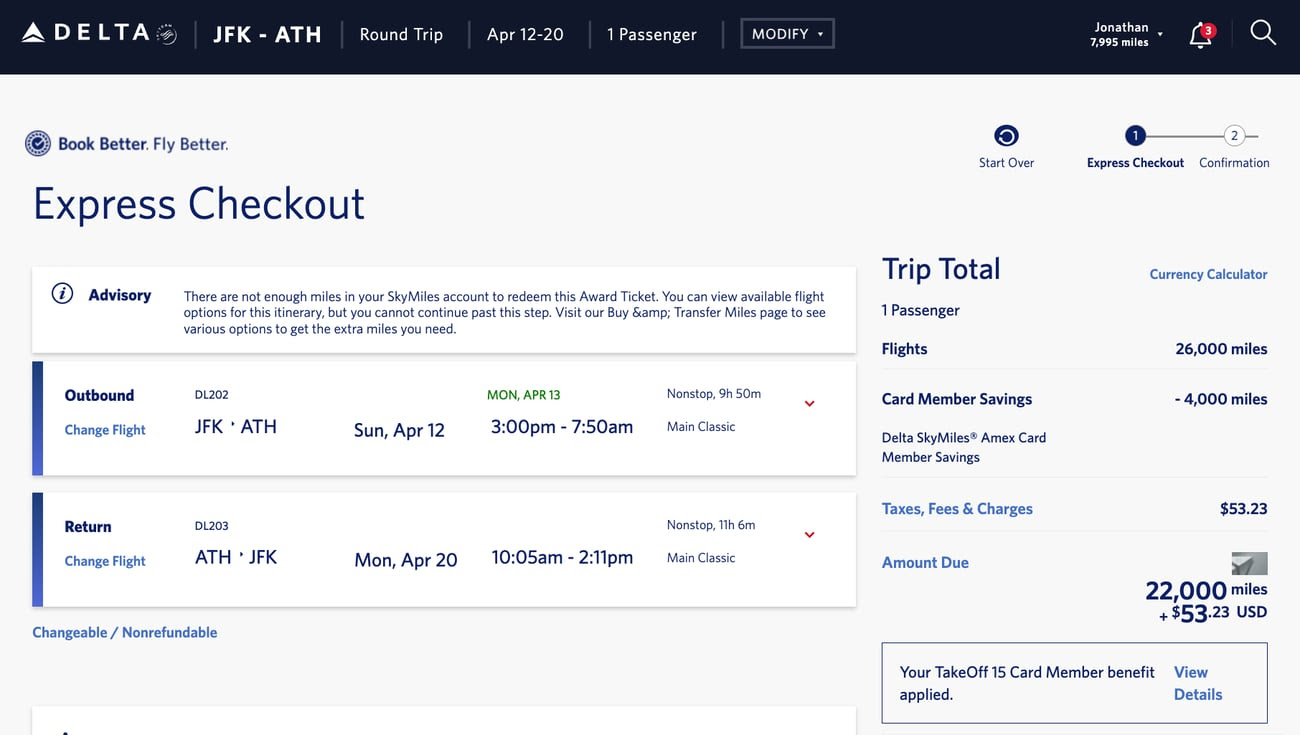
The downside? Amex is the only bank to pass on a pesky excise tax when transferring points to its domestic airline partners. Sure, it’s a relatively small fee of .06-cent-per-point (capped at no more than $99), but when Delta is suddenly your best partner, it starts to add up.
Finally, Amex’s list of hotel partners is lackluster. There, I said it.
Yes, you can transfer points to Hilton at an impressive 2:1 ratio, but Hilton has devalued its program time and time again over the past year or so, raising standard award rates as high as 250,000 points per night in the process. Even with that increased transfer ratio and a big transfer bonus, you’ll need to transfer 100,000 Amex points to book a single night at the best Hilton properties.
Aside from Hilton, you can transfer Amex points to Choice and Marriott at a 1:1 ratio. Given the relative lack of value with those programs, neither one is much to get excited about. Compare that to Wells Fargo, which offers 1:2 transfers to Choice or Chase which offers 1:1 transfers to Hyatt – a far more valuable hotel program, even still – and it’s hard to get excited about what Amex has to offer travelers looking to cash in for “free” night stay.
Bottom Line
At the end of the day, Amex Membership Rewards points still have plenty of value. Yet I can’t help but feel they’re undeniably less rewarding than they once were.
Between reduced transfer ratios, a shrinking list of airline partners, and fewer worthwhile transfer bonuses, travelers now have to work harder to maximize the value of their points. Amex isn’t alone in making cuts, but the recent changes suggest Membership Rewards may be losing the edge that once set them apart among transferable points programs.



Hi! So, how do you get the biggest bang for your Amex points?
Using transfer partners is still your best bet! To be perfectly clear, Amex points are far from worthless. They’ve just gotten worth less in the past year or so with all these changes.