


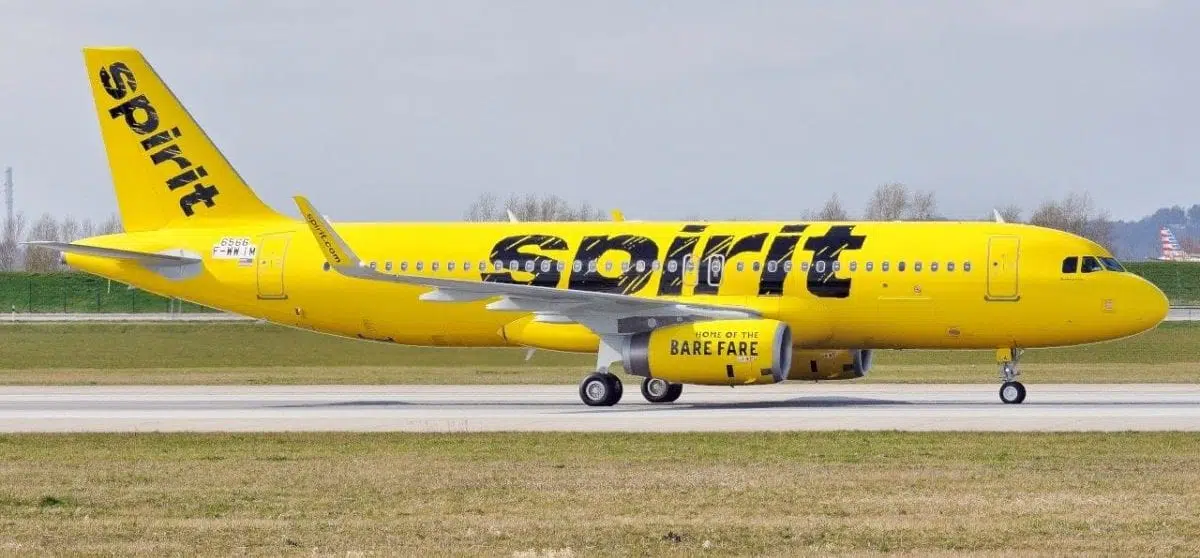
Spirit Airlines could again be on the brink of collapse, according to multiple media reports. But no matter how you feel about the country’s most divisive low-cost carrier, no traveler should cheer its demise.
Both Bloomberg and CNBC reported late Thursday that the beleaguered budget carrier could liquidate “as early as this week” after skyrocketing fuel costs have put it in dire straits. Both outlets cited unnamed sources “familiar with the matter” who weren’t authorized to discuss the situation publicly.
Spirit has responded with a simple statement: “We don’t comment on market rumors and speculation.”
That’s not a denial.

Spirit has clearly been in trouble for a while now. It’s in its second round of bankruptcy proceedings in less than two years, struggling for survival by slashing routes while transforming its business model on the fly: Selling first class seats and nixing a la carte fees in favor of fare bundles.
And this isn’t the first time Spirit has been the subject of rumors about an imminent collapse. Back in December, several U.S. airlines were preparing for Spirit to go under, only for the airline to get a financial lifeline to keep the lights on and planes in the air. Soon after, rumors began to swirl that Frontier would swoop in and acquire Spirit.
But this time might be different for one reason: fuel prices.
The cost of jet fuel has doubled since the start of the war in Iran in late February. In response, major U.S. airlines have raised fees and charged significantly higher fares. But for ultra-low-cost carriers like Spirit and Frontier, there’s only so high they can go before their budget-conscious customers balk and stay home instead.
An abrupt closure would be a sad conclusion for an airline with a storied (though often unpopular) past: a pioneering budget airline that was both the butt of late night comedians’ constant punch lines … and yet almost single-handedly responsible for the cheap fares that virtually all U.S. travelers love.
Whether it happens this week, next month, next year, or not at all, its failure would have major ramifications for American travelers. Regardless of whether you’re a diehard Spirit fan or you’ve sworn you’ll never set foot on one of its bright yellow jets, you’ve benefited from its cheap fares.
Read more: Why You Can’t Afford to Root for Spirit & Frontier to Die
We’ve seen that firsthand as Spirit has cut routes across the country. Among the victims was our home turf here in Minneapolis-St. Paul (MSP) last December, as Spirit left the market and stopped flying nonstop to both Detroit (DTW) and Atlanta (ATL) – a pair of Delta strongholds.
Within days of Spirit’s exit, Delta fares on both routes jumped by 50% or more.
Alongside the likes of Frontier and smaller upstarts, Spirit brought the ultra-low cost airline model to the U.S., with dirt-cheap base fares paired with higher fees for everything from bags to seat selection to water onboard – to the U.S. And it was a roaring success for more than a decade leading into the pandemic, forcing even major airlines like American, Delta, and United to slash prices and create unbundled basic economy fares in order to compete for passengers.
But in the wake of the pandemic, the hits just kept coming.
Ultra-low-cost carriers need ultra-low costs, and that’s much harder to pull off with higher fuel prices and richer pilot contracts coming out of the pandemic. Bigger, full-service airlines have figured out how to use their own, stingier basic economy fares to poach passengers who previously flew Spirit. While those major carriers have turned their frequent flyer programs and credit card relationships into an economic engine that dwarfs the revenue they make from selling tickets, smaller budget airlines don’t have that same luxury.
And perhaps most importantly: Americans increasingly want to fly abroad … in an extra legroom or even business class seat. That’s just not in Spirit’s DNA, so it missed out completely on the boom in all things premium travel.
Spirit first filed for bankruptcy in late 2024, only to emerge from those reorganization proceedings and refile for a second attempt again last fall. While the airline has reworked its entire business model with first class seating and new fare bundles, Spirit has also drastically slashed and reworked employee contracts in a desperate bid to stop the bleeding.
All the while, it’s been the subject of countless merger attempts and rumors, including takeover attempts from both Frontier and JetBlue. JetBlue’s bid was blocked by former President Joe Biden‘s Department of Justice last year.
While it fell out of favor in the post-pandemic travel boom, Spirit’s low-fare, high-fee model put the major U.S. carriers on their heels, forcing them to lower fares to compete on price or lose customers. Without Spirit’s competitive prices, flights on all those major airlines just get more expensive.
What You Can Do if Spirit Goes Under
A sudden failure would likely leave thousands of Spirit customers stuck at home or stranded as Americans gear up for the busy summer travel season. Travelers with Spirit flights on the books may not have many options.
- Refunds for canceled flights are unlikely if the airline does go out of business – at least not anytime soon. Your best recourse would be to file a credit card chargeback to get that money back from your bank instead.
- It varies from company to company, but most travel insurance policies – whether you book with a good travel credit card or buy a standalone policy – will not cover extra costs if you’re left stranded.
- The Chase Sapphire Preferred Card, for example, specifically excludes “Default of the Common Carrier resulting from Financial Insolvency” from covering unforeseen costs.
- Any unused Free Spirit miles would likely be wiped out and worthless if Spirit goes under.