



Happy Tuesday, Extra Mile readers! In today’s edition: The FTC just hauled Delta, United, and JetBlue in over personalized pricing, and we’ve got some thoughts. Also today: Capital One adds Copa, and Chase may be tightening the rules on business card applications.
- 🧐 The FTC is Investigating Airlines … But What Will They Find?
- 🤝 Deal of the Day: Finally a Fare Drop to Atlanta, GA!
- ↔️ Capital One Adds Copa ConnectMiles as New Airline Partner
- 🚫 Chase Tightens the Rules on Business Cards
- 🎙️ On the Pod: Basic Fares Are Getting Worse + Other News
- 📈 Shocked by High Airfare? Here’s How We’re Booking Now
- ✈️ Other Travel Tidbits
🧐 The FTC is Investigating Airlines … But What Will They Find?
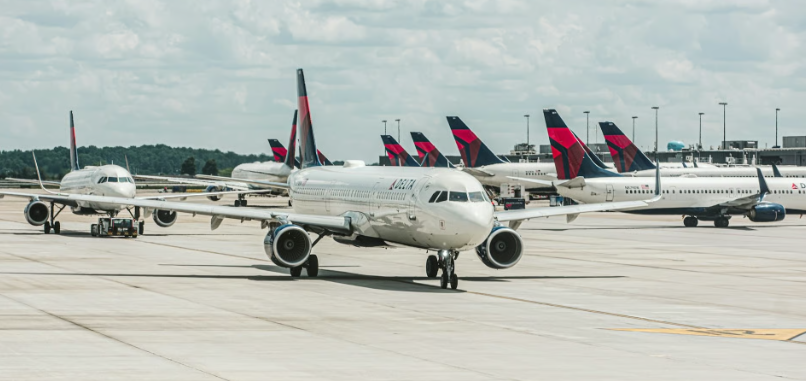
Seemingly out of nowhere last week, the Federal Trade Commission launched an investigation into a trio of U.S. airlines (plus a handful of other companies, including Uber, DoorDash, and Walmart) for their pricing practices.
Officially, the FTC is digging into the “opaque methodology that some companies in these industries may be using” and whether these companies use consumers’ “web surfing habits or other personal data to estimate the highest price they can charge each consumer.” The companies have another 40-ish days to provide regulators a whole raft of information on how they set prices.
Unofficially: They want to determine whether airlines, rideshare companies, and retailers are personalizing your prices.
As a reporter who has spent much of the last decade diving into the ugly weeds of airfare pricing, algorithms, and dirty tricks: Welcome to the team, FTC! Happy to have you here.
OK, so it’s not like the FTC is reading this here newsletter… but if you are, adjust your expectations.
I’m no expert on Walmart or Uber – though we have caught Uber up to some shady business setting fares – but I think I have a pretty good pulse on what the airlines are up to. Here’s how I see the lay of the land.
Airlines aren’t personalizing fares (yet). Delta, JetBlue, and United – the three U.S. carriers the FTC called to the mat – all said as much, denying they use even a shred of personal data to determine fares.
“There is no fare product Delta has ever used, is testing or plans to use that targets customers with individualized offers based on personal data,” Delta told CBS News.
Maybe you think they’re lying or you’re sure an airline has jacked up the price of the flight you were watching. To which I’d say: That’s not how airfare really works … and straight-up lying to federal regulators would be a colossal mistake that airlines, for as big and dumb of machines they can be at times, are far too smart to make.
The reality is that, as frustrating as the constant changes are, it’s all set and sold by a woefully antiquated system that cannot use information about individual travelers to manipulate prices on the fly. It’s an alphabet soup of fare classes, each with its own inventory, rules, and – most importantly – price.
It’s not that Delta or United saw you search for that $250 fare and then raised the price to $320 when you came back to purchase. It’s that there were only two V fares available at $250 – and when you waited an hour, someone else bought them. Now you’re left with those pricier $320 T-class fares.
But that’s how it works today. Tomorrow? Who knows what technology can do.
As Delta outlined its use of AI to set fares last year, its then-president envisioned a troubling future: “We will have a price that’s available on that flight, on that time to you, the individual,” Glen Hauenstein told investors. Oh, and the very AI firm that Delta entrusted to set prices bragged about using “customer lifetime value,” and “past purchase behaviors,” and “finding the optimal price for each customer.”
… until Delta started getting blowback for handing pricing over to the bots, at which point that firm scrubbed those remarks from its website altogether.
All of which is to say: Stay vigilant, FTC. You too, travelers.
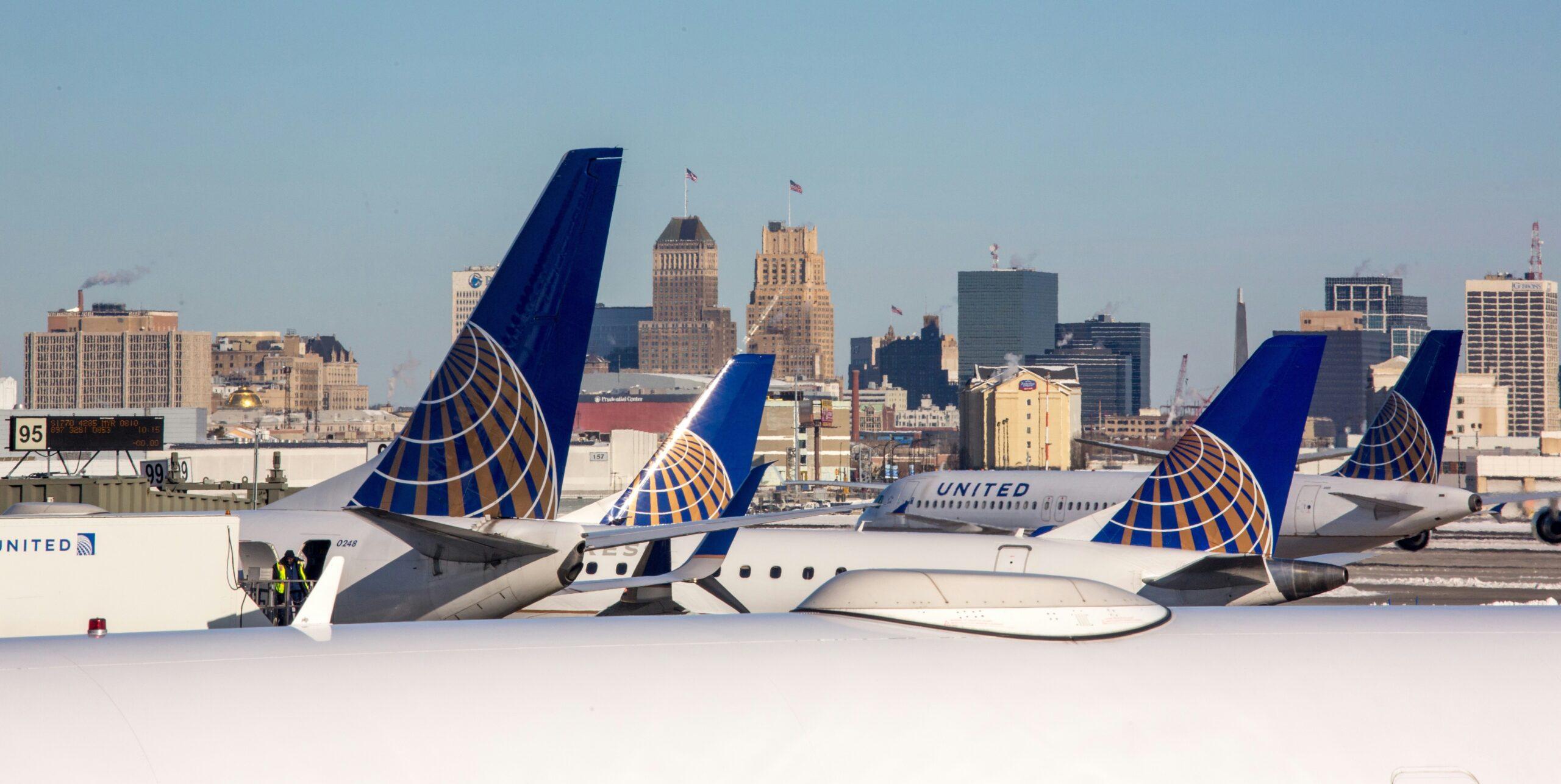
But upgrades are ripe for investigation. Airlines aren’t personalizing fares today. The prices you see to upgrade to an extra legroom or first class seat could be different.
To be clear: I can’t say for certain that it’s happening. But unlike airfare itself – which goes through a complex distribution system to make its way to Google Flights and other sites – that first class upgrade is entirely in the airline’s control.
What’s stopping the airline from charging me $150 to bump up to first on my flight to Chicago this weekend … because they know I’ve paid $120 in the past? Whereas you see the same seat for $120, maybe less.
That’s a win for you. Until, of course, your next flight, when the airline charges you more, too.
Again, that’s all hypothetical. But I really hope the FTC digs into it.
Think bigger than just “personalized fares” or “surveillance pricing.” The thought of using consumers’ search history, past purchases, or status to set prices is (understandably) a red line for many travelers.
It just feels gross and predatory. And frankly, it raises some existential questions about the future of flight deals: How can we continue finding the deals you all love if airlines have individualized pricing?
But that’s a question for another day and a different newsletter. There’s still plenty for regulators to explore in the good old-fashioned ways airlines set prices today … and hopefully get some answers.
Take, for example, our finding last week that both United Airlines (which is part of this investigation) and especially American Airlines (which, oddly, is not) are still charging solo passengers significantly higher fares than groups of two or more. There were some absurd examples, like American selling three tickets from Miami (MIA) to Charlotte (CLT) for less than the price of a solo ticket.
Are they using “personal data to estimate the highest price they can charge each consumer” as part of that pricing tactic? No. But is it some kind of “opaque methodology that some companies in these industries may be using to determine how much consumers pay”?
I’d say yes – especially since the airlines refuse to even acknowledge they’re doing it, let alone explain why.
Here’s hoping the FTC can get some answers.
– Kyle Potter, executive editor
🤝 Deal of the Day: Finally a Fare Drop to Atlanta, GA!

Heat scale (out of 3): 🔥🔥
Why we love it: Airfare to (and from) Atlanta has been incredibly high lately … which is why you need to jump on these low fares while they last!
Fly nonstop to ATL on Delta or Southwest this winter with fares ranging from $117 to $240 roundtrip from several cities!
Sign up now to get all the details on this deal & don’t miss the next flight deal alert.
Already a member? Log in to see all your deals.
– Gunnar Olson, Thrifty Traveler Premium deal analyst
↔️ Capital One Adds Copa ConnectMiles as New Airline Partner
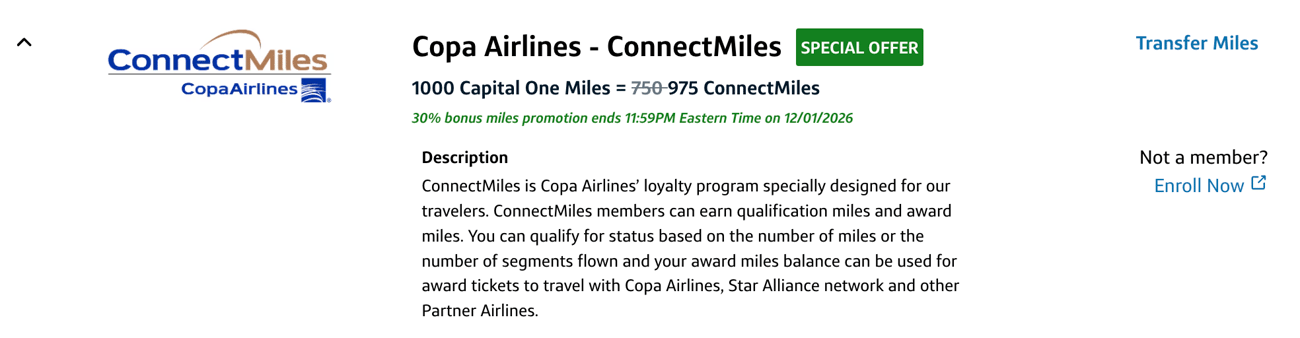
Following Rove and Citi’s lead, Capital One just added Copa ConnectMiles as its latest airline transfer partner … with a 30% bonus.
But before you get too excited: Capital One miles will ordinarily transfer to Copa on a 2:1.5 basis, so the limited-time bonus still doesn’t make it quite a 1:1 swap. Through Dec. 1 at 11:59 p.m. ET, every 1,000 Capital One miles transferred to Copa will net you 975 ConnectMiles.
Keep in mind that while Capital One transfers start at just 1,000 miles, you can fine-tune transfers to airline or hotel partners in 100-mile increments beyond that. So you won’t need to worry about stranding a bunch of miles in your Copa account.
For the uninitiated, Copa isn’t just a nice regional carrier with a hub in Panama City (PTY) – it’s a Star Alliance member that unlocks award space across United, Lufthansa, SWISS, ANA, Turkish, and more. And ConnectMiles has a few quirks that make it worth taking advantage of:
- No fuel surcharges on partner awards, including Emirates. A business class award from the U.S. to Dubai runs 80,000 ConnectMiles … if you can find availability.
- Enhanced access to United award space – way more than you’ll find with other partners like Air Canada or Avianca. Think San Francisco (SFO) to Newark (EWR) in United Polaris business for 55,000 ConnectMiles. Meanwhile, United itself might be charging 100,000-plus miles for the same seat.
- Intra-Latin America pricing is pretty sweet. Lie-flat business class within South America starts at 40,000 ConnectMiles – compared to 90,000 United miles for the same Panama City to Santiago (SCL) route on Copa.
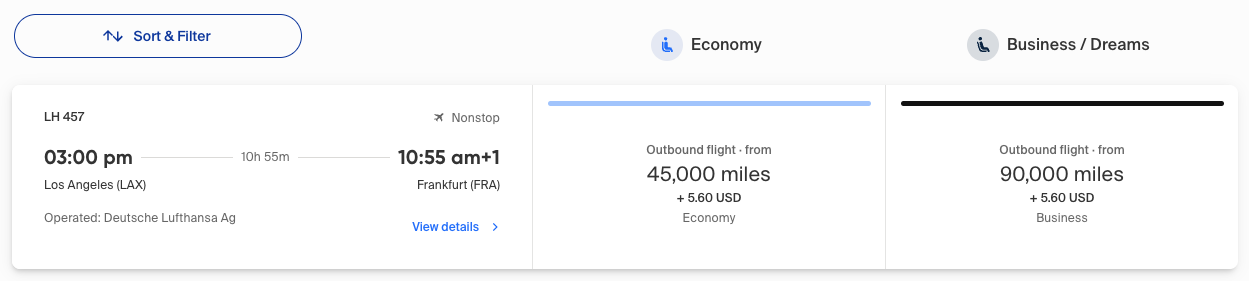
- Business class to Europe from 90,000 ConnectMiles on Star Alliance carriers like Lufthansa or Austrian, with no surcharges tacked on.
A word of warning: ConnectMiles award search can be clunky, and Copa’s site takes some getting used to. But considering the general lack of transfer options (at least historically), Capital One’s addition of Copa Airlines – even at a sub-1:1 ratio – could make it worthwhile.
If you’re sitting on a stash of Capital One miles, this new partnership is worth a good, hard look … at least while the 30% transfer bonus is still live.
You’ll find the best sweet spots on Star Alliance long-haul business class and transcontinental United Polaris routes, where Copa’s surcharge-free pricing and expanded United availability often beat booking direct.
– Jackson Newman, senior editor
🚫 Chase Tightens the Rules on Business Cards
If a Chase business card is on your wish list, you may now need a much cleaner credit history to get one.
For years, the bank’s unwritten 5/24 rule has been the line in the sand. If you’ve opened five or more personal credit cards from any bank (not just Chase) in the last 24 months, Chase will almost certainly deny you for a new card.
Since mid-September, though, applicants sitting at 3/24 and 4/24 have been getting turned down for Chase business cards, with reconsideration reps citing a stricter 3/24 threshold.
Yesterday, a Reddit applicant said a Chase underwriting specialist told them that it became official in September for all Chase business cards.
To be clear, Chase hasn’t confirmed any of this, and it’s never officially acknowledged 5/24 either. But where there’s smoke, there’s fire, and it matches what happened to me recently.
I’m at 4/24, and when I applied for a United business card a few weeks ago to take advantage of the big limited-time offer, I got an instant denial for “too many recent credit accounts.”
There are still some open questions, as many of the early denials involved people applying as sole proprietors, and some early reports suggested only Chase’s Ink lineup was affected.
My denial on an airline card suggests Chase’s co-branded business cards are in play too. That also tracks with the report from Reddit.
Until we know more, if you want a Chase business card, make sure you’re under 3/24.
– Nick Serati, Thrifty Traveler co-founder
🎙️ On the Pod: Basic Fares Are Getting Worse + Other News

📻 Kyle and Gunnar break down all the news that’s fit to podcast in this week’s episode, touching on main cabin upgrade prices, Southwest’s latest changes, plus big switch-ups at Amex and Bilt among other things.
Watch it now on YouTube, Apple Podcasts, Spotify, or wherever you get your podcasts. And stay tuned for the next installment next week!
📈 Shocked by High Airfare? Here’s How We’re Booking Now
Airfare is painful right now. It hurts out there, plain and simple. We feel you. This stinks.
But our team is still booking travel and traveling as much as ever. How, you ask? Here’s our strategy for booking flights and always getting the best deal, even as airfare soars:
📆 We’re Booking Sooner & Focusing on Flights
This year, you simply can’t count on airfare going down. In years past, we used to bank on cheap fares over the winter travel season. I wouldn’t do that this year.
If you’ve got flights to book, book them ASAP – but avoid basic economy. Pay the extra $70 to have some flexibility (you’ll see why in a second).
Also, make sure you’re centering flights in your travel planning. Follow the Flights First Rule, because airfare is likely to be the most costly part of your trip. Don’t book a cruise, hotel, or rental car and then get locked into expensive airfare.
📉 Use FareTracker to Catch Price Drops
Why did I tell you to book Main Cabin fares in the section above? Because our new, free tool called FareTracker can help you always get the right price … but only if you book Main Cabin or above.
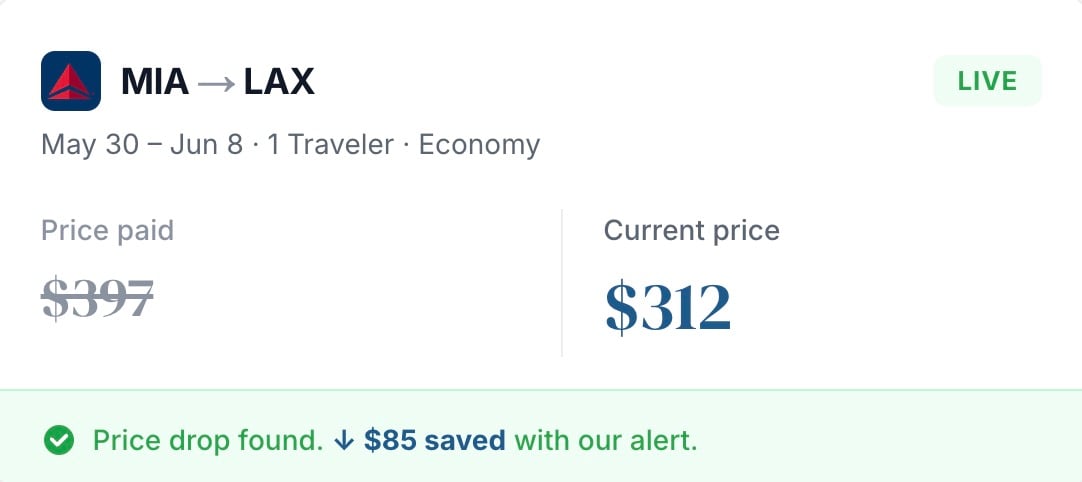
FareTracker is a free tool that lets you put your flight info into our system, including the cost, and we’ll alert you the second your flight price drops. Then we give you step-by-step rebooking instructions so you can receive an e-credit for the price difference.
At launch, it’s available for cash fares on Delta, United, American, Southwest, and Alaska.
The best travel booking strategy, in my opinion, is rebooking. That’s what separates everyday travelers from savvy ones.
⭐ Use Those Points and Miles!
Airfare is going up, but points and miles rates aren’t. In most cases, the cost to use your points and miles for a flight does not increase at the same rate as cash airfare.
That’s definitely true for U.S. airline programs like American, Delta, and United, but it’s even more staggering for foreign airline programs that have set award rates.
Take this for example: Flying from Minneapolis (MSP) to Punta Cana (PUJ) this Jan. will cost you $792 roundtrip in basic economy. To book with Delta SkyMiles on the same exact dates: 56,600 SkyMiles roundtrip. Not bad, right?
Well, look at what you’ll pay with Delta’s partner Air France/KLM Flying Blue.
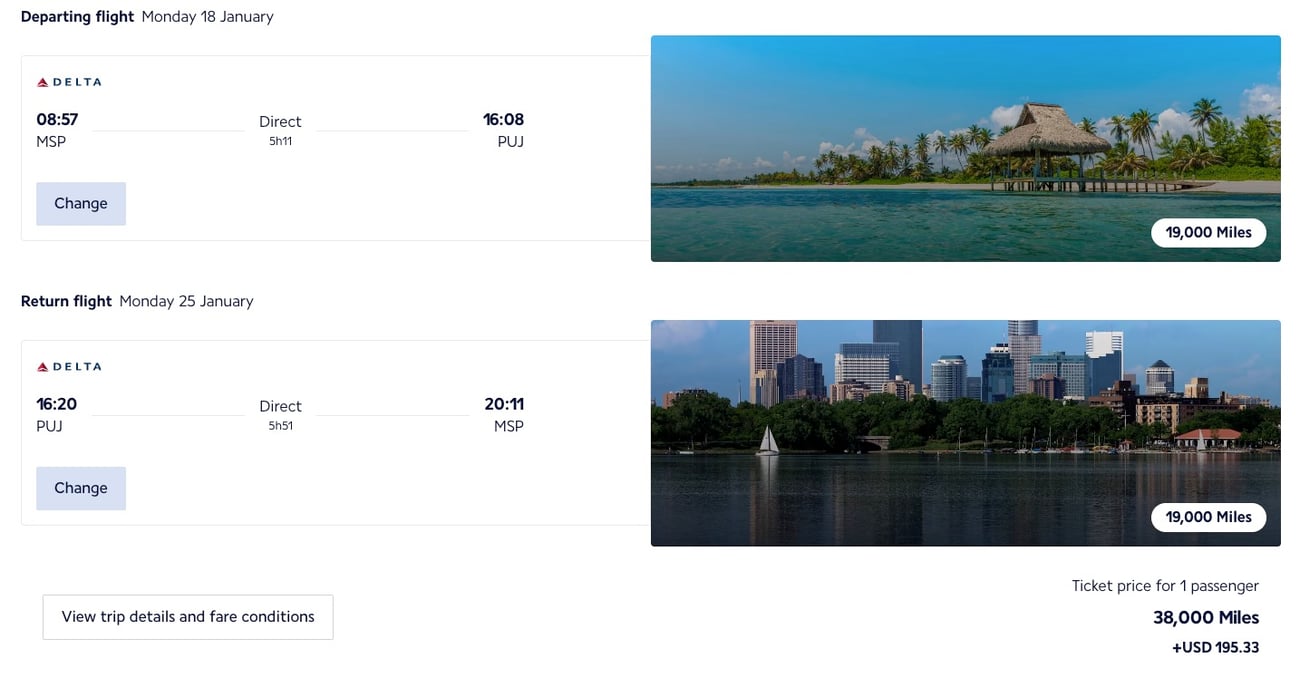
38,000 miles roundtrip for a Main Cabin flight (including seat assignment) or $792 roundtrip … your choice.
🧠 Bottom Line: Book Early, Book Flexible, & Re-Book!
By booking your flights earlier and more flexibly, and using FareTracker, you ensure you always get the best price. Plus, points and miles are going to be your ace in the hole to beat high airfare.
Head to our website for a full breakdown of how to beat high airfare right now.
– Gunnar Olson, flight deal analyst, travel reporter, and host of the Thrifty Traveler Podcast
✈️ Other Travel Tidbits
- 🏟️ Bilt just bought the sports loyalty platform LAVA for $300 million, which brings its ties to 56 pro teams across the NFL, NBA, MLB, NHL, and MLS. It’s Bilt’s biggest push beyond housing yet, and with a new live events division on the way, expect Bilt rewards at stadiums down the road. (Bilt)
- 💳 Amex will permanently switch on Pay Over Time for charge cardholders starting Feb. 1, 2027, and the option to turn it off will go away. That likely spells the end of Pay Over Time activation bonuses, too. (American Express)
- 💸 Got the Marriott Bonvoy Brilliant Amex? Check your Amex Offers for $200 back after spending $900 or more on flights booked directly with any airline by Feb. 28, 2027. It’s targeted but looks widely available. (One Mile at a Time)
- 🏨 Get up to 25% off stays at more than 1,250 hotels worldwide with Hyatt’s Cyber Sale. Book by Dec. 8 for stays through April 30, 2027. (Hyatt)
- 🌴 United is pulling out of Tulum (TQO). Its last flight from Newark (EWR) is Jan. 2, and service from Houston (IAH) ends after Jan. 4. That cuts U.S. flights to Tulum by more than half. (The Points Guy)


