


Hoping to book your flights for this spring, summer, or fall before fares increase due to rising fuel costs? It’s too late: Fares are already up.
That’s according to the CEOs and other top officials from the nation’s largest airlines themselves, all of whom told investors Tuesday that they’ve already raised fares to cover some of those higher fuel costs. Few gave specifics about the extent to which they’ve raised fares – or how much – but one airline suggested they’ve raised many fares by 15% to 20% in the last week alone.
“Now they’re running up between 15% and 20% in the last week,” United Airlines CEO Scott Kirby said during the J.P. Morgan Industrials Conference. “So pricing has been going up as one would expect.”

While prices continue to see-saw daily, data from the Argus U.S. Jet Fuel Index shows the price of jet fuel has increased by roughly 60% over the last few weeks, almost hitting $4 per gallon, up from the previous $2.40-ish range in late February. It all stems from the recent war in Iran and from disruptions to oil shipments near the Strait of Hormuz, one of the world’s most critical shipping routes.
Fuel is one of airlines’ biggest expenses, second only to labor. All four of the nation’s largest airlines – American, Delta, United, and Southwest – said Tuesday that the recent price spike has cost them roughly $400 million in March alone. Even smaller carriers like JetBlue and Alaska are feeling the burn.
Kirby from United was the first of the major U.S. airline leaders to warn that fares would rise to offset that increased cost. But he wasn’t the last.
“International, we can do fuel surcharges, and those have gone in,” Delta Chief Commercial Officer Joe Esposito said, mentioning the separate surcharges airlines build into long-haul international tickets and even tack onto some award tickets booked using miles. “And you’ve also seen the base fares for domestic go up.”
Esposito isn’t wrong, and Delta isn’t alone. Our Thrifty Traveler Premium flight deal analysts have noticed a marked increase in domestic flight prices for travel over the next six months or so. We’ve also seen it in our own personal travels.
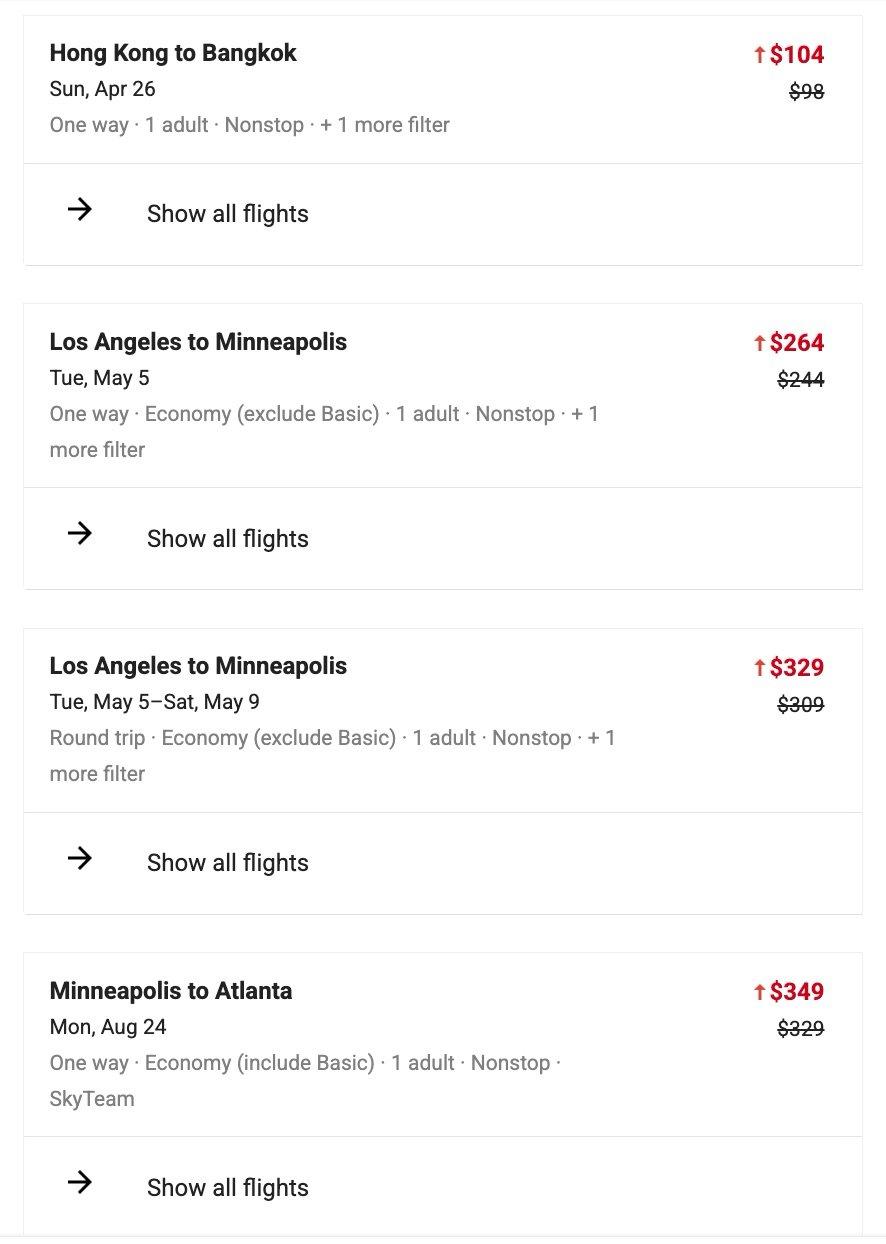
Virtually every airline executive said much the same … in their own, jargon-filled wording: Fares have increased. And more spikes could be ahead.
“If this is a longer-term duration phenomenon, we know that there will be the appropriate steps taken to ensure that we drive revenue performance to offset,” American Airlines CEO Robert Isom said.
Southwest said its recent transformation – ditching free luggage, charging fees for bags and seat assignments, and courting “premium” travelers – would be key to offsetting rising costs.
“While we all wish fuel that wasn’t at the point that it is, I am incredibly glad to have that extra revenue source coming online and being optimized,” CEO Bob Jordan said.
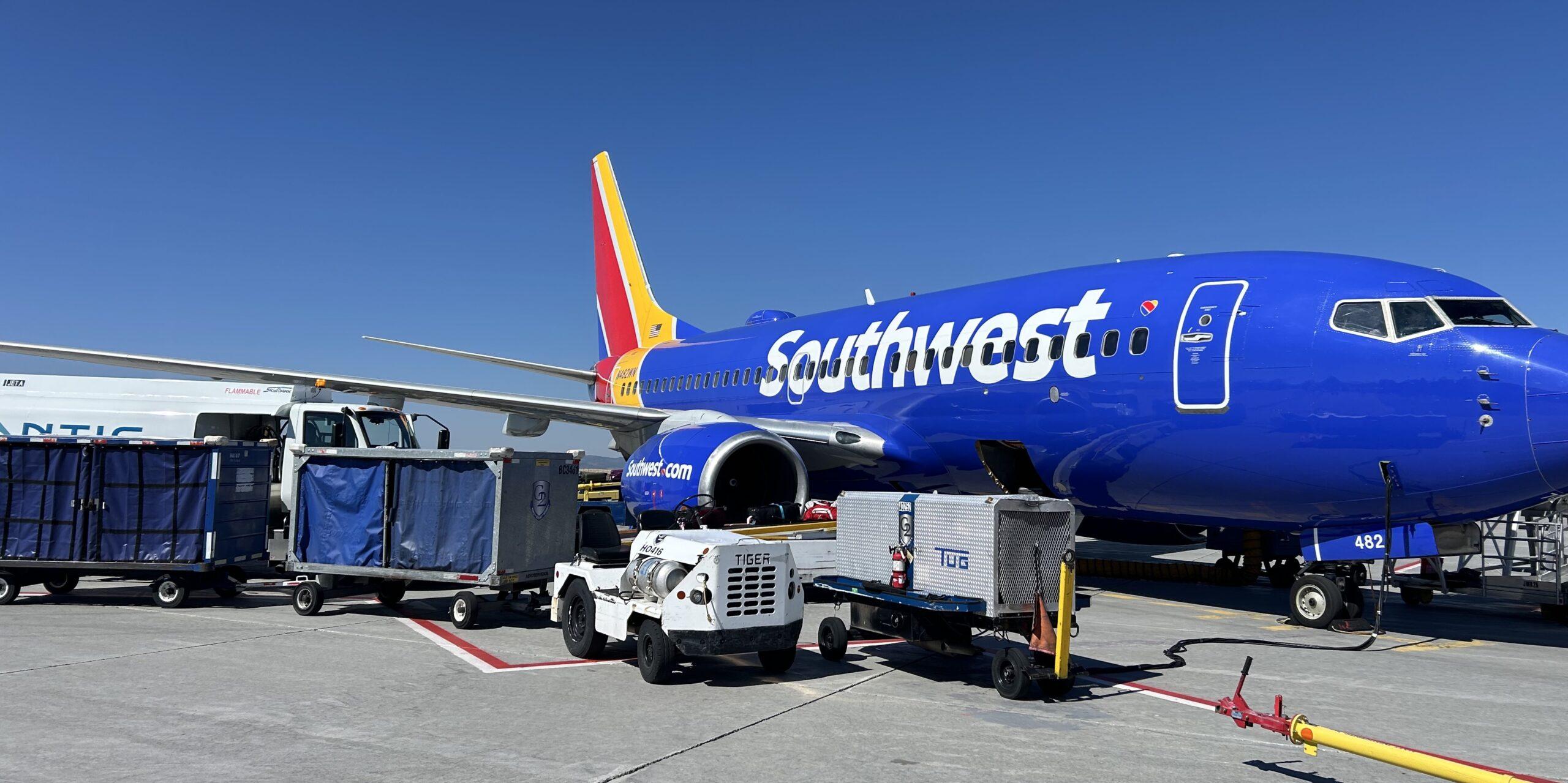
Fuel prices and other expenses like labor and planes are just one driving force – and ultimately, a small one compared to bigger dynamics like supply and demand … and especially competition between carriers. But even amid war in the Middle East, growing concern about flight prices, and a shaky economic outlook, airlines universally said travel demand remains sky-high.
Higher fares won’t be the end of it. Several airline leaders said they may also have to reduce flights – especially if fuel prices remain elevated.
And both Delta and United pointed to ultra-low-cost carriers like Spirit and Frontier – both already struggling for survival before – as being squeezed the hardest by the recent surge in fuel prices. That, too, will just allow the Delta’s and United’s of the world to charge higher fares – there’d be no scrappy Spirit to force them to compete on price.
“Assuming that oil prices do return back to a baseline, and the industry has gone through another period of dislocation and disruption that’s made it tighter and smaller and more durable, will yield a better return in the longer term,” Delta CEO Ed Bastian said. “Not what we wish for, but I think that’s going to be.”
Spoiler alert: Bastian, Delta, and the rest of the U.S. airline industry very much do wish for that.
What Travelers Can Do Right Now
Although fares are already inching up, future increases aren’t out of the question. Travelers planning trips later this year may want to consider locking in flights sooner rather than later – especially for summer travel.
Booking flights with flexible change policies can give you the best of both worlds: locking in today’s prices while keeping the option to adjust your plans later if cheaper fares appear. Deals and price drops are still in the cards, so wait for an alert from Thrifty Traveler Premium or set a Google Flights price alert and wait for a sign that prices have decreased.
This is also be a tailor-made time to redeem your points and miles. Most major U.S. airline programs use dynamic award pricing where award rates follow the cash cost, so any increases to fare prices would result in needing more miles, too. But others with fixed award charts – think Air France/KLM Flying Blue, Virgin Atlantic Flying Club, British Airways Avios, and countless more – could give you outsized value to book flights at lower rates, even as prices increase.
Airlines that don’t currently add fuel surcharges to award tickets aren’t likely to introduce them overnight – meaning award rates for airlines that currently publish an award chart could remain a relative sweet spot even if cash fares rise.
On the flip side, travelers booking award tickets may want to avoid programs that already charge hefty fuel surcharges (we’re looking at you, British Airways). As fuel costs rise, those airlines will likely adjust their fees to reflect higher costs in the months ahead.
Bottom Line
Airlines aren’t being shy about it: They’re raising prices to offset the recent spike in fuel costs. In fact, they already have.