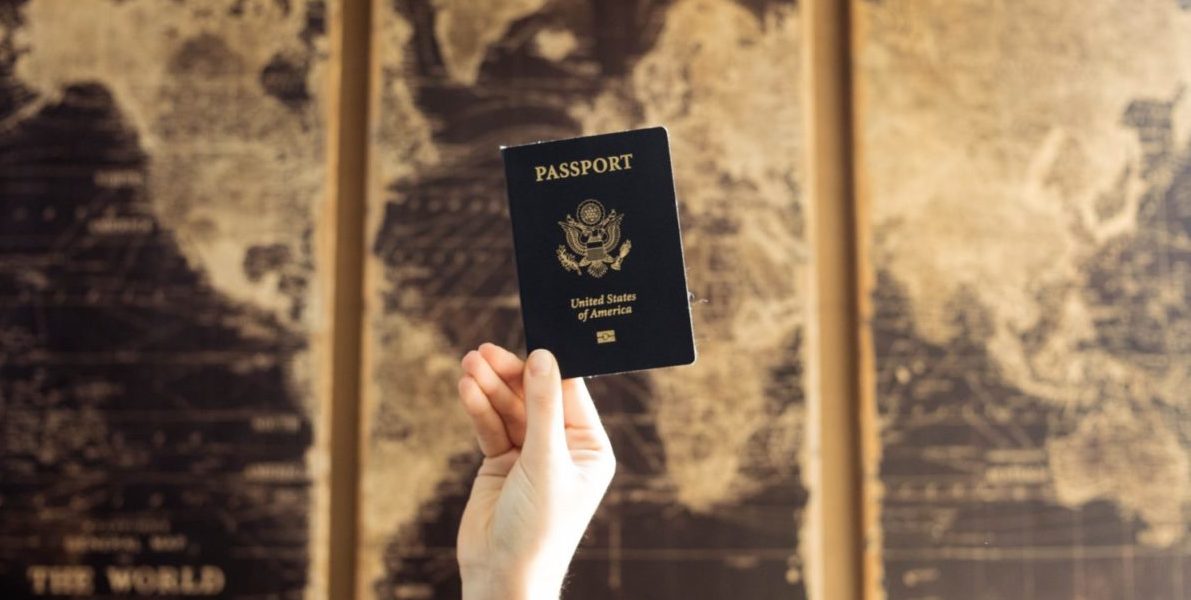
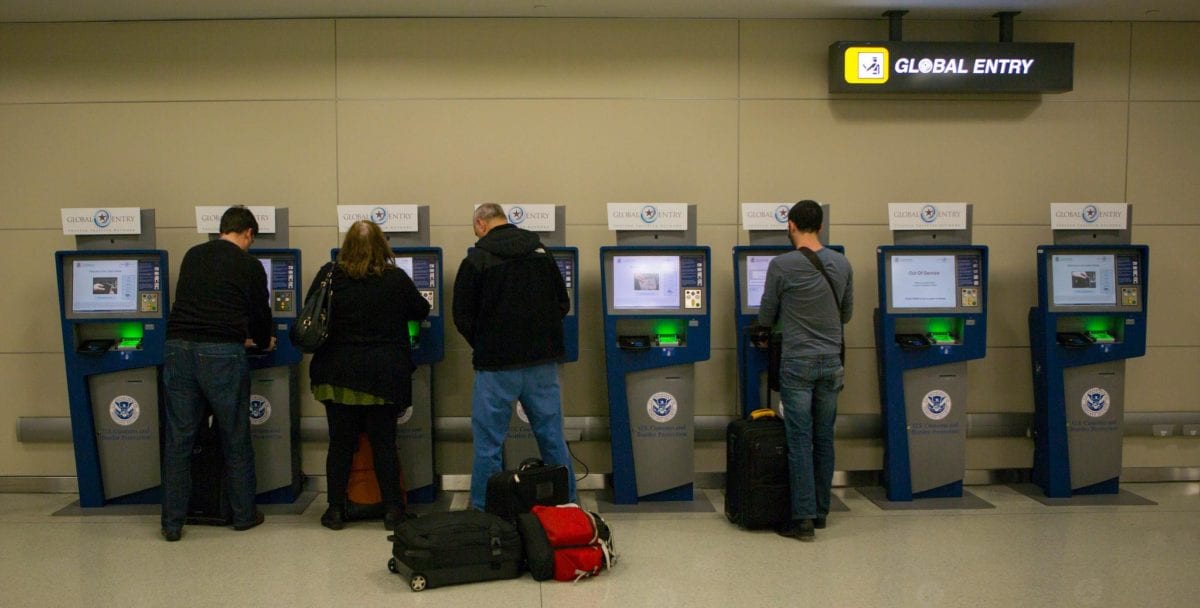



The Trump administration resumed Global Entry at international airports across the country effective Wednesday morning, suddenly reversing course after shutting the popular travel program down more than two weeks ago amid a partial government shutdown.
That shutdown continues, leading to longer lines at several airport security checkpoints as unpaid Transportation Security Administration (TSA) agents increasingly call out sick after missing several paychecks. Yet the Department of Homeland Security (DHS) confirmed to the New York Times late Tuesday that it would resume processing international travelers returning to the U.S. with Global Entry, saying it had reconsidered after “evaluating the implications of the shutdown.”
That change of heart comes just days after former Homeland Security Secretary Kristi Noem was removed from the cabinet. Noem and a top aide reportedly came up with the plan late last month to shut down both TSA PreCheck and Global Entry before being overruled and reversed by the White House.
But only TSA PreCheck got a reprieve. Keeping Global Entry on pause was both counterproductive and unprecedented.
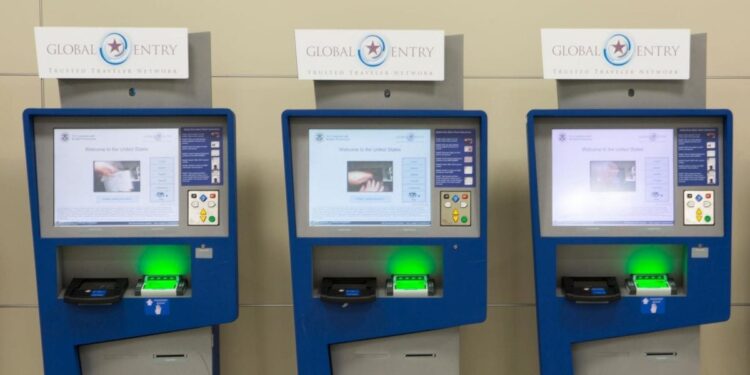
Global Entry is a lifeline for international travelers, giving them TSA PreCheck benefits but, more importantly, a fast-pass through passport control. With kiosks that let you snap a quick selfie using facial recognition, it’s largely automated. By allowing approved travelers to breeze through without additional scrutiny, it reduces wait times for all travelers – not to mention, it means less work for Customs and Border Protection employees. And with $120 membership fees to use it, it’s funded almost solely by travelers themselves.
Even during far longer government shutdowns – including the record-setting 45-day freeze last fall – the federal government never raised the prospect of pausing its trusted traveler programs. During a shutdown in late 2018 and early 2019, the federal government paused applications and in-person interviews for Global Entry. Yet this time around, applicants and interviews continued as normal, even as active Global Entry members weren’t allowed to use their benefits. Those five- to 15-minute interviews are arguably far more time-consuming than waving approved travelers through passport control.
A DHS spokesperson declined to respond to repeated questions from Thrifty Traveler over the last two weeks about why the agency was continuing to process those applications and interviews during this shutdown.
While far more limited in scope than previous shutdowns – only funding for DHS has been held up amid a dispute over the Trump administration’s immigration crackdown in Minnesota – this is the second shutdown in just over three months. Again and again and again in these funding disputes, everyday travelers have been used as leverage: a political pain point to try to force a funding deal in Congress.
The U.S. Travel Association and airlines had called on the Trump administration to reconsider and restore Global Entry service.
At $120 for a five-year membership, travelers pay good money for Global Entry – or, increasingly, turn to a travel credit card that covers the cost of enrollment. And more importantly, it benefits everyone: Allowing approved travelers to breeze through passport control means fewer travelers are subjected to standard screening, improving wait times for everyday travelers while reducing immigration agents’ workload.
This is a breaking news story, check back for details.