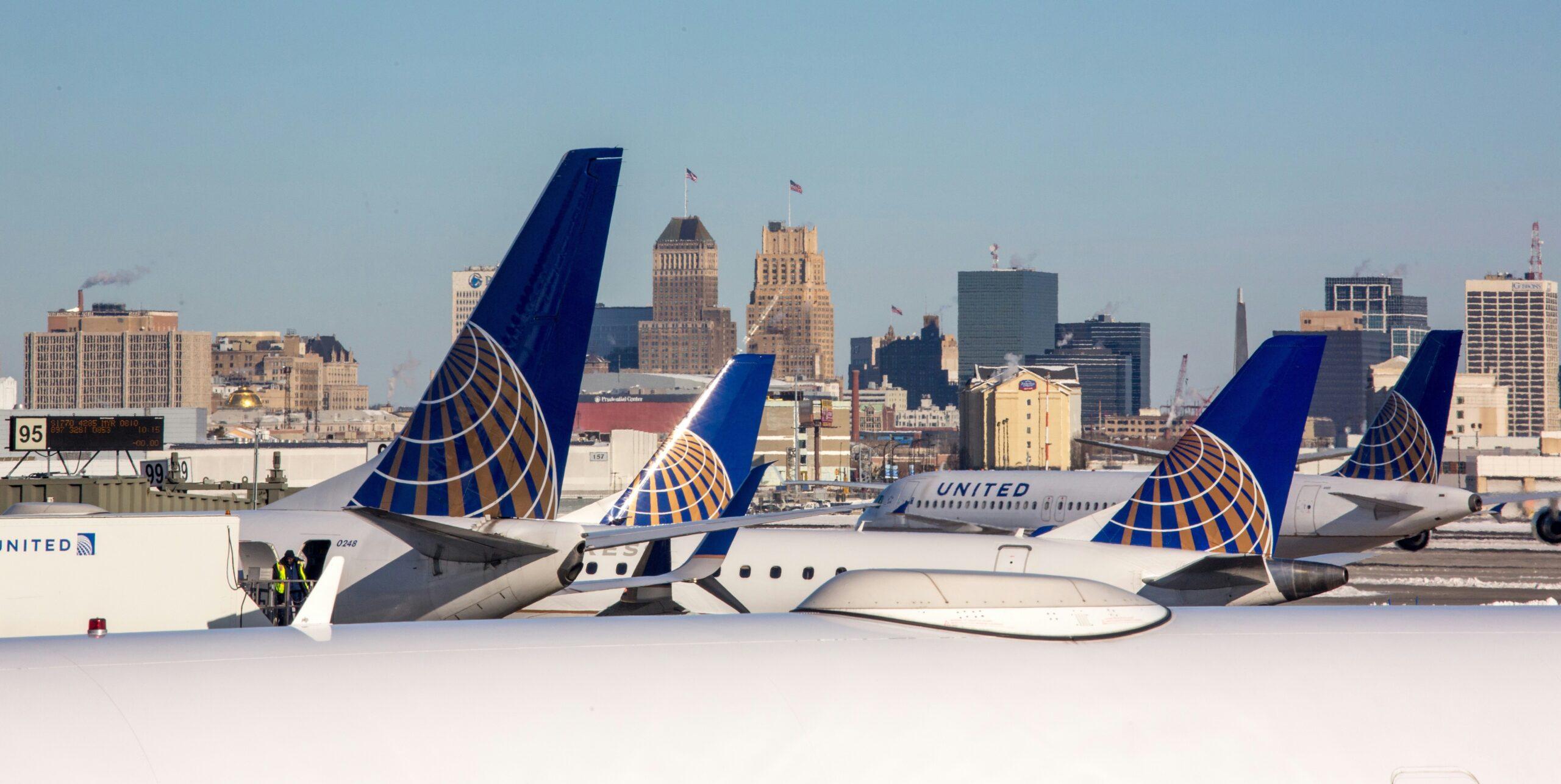



United Airlines abruptly raised checked bag fees by another $10 overnight Friday, becoming the second major U.S. carrier to do so in just a 72-hour span.
With jet fuel prices up by more than 100% in the last month, JetBlue kicked off the troubling new trend by bumping up its own bag fees to at least $39 each way. United went even further.
Effective for new flights booked as of Friday, April 3, United now charges:
| Bag | Previous Fee (Prepaid) | New fee (Prepaid) | Previous Fee (At the Airport) | New Fee (At the Airport) |
|---|---|---|---|---|
| First Checked Bag | $35 | $45 | $40 | $50 |
| Second Checked Bag | $45 | $55 | $50 | $60 |
| Third Checked Bag | $150 | $200 | $150 | $200 |
As always, flyers with a United co-branded credit card or MileagePlus elite status can check at least one bag for free.
The airline announced that hike in a short email to media outlets early Thursday afternoon, giving travelers just a few hours warning to book flights beforehand. And United stressed it’s “the first time in two years the airline has raised bag fees” … as if it’s done flyers a favor.
With this change, you’ll now pay at least $45 for a checked bag – or $90 roundtrip. Wait until you get to the airport to check it, and you’ll tack on another $5 each way. Critically, these increases only apply to domestic routes and flights to Canada, Mexico, and the Caribbean. Long-haul international flights to Europe, Asia, and even far-flung destinations like Australia and Africa have been spared from these higher fees … for now.
Thrifty Tip: Curious what a checked bag will cost for your flight? Use United's baggage fee calculator to find out.
In the monkey-see, monkey-do airline industry, one airline raising fees is typically just the first domino to fall. That's exactly what we saw back in 2024, when virtually all the major airlines raised bag fees from $30 to $35 in a matter of months. The only question now is: Which U.S. airline is next?
Jet fuel prices have doubled since the start of the war in Iran and the closure of the Strait of Hormuz, climbing from roughly $2.50 per gallon to about $4.88 today, according to the Argus U.S. Jet Fuel Index. Fuel is one of airlines’ biggest expenses, second only to labor.
But while airlines have already raised ticket prices – with United itself saying some fares were up 15% to 20% – increasing fees is an even more effective lever for airlines to pull for a few reasons:
- Airlines have to pay a 7.5% excise tax on the fares they charge, but not on optional fees like baggage or seat assignments
- Those optional fees make airlines' co-branded credit cards – their real profit engines these days – even more alluring to consumers as a way to escape extra fees
- The last two decades of airlines unbundling fares and charging fees have proven that even when fuel prices decline, elevated fees remain unchanged
While an extra $10 per bag may not seem like much, luggage fees are big business. U.S. airlines collected more than $7.2 billion (with a b) on bag fees alone in 2024, according to federal data.
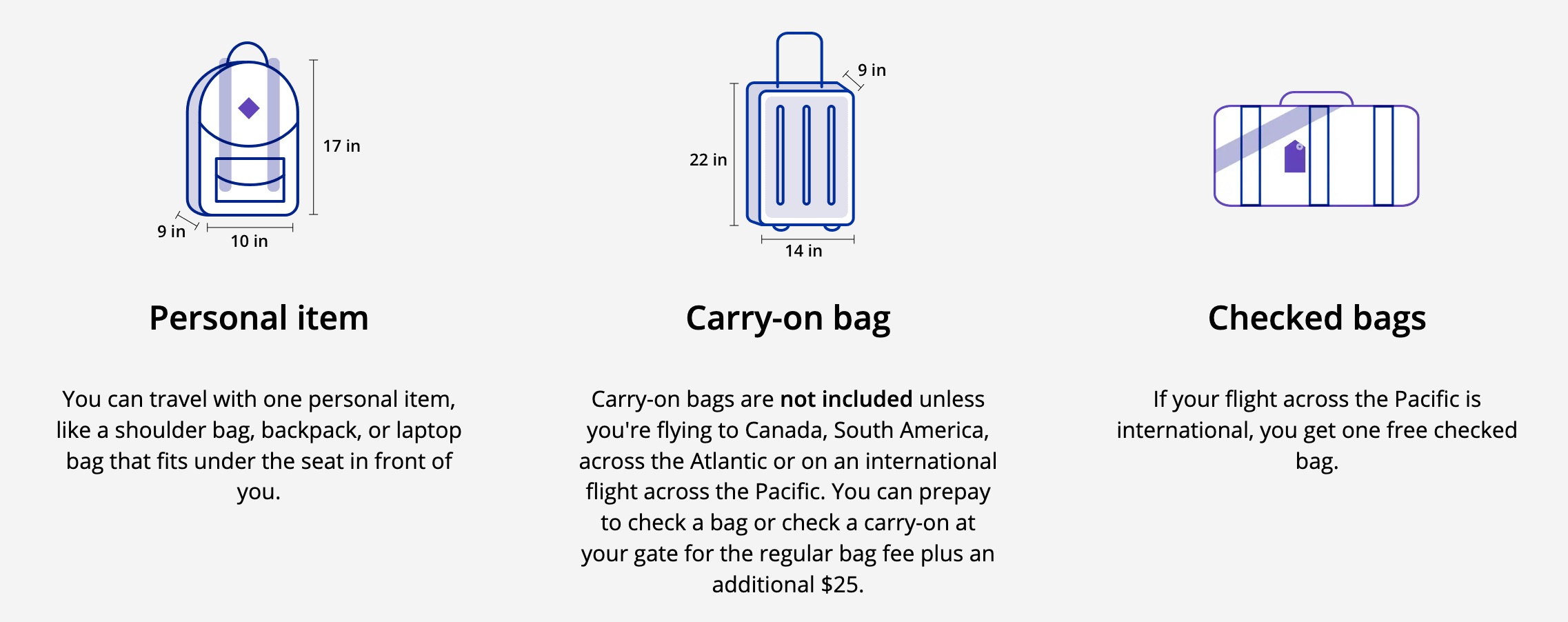
To make matters worse, United's cheapest basic economy fares don’t even include a full-size carry-on – just a small personal item like a backpack or laptop bag. So while you might save around $80 or so roundtrip by booking one of these barebones fares, that savings can quickly disappear if you need to bring more than the basics. For trips longer than a day or two, you’ll almost certainly end up paying more in the end.
Bottom Line
Flying United just got a little more expensive, as the carrier raised checked bag fees by $10 each way under the cover of rising fuel costs.
Now that JetBlue and United have opened the door, the question becomes: Which airline is walking through it next?