


Basic economy is so 2016. In 2026, basic business class is (unfortunately) where it’s at.
United led the charge last week, announcing its plans to begin selling “base” business class fares (as well as in premium economy) that can’t be changed or canceled, charge you to pick a seat, and can’t even get you into a fancy Polaris lounge. Delta, which has been hinting at and inching toward it for almost two years, likely isn’t far behind. And overseas, Lufthansa is just the latest in a slew of major international carriers to begin selling unbundled business class seats.
It won’t stop there. As the entire airline industry reorients around all things premium travel – upping their champagne game, bedding, and lounges while ripping out and shrinking economy seats to install more lie-flat capacity – this is where practically every airline is heading.
United tried to spin it as a positive for consumers, saying in a statement that its new, three-tiered fare structure would “give customers more choice and make it easier to find a fare that includes the benefits they want most – whether that’s a great value, added perks, or maximum flexibility.” But that’s a mirage.
Over time, the stingier basic fares take the place of a standard fare, which goes up in price. You pay the same to get less.
The Basics of Going Basic
To understand how airlines got here, we need a quick history lesson. It’ll be fun, I promise.
Delta created basic economy more than a decade ago – a lifetime ago, really, in the world of aviation. Ultra-low cost carriers like Spirit, Frontier, and Allegiant were breaking through with travelers thanks to their dirt-cheap fares accompanied by fees for … well, pretty much everything.
So basic economy was a defense mechanism – a way to unbundle their own fares by charging for seat assignments, restricting changes and cancellations, and even banning carry-on bags. That way, Delta could compete with the Spirits of the world on price with a ticket loaded with restrictions … while not-so-subtly encouraging an upsell to a standard, main cabin fare.
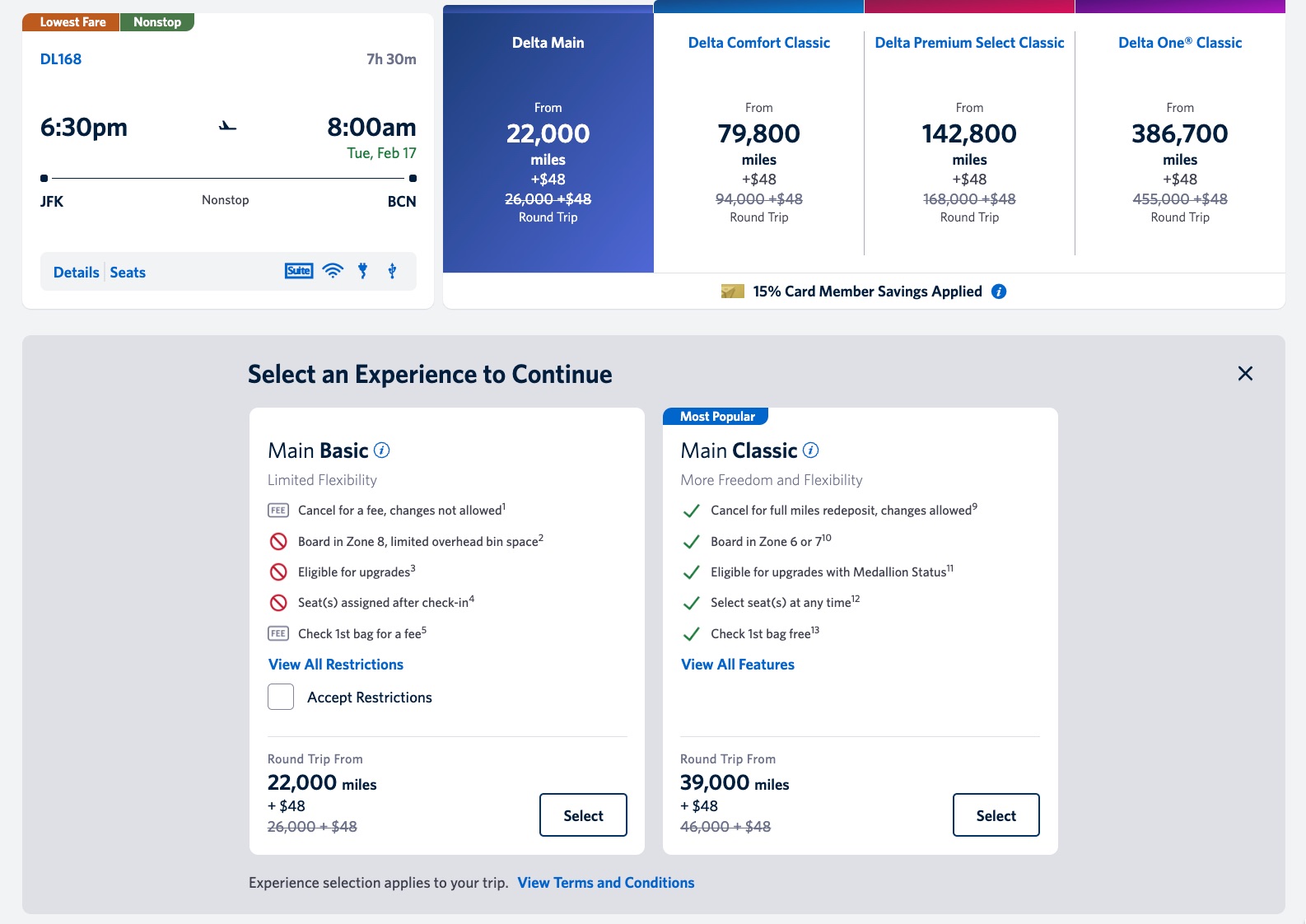
Over time, it steadily spread from just a handful of domestic markets on one carrier to a global phenomenon you’ll see on virtually every route. And these fares have gotten worse, too: Several airlines have stripped out mileage earning, while others deploy it in a form of bait-and-switch pricing.
Fast forward to the present day, and it’s clear they won the war. Ultra-low-cost carriers are on the ropes, with Spirit in its second round of bankruptcy proceedings in less than a year.
That’s due in no small part to how airlines like to weaponize basic fares. With bigger planes, they could fill the back with bargain-hunters happy to give up perks to save $70 or so – all while still catering to the increasing crowd of travelers happy to spend more for a comfier setup.
But this time around, there’s no one to fend off. United and especially Delta are on offense, lapping the competition.
That makes basic business class a different breed: A new way to charge travelers more for a seat at the front of the plane at a time when Americans are apparently willing and ready to pay it.
Why Basic for Biz?
Why on earth would United, Delta – or any airline – sell business class fares for thousands of dollars apiece yet charge travelers for seat selection or lounge access?
Because they can. And more importantly, because it’ll make the airline more money. Like it or not, unbundling business class fares is a clever move at a time when demand for premium cabin seats is sky-high and seemingly only growing.
Case in point: Despite collecting $1.1 billion less on economy seats last year compared to 2024, Delta still turned a record profit in 2025 … because it more than made up for the difference in premium cabins. The airline expects premium ticket revenues to overtake economy altogether this year or next – an unthinkable prospect just a few years ago.
“Premium cabins are leading the way, not only domestically, but across the entire network,” United Chief Commercial Officer Andrew Nocella told investors earlier this year.

It’s not a coincidence that the two airlines chasing premium travelers hardest are making this move first. And it’s no coincidence that they’re making this move at a time when airlines across the globe are raising fares and fees to offset soaring fuel prices.
Unbundling business class is a two-birds, one-stone maneuver:
- They’ll wind up making more money from passengers who pony up for better, standard business class fare
- And they’ll also collect some additional fee revenue from flyers booking base fares who decide to pay more for a seat assignment or to check an extra bag – and that’s revenue they won’t have to pay federal taxes on
Don’t just take it from me: Take it from the architect of Delta’s entire premium strategy himself.
“I think that if you were offered a $500 ticket, there was no reason for you to ever want to pay more than $500 because it was fully loaded,” former Delta president Glen Hauenstein told investors earlier this year before retiring just a month ago. “If you look further out, this continues to be multi-billion-dollar opportunities in here to add high-value, lower cost … higher-margin products that we don’t have on the shelf today.”
This is the airline industry, after all. Its entire mission is to maximize revenue by filling up planes at the highest fares possible. And with demand for premium travel showing no signs of cooling down, they sense an opportunity.
All of which begs the question: If this is, in fact, bad news for travelers … just how bad will it get?
What’s the Cost?
We don’t know yet. But we do have a good sense of what they’ll look like.
United followed up a victory lap-like press tour late last month – when it officially unveiled its new business class cabins and a buzzy new “Relax Row” lie-flat seating in economy – with a bona fide news dump: a baggage fee hike and these basic fares.
Onboard, you’ll get the same lie-flat seat, bedding, amenity kits, and post-dinner ice cream sundaes as everyone else. But United’s cheapest business class fares:
- Will only include one free checked bag – not two, as normal
- Will not include free seat selection: you’ll have to pay extra for that
- Will not get you into the United Polaris Lounge – only everyday United Clubs
- Cannot be changed
- Cannot be canceled, either – not even for a credit
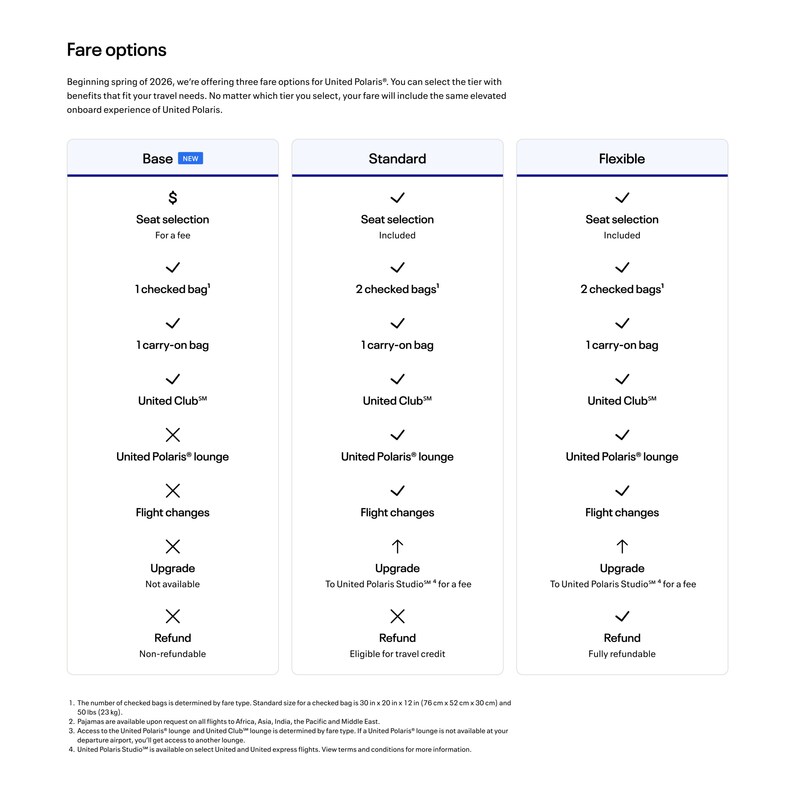
No change or cancellation is positively brutal for fares that may cost thousands of dollars each way. It’s yet another reminder that airlines didn’t actually get rid of change fees – they just rebranded.
United won’t begin selling “base” business class fares on long-hauls, transcontinental routes, or flights to Hawaii until sometime later this year. Delta hasn’t made it official just yet, but the Atlanta-based airline has been working toward doing the same for more than a year. I wouldn’t be surprised if the airline makes something official later this week – Delta is set to announce its quarterly earnings on Wednesday.
Because they’re not on sale yet, we can’t say exactly how much travelers can “save” with these basic business class fares. But we can look overseas for guidance.
Check out these “Business Lite” fares from Qatar Airways from New York City (JFK) to Dubai (DXB) via Doha (DOH) this September, for instance.
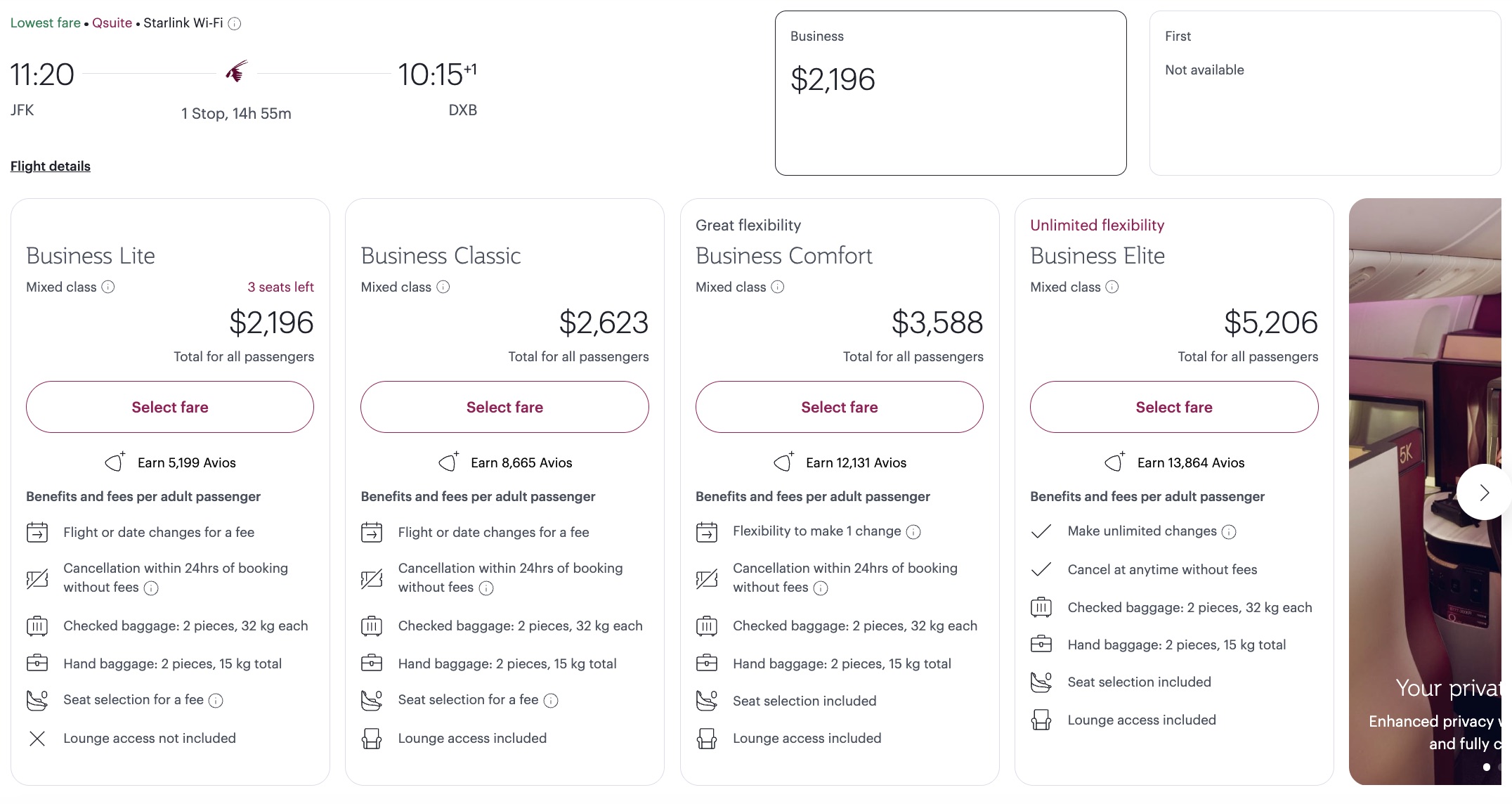
That’s an extra $427 for a “Classic” fare … and another almost $1,400 for a “Comfort” ticket that includes seat selection, lounge access, and free changes. And that’s each way.
The options are even more overwhelming for Lufthansa, which recently rolled out its own “Business Light” fares.
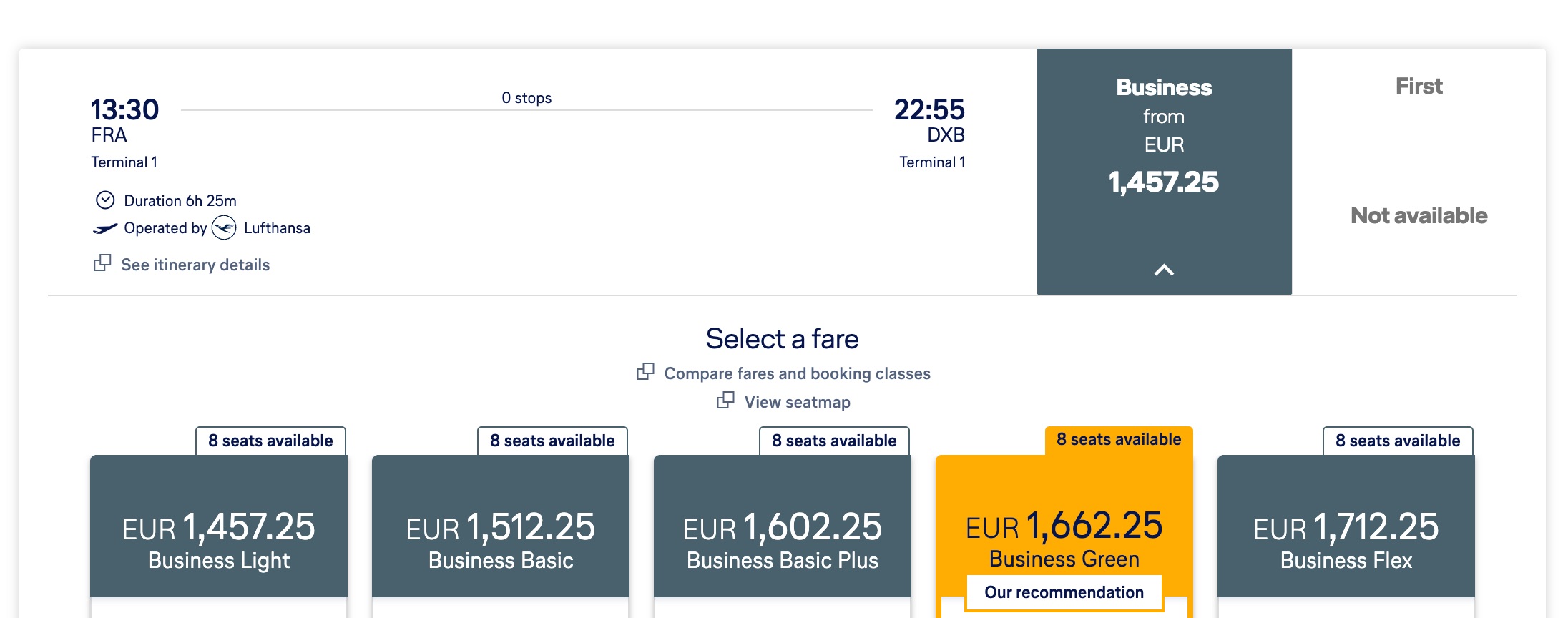
Now, those are extreme examples, but they could signal what we’ll see from United.
No doubt, these upcharges will vary a lot from route to route and especially by time of year. And because United is just getting started with this new fare structure, we’d expect more reasonable price differences at the beginning compared to an airline like Qatar, which has been doing this for years.
Will some basic business class fares, in fact, get cheaper than the current price? Sure, some might … but in the aggregate, fares will go up.
After all, that’s why airlines are doing this: To get more money out of passengers who are ready and willing to pay it.
Bottom Line
In case you missed it, let me repeat the headline: Don’t be fooled. Basic business class fares are bad for consumers.
That’s the reality. Airlines aren’t offering “cheaper” business class fares out of the goodness of their hearts. It’s a price hike in disguise.
I’d love to be wrong. But we’ve covered the airline industry for long enough – and their handling of basic economy fares, in particular – to know better than to buy the airlines’ spin.