
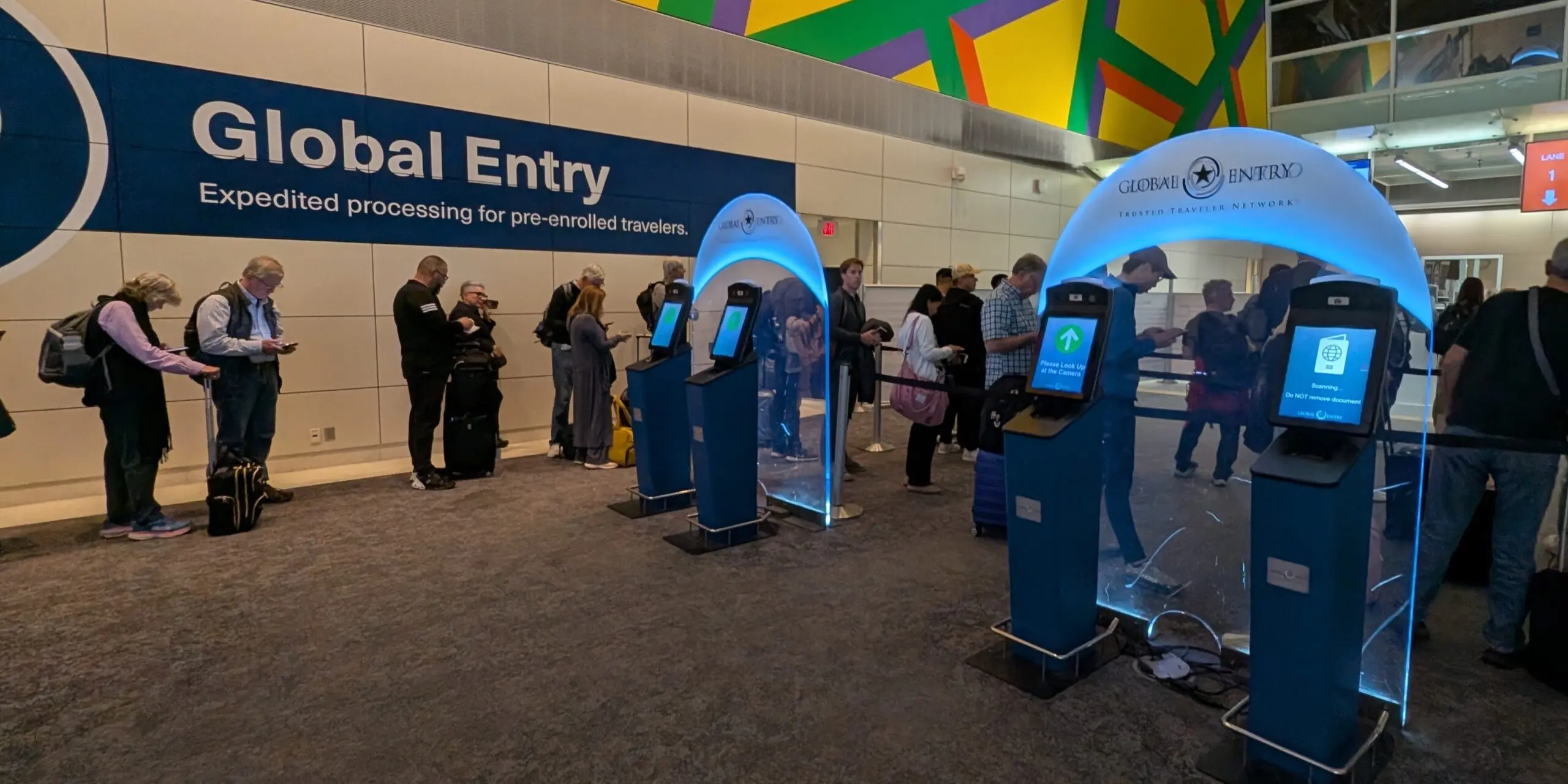



After a weekend of confusion and chaos, the Trump administration backtracked and continued running TSA PreCheck® lanes at airport security as normal. Unfortunately, the same isn’t true of Global Entry.
As of Tuesday morning, Global Entry lanes and kiosks across the country remained mothballed. And the federal government says the expedited program through customs and immigration won’t resume until the partial government shutdown ends and funding is restored to the Department of Homeland Security (DHS).
“As of 6 a.m. on Feb. 22, 2026, U.S. Customs and Border Protection, Global entry was shutdown,” a spokesperson for Customs and Border Protection, the agency that runs Global Entry, said in a statement. “Until funding for the Department is restored, CBP Officers are currently unpaid but continue to focus on preventing potential security risks from those entering the country.”
Global Entry is a lifeline for international travelers, giving them TSA PreCheck benefits but, more importantly, a fast-pass through passport control. With kiosks to snap a quick selfie using facial recognition, it’s largely automated. By allowing approved travelers to breeze through without additional scrutiny, it reduces wait times for all travelers – not to mention, it means less work for Customs and Border Protection employees.
Its closure is already causing chaos for travelers returning from abroad. Take a look at the situation at Washington, D.C.-Dulles (IAD) on Monday night, for instance.
Customs at Dulles last night during a DHS shutdown with Global Entry suspended is not fun pic.twitter.com/lrlFFujyVZ
— Reese Gorman (@reesejgorman) February 24, 2026
The saga started late Saturday, when DHS hastily announced it would shut down both popular trusted traveler programs … until, barely 12 hours later, the TSA confirmed that PreCheck would remain operational. The Washington Post reported Monday evening that Homeland Security Secretary Kristi Noem and top aide Corey Lewandowski came up with the plan, only to be overruled and reversed by the White House the following morning.
But only TSA PreCheck got a reprieve. Keeping Global Entry on pause is both counterproductive and unprecedented.
Even during far longer government shutdowns – including the record-setting 45-day freeze last fall – the federal government never raised the prospect of pausing its trusted traveler programs. During a shutdown in late 2018 and early 2019, the federal government paused applications and in-person interviews for Global Entry. Meanwhile, TSA PreCheck applications are handled by third-party processors.
Yet this time around, interviews are continuing – even as active Global Entry members aren’t being allowed to use their benefits. Those five- to 15-minute interviews are arguably far more time-consuming than waving approved travelers through passport control.
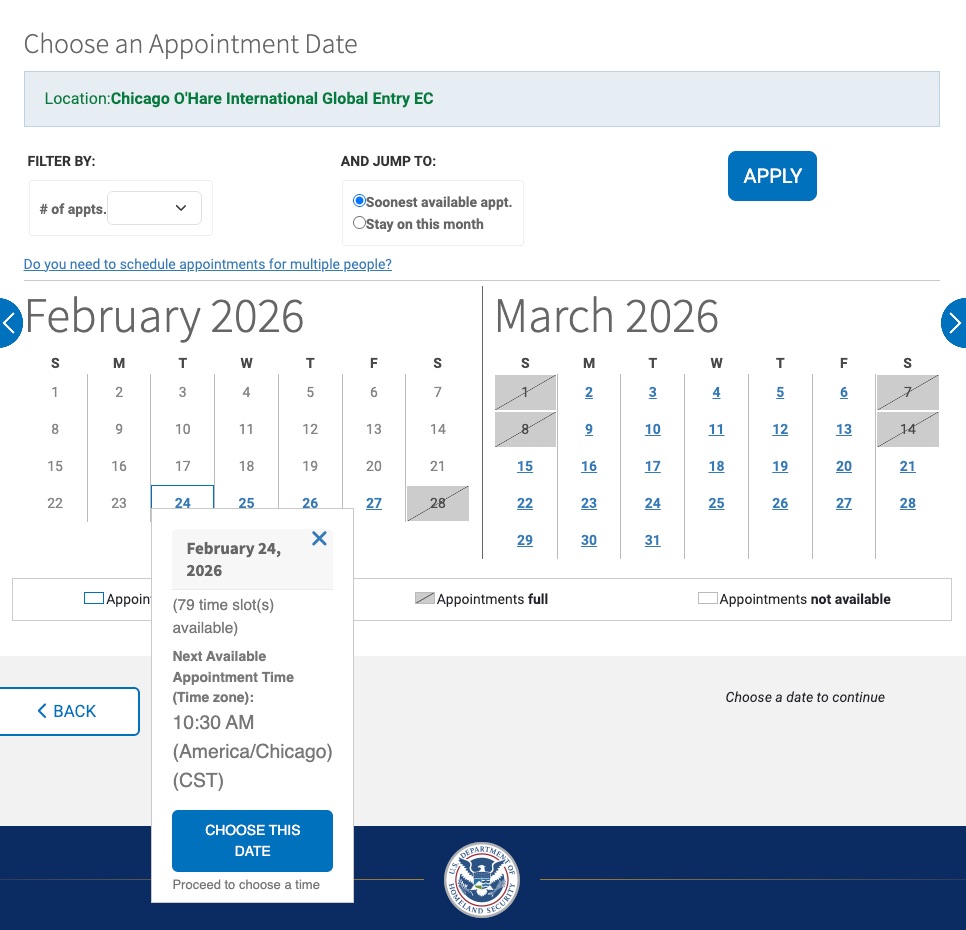
A Customs and Border Protection spokesperson did not address several questions about why the agency is continuing to offer those interviews, despite claiming it needed to free up Global Entry manpower to “process all other arriving travelers. ”
While far more limited in scope than previous shutdowns – only funding for DHS has been held up amid a dispute over the Trump administration’s immigration crackdown in Minnesota – this is the second shutdown in just over three months. Again and again and again in these funding disputes, everyday travelers have been used as leverage: a political pain point to try to force a funding deal in Congress.
The U.S. Travel Association has called on the Trump administration to reconsider and restore Global Entry service.
“Suspending it doesn’t just slow lines. It increases costs and strips away a layer of security infrastructure that took years to build,” President and CEO Geoff Freeman said in a statement Tuesday. “There is no fiscal – or logical – rationale for this decision.”
At $120 for a five-year membership, travelers pay good money for Global Entry – or, increasingly, turn to a travel credit card that covers the cost of enrollment. And more importantly, it benefits everyone: Allowing approved travelers to breeze through passport control means fewer travelers are subjected to standard screening, improving wait times for everyday travelers while reducing immigration agents’ workload.
For now, the free-to-use Mobile Passport Control (MPC) app is a good alternative … until it’s not. We’ve heard sporadic reports that even designated MPC lanes have been shut down at airports across the country this week.
And ironically, some Canadian airports continue to operate Global Entry lanes as normal. That’s likely because airports like Toronto (YYZ), Montreal (YUL), Vancouver (YVR), and others have so-called pre-clearance facilities on-site, processing international travelers before flying south across the border to allow those planes to park at a standard domestic gate.
Bottom Line
Days after a confusing, back-and-forth shutdown announcement, Global Entry lanes across the country remain largely shuttered … with no clear timeline for when they’ll reopen.
Keeping the program paused while TSA PreCheck runs as normal, and even as Global Entry interviews continue, is a baffling and counterproductive move that’s creating longer lines, more work for officers, and unnecessary headaches for travelers caught in the middle of a political funding fight.