




File this under things you hate to see: American Express has quietly raised the minimum spending requirement on its top-tier American Express Platinum® Card by a whopping $4,000.
Until now, new cardholders could earn “as high as” 175,000 points after spending $8,000 in the first six months. That threshold has jumped to $12,000 – with no increase in the maximum bonus.
As before, the exact welcome offer you’ll see can vary, and some applicants may not qualify at all. After submitting an application – but before accepting the card and triggering a credit pull – Amex will disclose the specific bonus you’re eligible for.
Want more credit card news and points & miles tips like this delivered straight to your inbox? Sign-up for our daily Extra Mile newsletter!
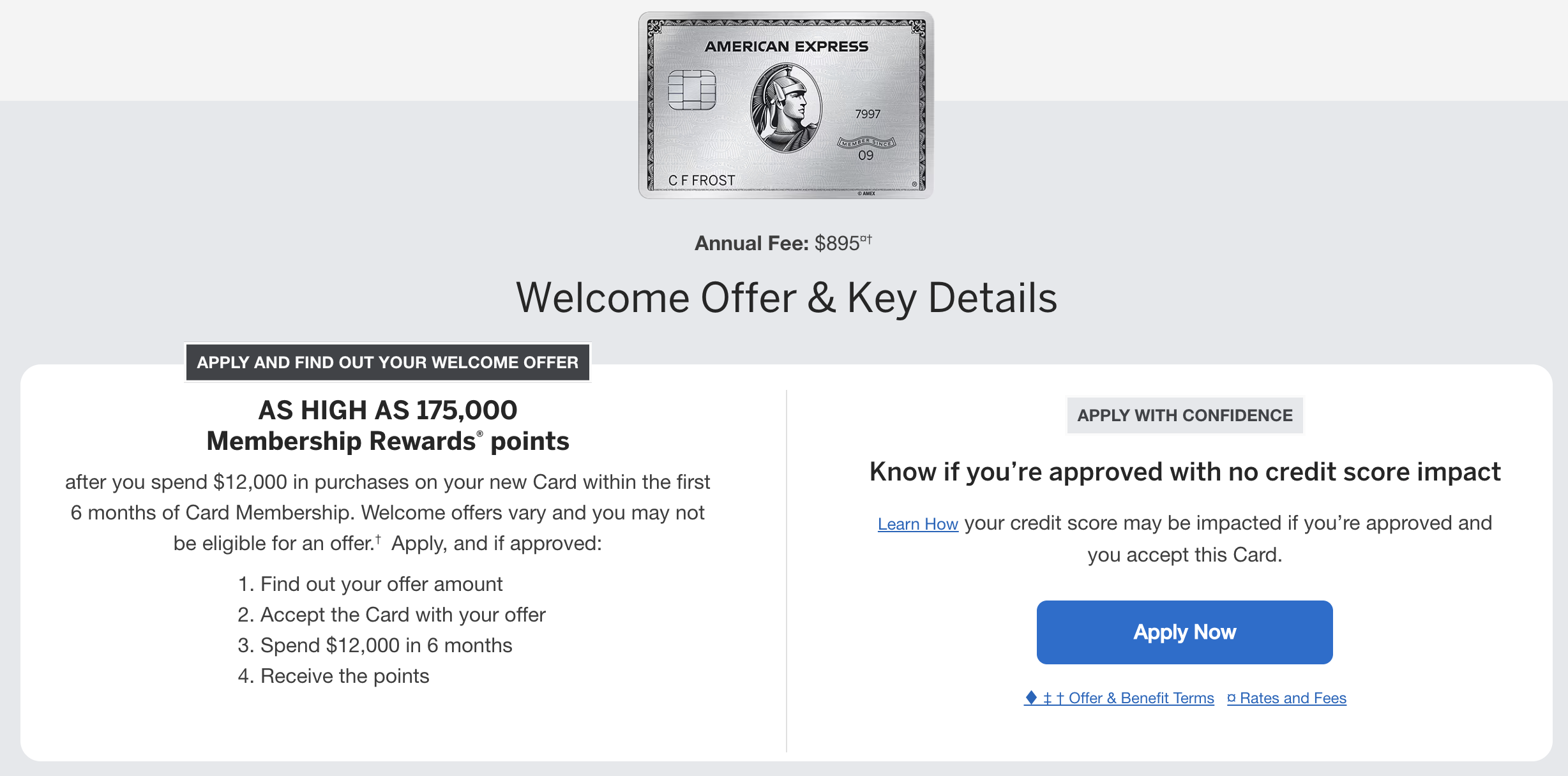
For those keeping score at home, that’s a 50% increase in required spending, rolled out without warning – and it inevitably makes the Platinum Card less appealing for would-be applicants. The timing is especially curious: Amex has been vocal about record demand for the Platinum Card following last summer’s refresh. This move raises an obvious question – why try to cool something that’s clearly working?
But if there’s any saving grace, it’s Amex’s comparatively generous timeline. While most issuers give cardholders three months to meet a welcome bonus requirement, Amex has long offered six months on many of its cards – and that hasn’t changed. That longer runway is no accident: Amex wants new cardholders to keep the Platinum Card top of wallet longer and build the habit of using it frequently … especially when it’s not the most rewarding card for everyday spending.
So why make the change now? A look at the competition offers some clues.
Chase is currently offering up to 125,000 points on the Chase Sapphire Reserve® after $6,000 in spending over three months. The newly launched Citi Strata Elite℠ Card, meanwhile, comes with a comparatively modest 75,000-point bonus for the same $6,000 spend in three months.
Yes, Amex’s $12,000 requirement is double those thresholds – but with twice the time to complete it, the Platinum Card now sits more or less in line with other premium travel cards. If Chase and Citi can ask for that level of commitment, Amex likely sees little reason it shouldn’t, too.
The bigger miss may be the context: Neither of those competing cards has matched the success of Amex’s Platinum refresh. Months ago, we questioned whether Chase fumbled its Sapphire Reserve overhaul, pointing to a lukewarm endorsement from the bank’s CEO, quick benefit tweaks, and a boosted welcome offer that felt reactive rather than strategic.
By contrast, travelers have overwhelmingly praised the revamped Platinum Card – praise undoubtedly fueled by its better bonus offer. Now that spending requirements are effectively evened out, it remains to be seen whether that enthusiasm holds.

The clear winner in this shuffle is the Capital One Venture X Rewards Credit Card. Not only is that card (far and away) the cheapest option of the bunch, but its minimum spending requirement is far more approachable – just $4,000 in the first three months. For travelers looking to dip a toe into the premium-card pool, the Venture X continues to stand out from the pack.
Related reading: Is the Capital One Venture X the Last True, Premium Travel Card?
Bottom Line
American Express has raised the Platinum Card’s minimum spending requirement by 50% – to $12,000 in six months – without increasing the welcome bonus, bringing it in line with other premium travel cards but making it harder for many applicants to meet.
While Amex’s longer spending window softens the blow, the move could dampen enthusiasm for a card that had been riding a wave of post-refresh praise. Meanwhile, the Capital One Venture X stands out as the most accessible and affordable premium option.




Frankly, I don’t think any minimum spend should be a problem for any premium card. You either can do it, or you can’t. They set it, you accept or don’t. .
AmEx screwed themselves. Chase SR is a way better single card if you can only have one, unless Centurion Lounges drive you. It blends the AmEx Plat and Gold and has way WAY (primary on rentals, etc ) better insurance. Unless you, like I do, religiously buy groceries with AmEx Gold, you shouldn’t get that card after AmEx nerfed MR. Plat I have for Lounges and because my wife likes the coupons. I have all three and one other metal card. Both AmEx cards are the first to go when they lose value.