


If you thought we'd get two full weeks into 2026 before dissecting the “premium” travel boom again, blame Delta.
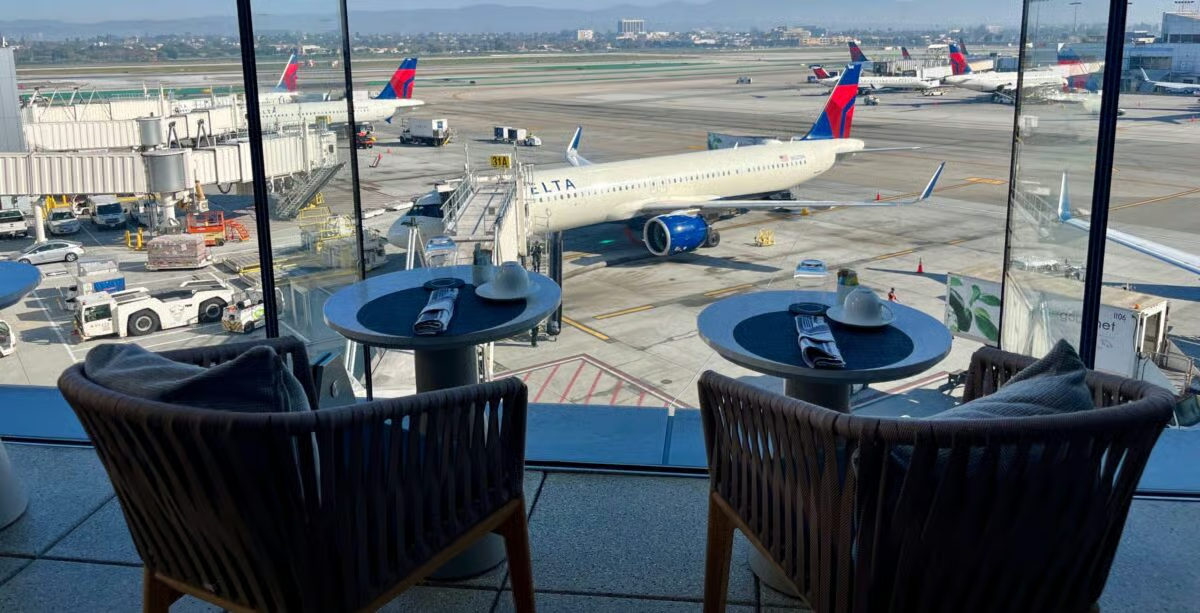
Airlines and banks have been chasing after “premium” travelers for years, introducing fancier new business class cabins, pouring pricier champagne, and building lounge after lounge after lounge, none moreso than Delta. Premium customers are where all the money and focus is in travel – not at the back of the plane. That's why Delta is churning out profits while low-cost carriers are fighting over scraps.
The Atlanta-based airline proved that point with a staggering statistic hidden in its $5 billion annual profit announced on Tuesday. But you can also see that strategy in a surprising new aircraft order and how protective Delta is of its precious credit card revenue from American Express.
Premium is Everything for Delta
One statistic stands out far more than Delta's $5 billion profit from 2025 … because it's the reason why Delta has become the most profitable airline in the country.
Delta powered its way to its biggest year in company history despite making 5% less in revenue from selling economy tickets than a year ago. How? Because it more than made up for it in premium cabin revenue.
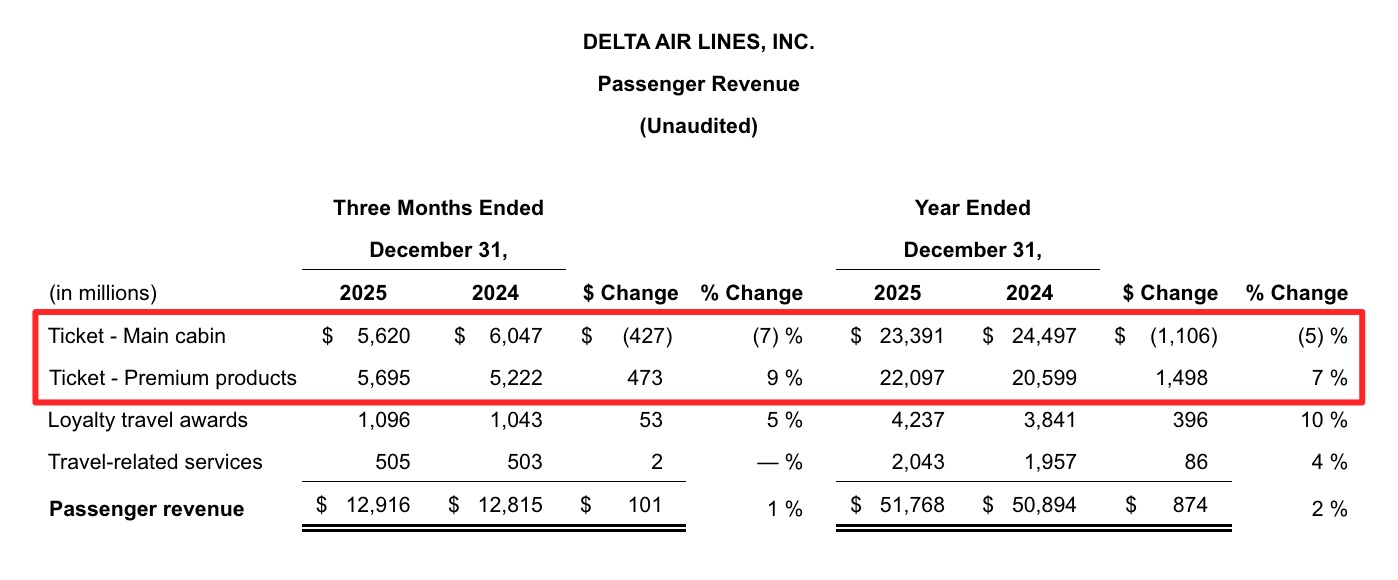
In the final three months of 2025, Delta made more on premium cabin ticket sales – Delta One, first class recliners, Delta Premium Select, and Delta Comfort – than economy … even though economy seating drastically outnumbers those cabins. That's a first.
It's a bit of a chicken-or-egg situation here, honestly. Is Delta making more money on premium seats because economy isn't selling? Or is Delta shrinking economy cabins, leading to greater sales at the front of the cabin?
Honestly, it's probably some of both. And it's clearly being driven by the economy at large: Wealthy Americans have more money than ever and are willing to spend it on travel. The rest of the population, not so much
Or, as outgoing Delta President Glen Hauenstein put it: ” The bottom end of the industry and the commodity side of the business has been struggling greatly.”
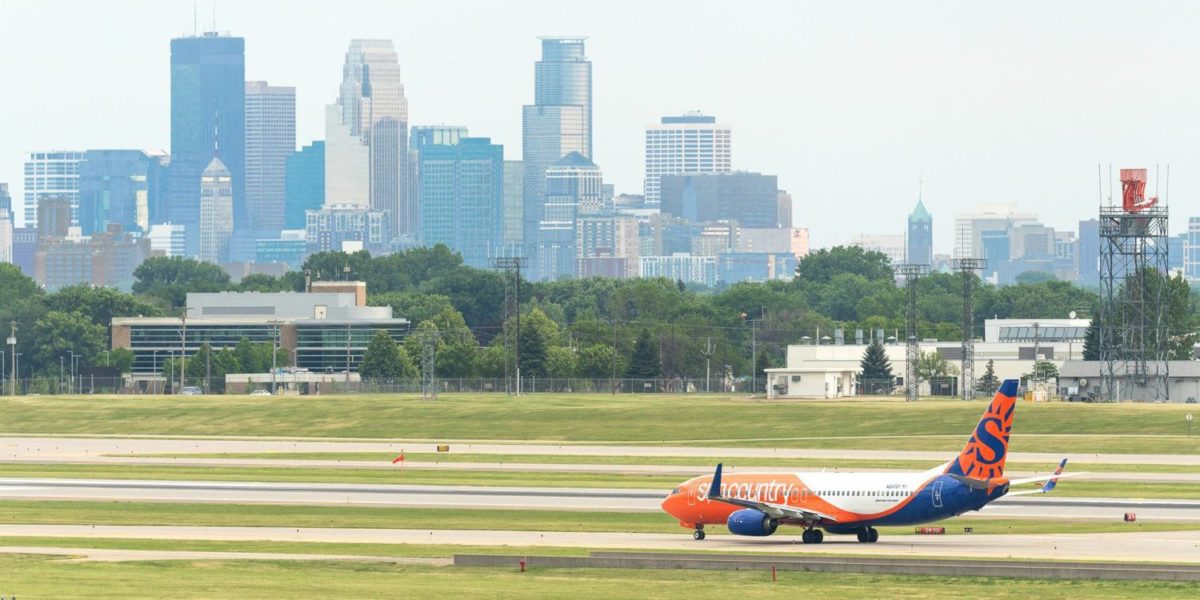
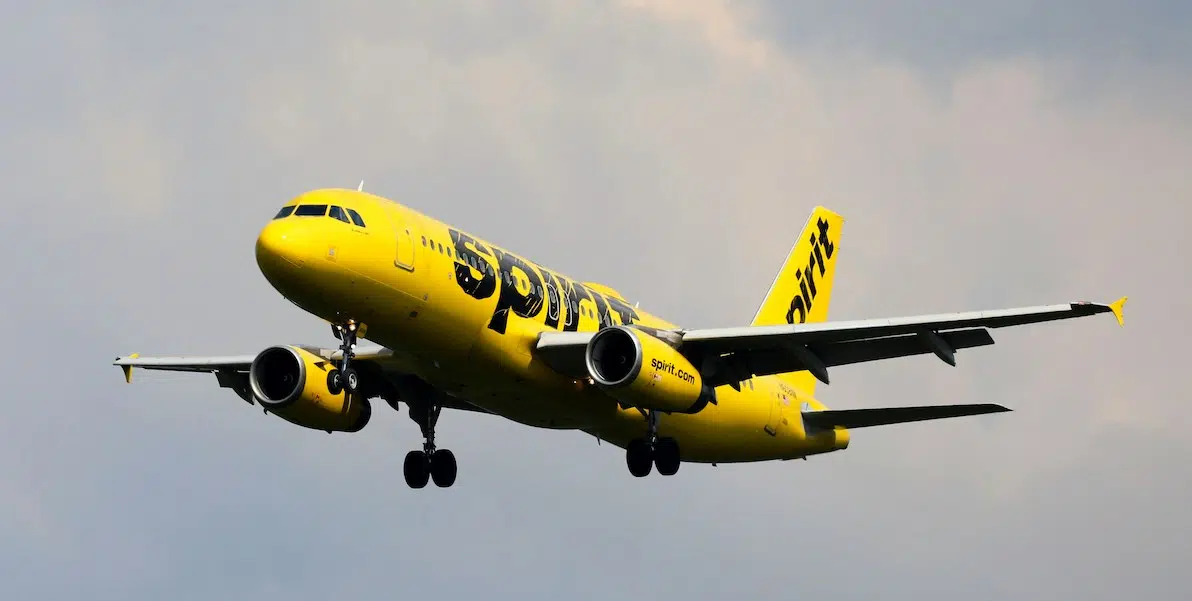
That's what's driving Delta's economy revenue flip-flop, as well as Frontier's ongoing struggles, Spirit circling the drain and, Southwest's reinvention … and even the recent merger announcement between Allegiant and Sun Country.
It's a major change that will reshape travel – with Delta and every other airline – for years to come.
“There's more to do with Amex, premium products and the fleet that we're getting for the future is really exciting,” Joe Esposito, Delta's senior vice president of network planning, told investors.
Boeing 787s are Coming
Delta had other big news in store.
After months of rumors and speculation, the Atlanta-based airline announced Tuesday it was ordering 30 Boeing 787-10 Dreamliner jets – with an option to add another 30 down the line. Those won't hit the skies until 2031 at the earliest, but it's still big news for an airline that has practically bragged about how many Airbus widebody jets they have flying across either ocean or down to South America.
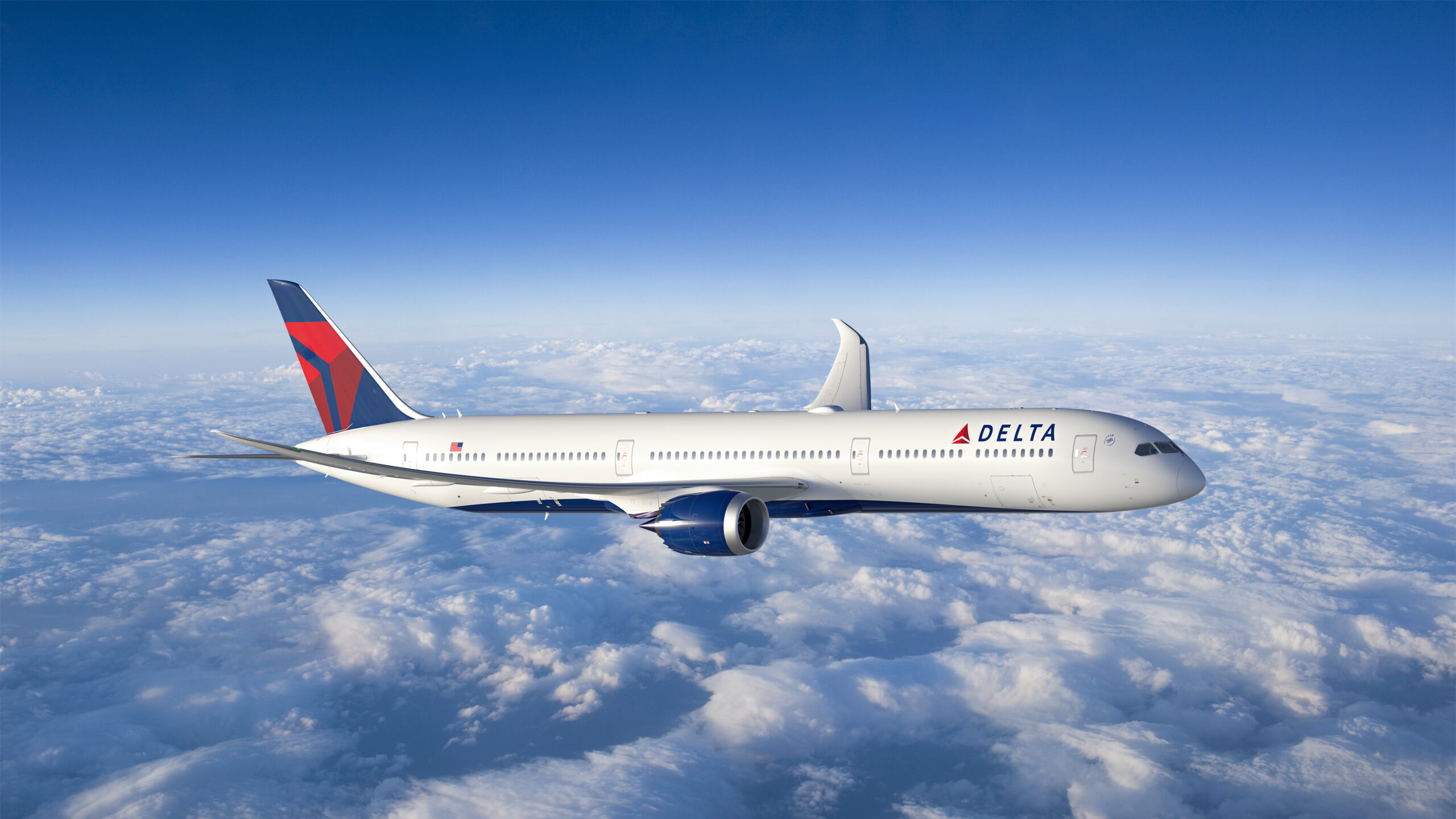
In a funny wrinkle, Delta had previously been slated to bring on more than a dozen Dreamliners. It inherited that order as part of its acquisition of Minnesota-based Northwest Airline – if you look closely, we have a model of that never-to-be Northwest Dreamliner in our podcast studio!
But what's old is new again down in Atlanta. It's Delta's first order of a widebody Boeing jet in more than two decades, joining an aging fleet of Boeing 767-300ERs and 767-400s. Delta ditched its small fleet of Boeing 777s during the pandemic.
Five years from now, Delta executives suggested they'll deploy those planes on routes over to Europe or down to South America – likely replacing many decades-old Boeing 767 and perhaps some outdated Airbus A330s, too.
Bastian Bites His Tongue on Interest Rate Cap Proposal
President Donald Trump sent credit card company stocks plunging this week after reviving a campaign trail promise for a one-year cap on credit card interest rates at 10% over the weekend.
Whether he's serious about that proposal – or even has a legal way to enact it – is another question. But for airlines that have turned themselves into credit card companies that own planes (no, seriously: Delta made more than $8 billion in revenue from its American Express – dwarfing its operating profit for the entire year) it's an existential threat.
Delta CEO Ed Bastian was careful in how he criticized it, mainly stressing he believes “it would likely require legislation.”
“I think one of the big issues and challenges with the potential order is the fact that it would actually restrict the lower end consumer from having access to any credit, not just what the interest rate they're paying, which would upend the whole credit card industry,” he said. “We'll be working closely with American Express, but I don't see any way we could even begin to contemplate how that would be implemented.”
Asked later what other big changes could be on the horizon this year, Bastian quipped: “I think we're all 1 year smarter and more conditioned to expect maybe the unexpected in some of the policy approach.”