
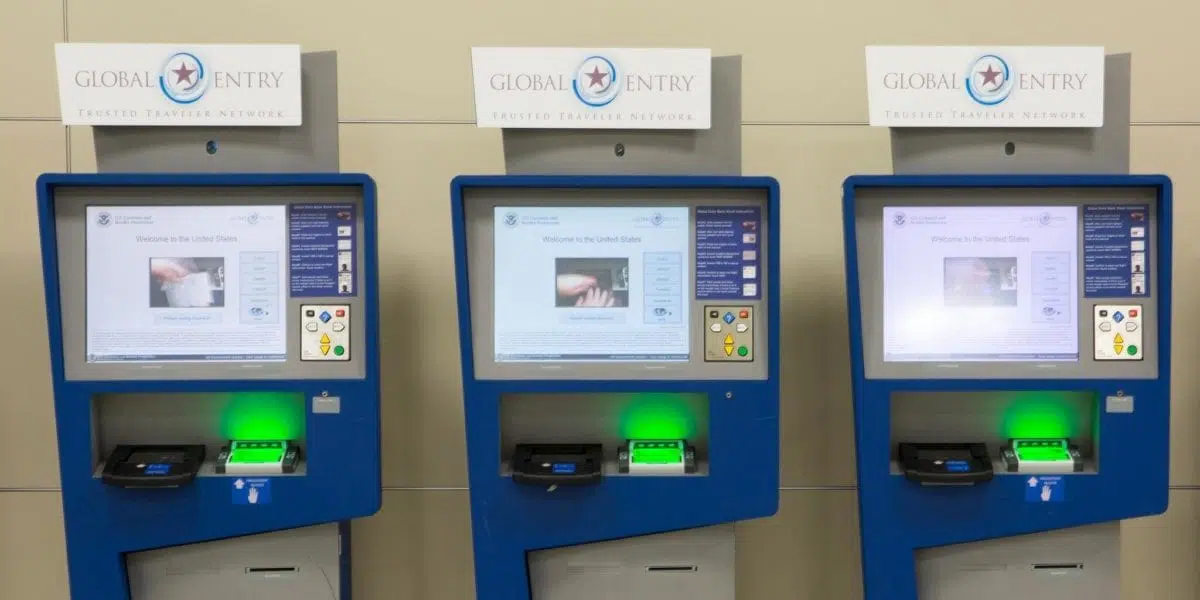



Global Entry and TSA PreCheck are designed to flag risk at domestic airports and U.S. borders – not during political protests miles from the nearest checkpoint. But new court filings and reporting by The New York Times suggest trusted traveler status may now be intersecting with federal surveillance in unexpected ways.
U.S. Immigration and Customs Enforcement (ICE) is using facial recognition technology to identify people during immigration enforcement operations and protests. And in at least one documented case, that encounter was followed just days later by the revocation of Global Entry and TSA PreCheck privileges – even though no arrest or criminal charge occurred.
The case, now part of a federal lawsuit, raises serious questions about how trusted traveler programs are being administered, and how easily the benefits that many frequent travelers rely on can disappear far from any airport or border crossing.
A Documented Case Ties ICE Surveillance to Global Entry Revocation
The most detailed account comes from Nicole Cleland, a longtime Global Entry member whose sworn declaration – first highlighted by View from the Wing – is now part of a federal lawsuit against the Department of Homeland Security.
The encounter took place amid heightened immigration enforcement activity in the Minneapolis area, where ICE agents were conducting operations that drew public attention and protests.
According to the court filing, Cleland was engaged in legal observation of ICE activity in her hometown of Richfield, Minnesota, when a Border Patrol agent stopped, approached her vehicle, and addressed her by name – despite the two never having met before.
Cleland says the agent told her he had used facial recognition to identify her and warned that she was “impeding” federal operations. He told her she could be arrested if it happened again, though Cleland was not detained, arrested, or charged with any offense.
Three days later, she received an email from the Department of Homeland Security (DHS) informing her that her Global Entry and TSA PreCheck privileges had been revoked. The notice did not provide a specific explanation, stating only that DHS cannot always disclose why a traveler’s status has changed.
Cleland had been a Global Entry member since 2014 without incident. In her declaration, she says the timing led her to believe the revocation was in retaliation for her observing ICE activity, and that the encounter caused her to stop participating in legal observation out of fear of further consequences.
ICE’s Expanding Use of Facial Recognition
Reporting by The New York Times detailed ICE’s use of facial recognition technology during immigration enforcement operations and protests, including activity in the Minneapolis area.
The technology at the center of the case is known as Mobile Fortify, a smartphone app used by ICE and Customs and Border Protection that allows agents to scan faces and collect “contactless” fingerprints, and then instantly retrieve biographical information from federal databases.
The Times confirmed that ICE agents have been using Mobile Fortify during immigration enforcement operations and protests, and verified photos and videos showing agents scanning people’s faces with smartphones and telling individuals they were being recorded using facial recognition technology, without consent.
According to current and former Department of Homeland Security officials cited by the Times, facial recognition is only one part of a broader surveillance toolkit that also includes license plate readers, social media monitoring, cellphone location data, drones, and data-analysis systems.
ICE has declined to provide details on how or when these tools are deployed, describing Mobile Fortify only as a lawful law enforcement tool used nationwide.
Why This Matters for Global Entry and TSA PreCheck
For frequent travelers, the issue isn’t just facial recognition alone; it’s how surveillance data can feed directly into Global Entry’s discretionary rules.
According to Customs and Border Protection’s official Global Entry FAQ, membership in the program is voluntary and subject to continuous vetting. CBP can revoke Global Entry or TSA PreCheck at any time if a traveler is deemed no longer eligible. A criminal conviction is not required, but being under investigation by any law enforcement agency can be grounds for termination from the program.
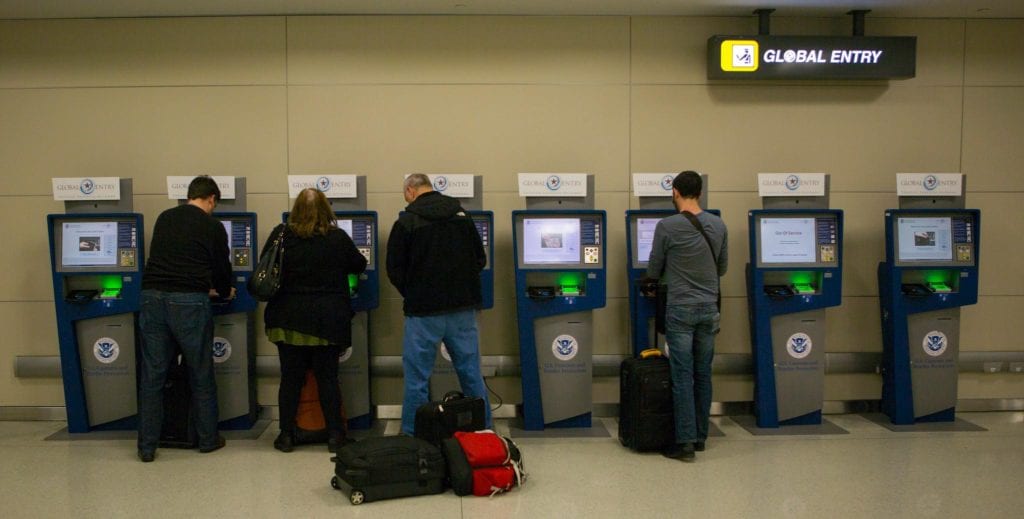
That structure allows information gathered through ICE surveillance to move across DHS systems, putting a traveler’s Global Entry or TSA PreCheck status at risk, often without a clear explanation.
As Ars Technica noted in its coverage of the case, DHS does not need to make an arrest or file charges to revoke trusted traveler status – and the agency has not denied the timeline of events or disputed the use of facial recognition, declining instead to comment on individual revocations.
Global Entry revocations aren't new. Membership can be lost for things like forgetting to declare food when returning from abroad, failing to disclose an old arrest, or even bringing family members through the wrong customs lane.
What’s different here is where and why the revocation appears to have occurred.
In Cleland's case, Global Entry and TSA PreCheck were not revoked after an airport inspection or border crossing, and there was no customs violation, arrest, or allegation of criminal conduct. Instead, the triggering event appears to have been lawful political activity.
Civil liberties advocates argue this effectively allows DHS to penalize lawful protests indirectly, without ever stating that protest itself is disqualifying under the Global Entry program rules.
While it's possible to appeal a Global Entry revocation, it can be an uphill battle. Travelers can file an appeal through DHS’s Trusted Traveler Program portal – though reporting suggests that roughly four in ten are ultimately overturned.
Bottom Line
In at least one documented case now before a federal court, a U.S. citizen in Minnesota was identified using facial recognition during an ICE operation, and then lost her trusted traveler status days later, without a clear explanation.
As ICE expands its use of facial recognition and other surveillance tools, Global Entry and TSA PreCheck are colliding with activities that have nothing to do with travel.
If you’ve recently lost Global Entry or TSA PreCheck and believe it may be connected to an interaction with a DHS agency, we’d like to hear from you.

The mental gymnastics “don’t tread on me” Trump supporters who ranted about government tyranny during COVID will engage in to somehow justify this level of fascism is going to be pathetic to watch.
It already is pathetic to watch. They’re such a gullible bunch. trump ain’t even the sharpest knife in the drawer. trump didn’t even try yet somehow they all fell for it. It’s as if they want to be rule by a monarchy.
Wow. Frightening and disturbing at the same time. Then again, not surprised in this current police state. It will be interesting to see how this violation plays out in the courts. Thanks for shedding light on it.
Interesting article. The whole premise of the Trusted Traveler Program is that you are not a security risk. Obstructing an ICE operation would fall under being a security risk to law enforcement.
Protesting peacefully is different and does not involve obstructing law enforcement.
Observing is not obstruction. They don’t want observers because much of what they are told they can do is technically illegal based on the constitution and bill of rights, not to mention it’s plain bad press for their thug tactics. This is a low hanging fruit way of punitive retaliation that is easily swept under the rug. But don’t for a second think it isn’t still insidious, unethical, and an abuse of power.