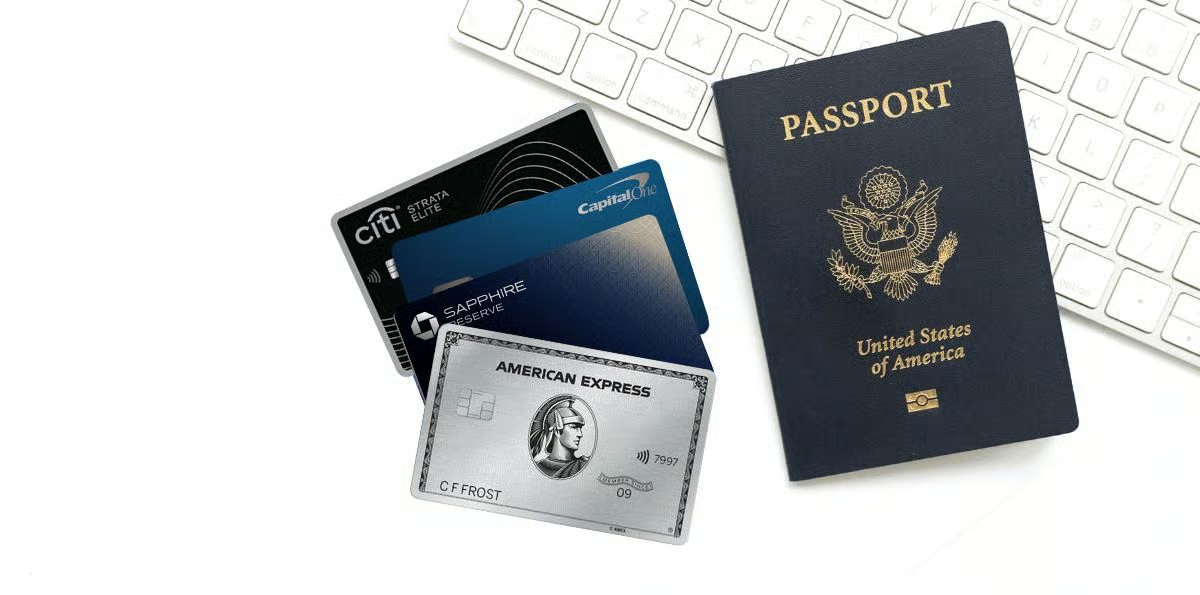




President Donald Trump has credit card company stocks plunging and travelers cautiously eyeing their stash of points after reviving a campaign trail promise for a one-year cap on credit card interest rates at 10% over the weekend.
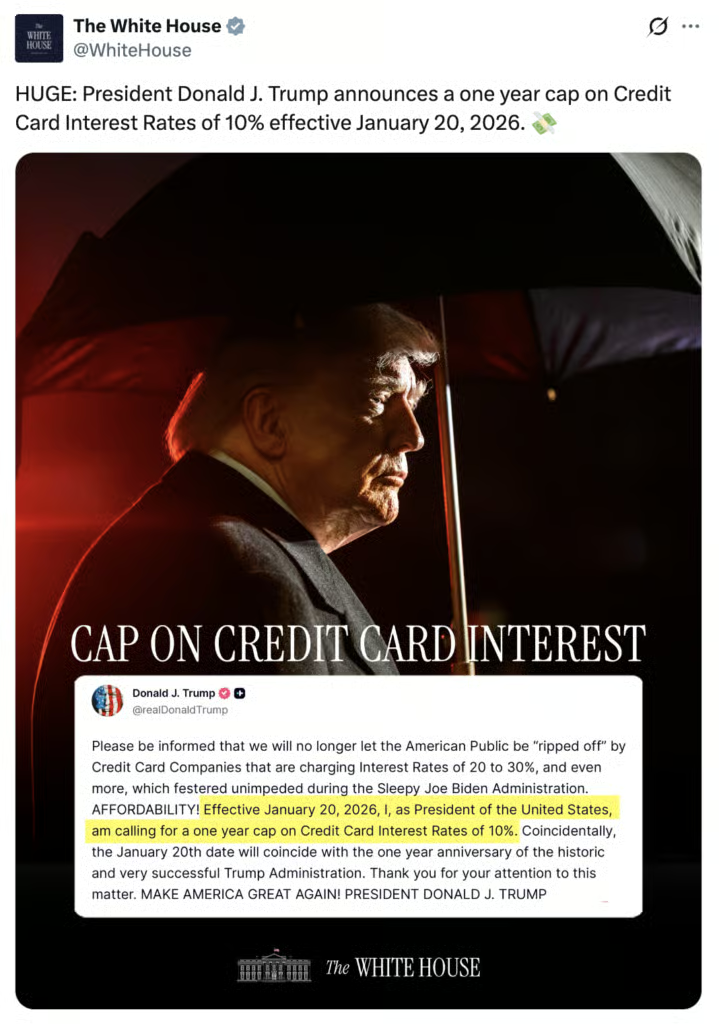
Trump announced that proposal in a post on Truth Social late Friday, which was later shared by the official White House account on X, stating that the cap would take effect on Jan. 20. He framed the move as a way to prevent credit card companies from charging what he described as excessive interest rates that often exceed 20% – if only for one year.
What Trump did not explain is how he'd enforce such a cap – or whether the president has the authority to impose it, period.
As of publication, there's no executive order requiring companies to lower interest rates. And while one member of Congress has said he'll introduce legislation – even though a similar effort from prior presidential candidate and Democratic Sen. Bernie Sanders has gone nowhere – any bill would likely take months, if not years, to become law and face steep opposition from banks and credit card companies.
For consumers, the appeal may seem obvious. Millions of Americans carry balances on credit cards month to month, with interest charges that can quickly compound. Research cited by the Associated Press estimates that a 10% cap could save Americans roughly $100 billion a year.
But any cap on interest rates would also come with massive tradeoffs, from disrupting the delicate ecosystem of earning points to what credit cards Americans can even open in the long run.
Can a President Actually Cap Credit Card Interest Rates?
Credit card interest rates are governed by federal banking law and decades of Supreme Court precedent, which allow banks to charge interest rates based on the laws of the states where they are headquartered. Experts say changing that framework would almost certainly require an act of Congress – and circumventing that would likely invite a legal challenge.
So it's unclear whether Trump means business or is merely hoping to pressure credit card companies to lower interest rates themselves.
The president has not spelled out what authority he has to impose a nationwide cap – though, in subsequent comments onboard Air Force One over the weekend, he declared that lenders would be “in violation of the law” if they failed to comply. But there is no law, and the White House has not weighed in further.
Several Wall Street experts have said there is no clear executive authority to implement a credit card interest rate cap without new legislation. A Republican senator told the Associated Press he has spoken with Trump and plans to work on a bill with the president’s support. At the same time, similar proposals have already been introduced by lawmakers in both parties.
Until that happens, the legal path remains unclear.
Even so, financial markets reacted swiftly on Monday morning. Shares of major U.S. banks – including JPMorgan Chase, Bank of America, Citigroup, and Wells Fargo – fell by as much as 4% … while consumer-focused card issuers like Capital One and Synchrony Financial dropped by more than 10%.
That underscores just how disruptive a cap could be.
What This Could Mean for Everyday Cardholders
Let us repeat: Any cap on credit card interest rates is far from a sure thing. It's unclear how that would even be enforced.
But if it were to happen, the ramifications would extend far beyond lower interest payments for existing credit card debt:
- With less ability to predict and price for risk, banks would likely tighten up on credit approvals, lower credit limits, or even eliminate some credit products altogether
- That could lead consumers with poor credit to even riskier alternatives like payday loans or buy-now, pay-later financing
- For travel-obsessed readers of this site, it's important to stress just how much interest rates subsidize the points and perks we all love: cardholders who pay interest help fund the rewards programs, sign-up bonuses for those who pay their balances each and every month
Bottom Line
A 10% cap on credit card interest rates could offer some serious relief to consumers carrying high-interest debt – but would come with plenty of unintended consequences.
Above all, it's unclear how (if at all) Trump would make good on this revived campaign promise. Until then, consumers shouldn't expect immediate changes – if any.