




Bilt Rewards broke through and eventually dominated the travel landscape by doing something no other major rewards program had managed: It made earning points on your rent payment not just possible, but almost effortless. Cue a massive following, tons of online attention, and rapid growth.
After months of hype surrounding its next chapter, Bilt 2.0 officially landed last week … not just with a thud, but with an outcry.
The response to Bilt’s trio of new credit cards and convoluted new structure for earning points on both rent and mortgage payments has been mixed at best. That’s natural for any loyalty program – look at virtually every credit card that raises annual fees or airline mileage programs hiking award rates. But few of them return less than 48 hours later to make significant changes.
“On one hand, there have been record applications for the cards, and I’m excited for members to get them. However, I’ve also seen real and reasonable confusion about the new value proposition – especially around rent and mortgage points,” Bilt founder and CEO Ankur Jain wrote late last week. “That’s on me, and we’re fixing it.”
There’s still immense value in Bilt Rewards, and that’s not changing anytime soon. But after being the toast of all things award travel for years, Bilt is suddenly on the back foot.
Here’s why.
Power Users Turned on the Program
Bilt first hit the scene nearly five years ago, carving out a diehard membership who loved its simplicity, an almost too-good-to-be-true structure for earning points on rent, and an unbeatable array of transfer partners that includes a trio of major U.S. airlines and World of Hyatt.
The undeniable value of its rewards system was part of what fueled its rapid growth. But after getting a foothold in the market by luring in points-obsessed travelers and cultivating a community on Reddit, Bilt clearly turned to bigger aspirations: It wanted to be mainstream.
Last week, Bilt officially pulled the rug out from under its earliest adopters.

It had been clear that the old way of awarding points on rent payments – just five non-rent transactions a month would unlock the full 1x points on housing – was unsustainable, especially as the company expanded into mortgages. But it’s not its members’ responsibility to understand a company’s business model and whether it’s too good to last forever.
That’s on Bilt, and Bilt alone.
Had Bilt ushered in its changes in stages over the years, we might not be writing this. But an overnight transformation – as our headline says, from a no-brainer to a head-scratcher – alienated its once-loyal members and superusers.
To make matters worse, one of Bilt’s top executives posted a meme on his social media referring to upset and confused customers as “basement-dwelling redditors trying to cheat their rent system.” That only poured fuel on the fire and sent a clear message: “If you’re not happy with Bilt 2.0, you’re wrong, and we don’t care.”
Turning Rewards into a Math Problem
At the heart of Bilt’s 2.0 makeover, the famously low-effort five-transaction rule was replaced with a spend-more, earn-more system built around “Bilt Cash,” a relatively new internal currency.
So you have to open and spend more on one of three new credit cards … to earn a second currency … then apply it to your rent or mortgage payment … to earn the points you actually want?
Confused yet? You’re not alone.
What was once a single-sentence value proposition has become a system that requires thresholds, conversions, and external tools – like a handy calculator built by MaxMilesPoints – just to understand. Users didn’t simply have to accept that earning points on rent would take more effort or spending. They had to learn a brand-new program.
Let me put it this way: When even die-hard points-and-miles enthusiasts like yours truly – the very audience that helped fuel Bilt’s early momentum – are struggling to understand or even explain how everything works, you’ve got a problem.
Just two days later, Bilt effectively confirmed the confusion.
In response, the company introduced a second, parallel way to earn points on rent and mortgages … without removing the first. Users can now choose to bypass Bilt Cash altogether and instead use a tiered spending structure for unlocking more rewards on monthly housing payments.
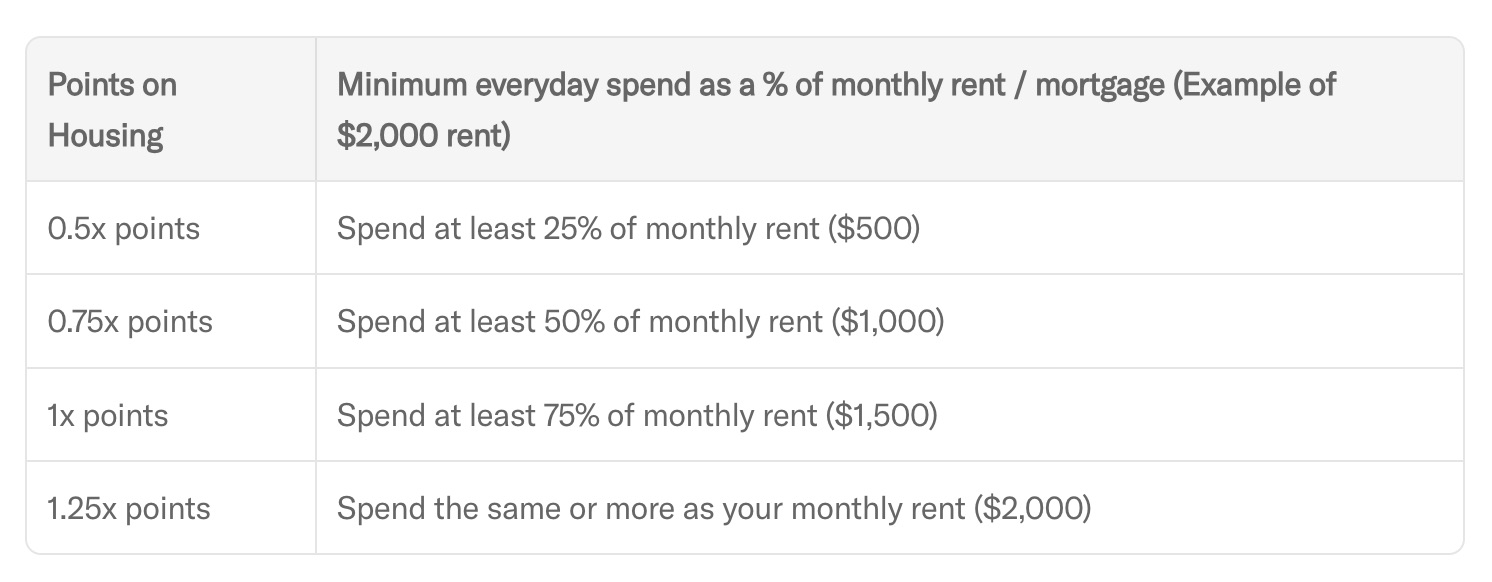
But the original Bilt 2.0 model hasn’t disappeared: You have to choose between the two. And the two different earning systems have their own rules and potential tradeoffs that may vary from user to user … and even from month to month.
Rather than simplifying the experience, this choice may only compound the confusion.
The appeal of Bilt was not just how valuable the points can be, but the simplicity of earning them. Bilt even leaned into humor as it charted a new course, mocking the end of purchasing “five bananas” to unlock rewards on rent and mortgages.
Requiring users to spend more to earn rewards is logical. But with last week’s changes, they lost the simplicity that made focusing on Bilt points such an easy, even automatic decision.
A True But Hollow Promise on Fees
In the week leading up to Bilt’s big unveil, leaked details on its trio of new cards suggested that the company would start charging transaction fees for housing payments. A few days later, Bilt representatives rebutted that leak, insisting that fee-free rent and mortgage payments were “here to stay.”
That statement was technically correct … but also carefully framed.
In reality, Bilt 2.0’s new “Bilt Cash” system for unlocking housing rewards functioned as a replacement for a transaction fee:
- Spend more on your card to earn Bilt Cash to unlock housing rewards
- Don’t have enough Bilt Cash to earn as many points as you want? You can “buy” more Bilt Cash to cover the difference
While Bilt Cash was designed to incentivize users to spend more on their Bilt Cards, it’s also a transaction fee by another name.
The difference may have mattered internally. But to users whose entire relationship with the company was built around earning points on rent, it felt like Bilt was playing word games.
Additional details in the fine print of Bilt’s rollout bred even more mistrust.
Fine Print & A Frustrating Transition
As users began digging into Bilt Card 2.0 following last week’s launch, the frustration didn’t stop with complexity, timing, and pseudo-transaction fees. It showed up in the details – often after the fact.
For starters, some spending categories that many cardholders reasonably assumed would earn points simply won’t. As first flagged by Award Wallet, tax payments and secondhand marketplace platforms like eBay or Facebook Marketplace will not earn Bilt points.
Those restrictions – clearly meant to stop cardholders from racking up massive amounts of points with questionable spending tactics – are by no means unprecedented in the credit card world. But they were never communicated proactively: Instead, they were tucked into the terms and conditions and only discovered by eagle-eyed readers.
Bilt also should have been more transparent about how housing payments are changing for cardholders under the new system. Rather than charging rent or a mortgage payment to their card, giving cardholders the flexibility to “float” a monthly payment and pay it off later, it will be paid through a direct ACH bank transfer.
Yet other details weren’t finalized, period. Namely: In addition to unlocking rewards on housing payments, users can also redeem Bilt Cash towards other items like Lyft credits. While Bilt insisted those redemptions will be “dollar-for-dollar,” the company provided no details … until a week after launch, when Bilt’s CEO finally spilled the beans in a follow-up email to spell out another convoluted series of options.
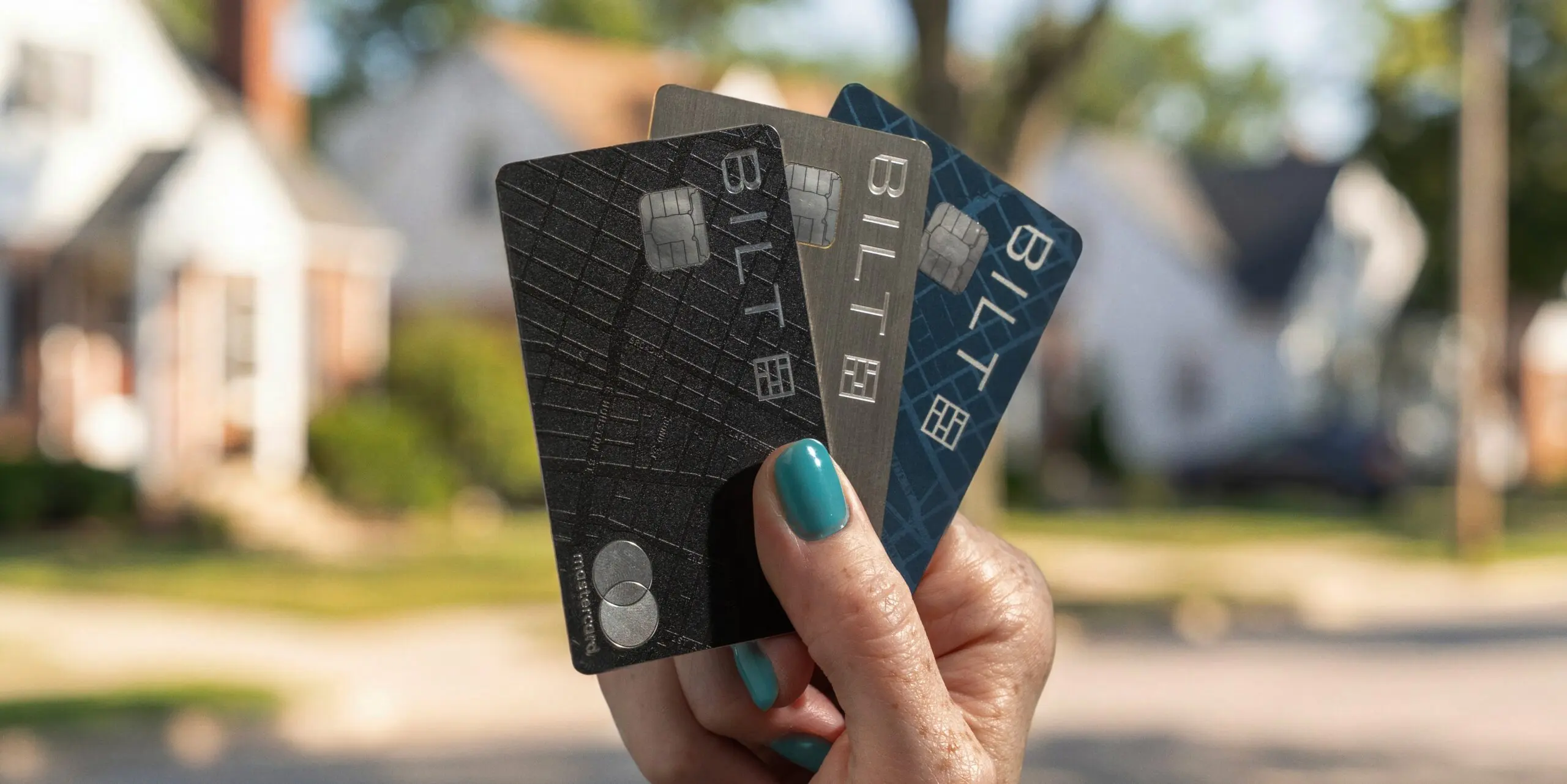
And while Bilt promised a “seamless” transition for longtime cardholders to one of the three new options as the company ditches Wells Fargo and moves to a suite of new co-branded cards issued by Cardless, it hasn’t worked that way for many people.
Reports surfaced of denials or sharply reduced credit limits, even among cardholders with strong credit profiles and years of positive history with Bilt – including myself. While I was approved for the top-tier Palladium Card, I was given a lower credit limit than I previously had under the original Wells Fargo-issued Bilt card.
Shortly after launch, Bilt CEO Ankur Jain emailed members acknowledging that longtime users with solid credit scores had been declined or approved at lower limits than expected, prompting manual reviews with the issuing bank.
Why I’m Still Willing to Try Bilt 2.0 … For Now
Let’s be clear: It’s all too easy to Monday morning quarterback a launch like this.
Major overhauls rarely go off without a hitch, especially when they involve new cards, a new card issuer, and a fundamental reshaping of how a rewards program works. Some confusion and course correction were probably inevitable.
Surely, Bilt will lose customers it doesn’t truly want: People who game the system to earn rewards without providing so much as a cent in value to the company. Plus, the world (and the world of travel, in particular) is full of people who swear they’re done after negative changes … only to do nothing.
All that context certainly matters. But so does the reality that Bilt 2.0 is no longer a one-size-fits-all program.
Despite everything, I’m not writing Bilt off. For me, Bilt Card 2.0 may still work – specifically with the Palladium Card. I spend plenty on categories that wouldn’t earn a bonus on other cards, so that 2x multiplier really shines. Then again, so does the Capital One Venture X Rewards Credit Card.
The 50,000-point sign-up bonus helps offset the $495 annual fee in the first year, and Bilt points remain among the most valuable transferable currencies on the market. For me, the math can still make sense.
But now, more so than perhaps any other card or points program on the market, whether Bilt still makes sense depends heavily on the individual – how much you spend, where you spend, and how much effort you’re willing to put into optimizing the system – you’ll need to crunch the numbers for yourself, too.
This isn’t a program that’s suddenly worthless. But it’s no longer as automatic as it used to be. What used to be a set-it-and-forget-it benefit now requires active monitoring, choosing the right earning system, tracking thresholds, and staying on top of evolving rules.
I’m willing to give it a year. But patience has limits.
If the effort required to optimize Bilt 2.0 outweighs the value of the points it delivers, I won’t hesitate to pull up stakes. A rewards program should reward my loyalty, not test it.
Bottom Line
Bilt 2.0 was billed as a victory lap for a company that has become the toast of all things award travel. Instead, it stumbled out of the block.
From the trio of new co-branded cards to the convoluted new choices for earning rewards on housing to the secondary currency, the entire Bilt 2.0 rollout feels rushed and haphazard. When longtime users need calculators and flowcharts to decide whether a program makes sense, something fundamental is broken.
Altogether, it smacks of hubris: A company so sure that it’s the best that it didn’t stop to consider whether its users – the people it needs to succeed – would agree.
It’s not too late. Bilt Rewards points are still easily among the most valuable in the world of travel. But by abandoning clarity and burning bridges, it’s no longer a no-brainer.




Their problem is they need to get rid of rent as having anything to do with their program. Right now it’s just an arbitrary limiter on how much bilt cash can be used to buy extra points that requires people to possibly jump through a hoop to pay their rent or mortgage.
The value proposition now, is that you have cards that work like capital one venture x, sapphire preferred, and generic no-fee cards, but also earn 4% bilt cash instead of having coupon books like csr and amex platinum. If you don’t need $10 in lyft credits or $34 guest passes for priority pass or you don’t eat out a lot, those coupons don’t go wasted, instead you can buy points (currently limited by how much you pay on rent or mortgage) or buy a smaller amount of points (up to 5000 5x a year but not limited by your rent or mortgage) which has a somewhat lesser value than using the money on things you buy already but gives you a way to get a little bit of value in the form of points rather than changing the way you spend or just not taking advantage of coupons offered otherwise.
They bilt (pun) their brand on rent points, but they need to pivot out of that now and just explain why they are better than alternative cards with their new system and get rid of the rent or mortgage constraint on bonus points bought with bilt cash
The biggest issue for me is that the marketing material say something but the terms of service (unless they updated them in the last 24 hours) says something different and their customer support, when asked, will lie to you.
Honestly I don’t see the value in the Palladium but I can make the Obsidian work for me. Except they lost my trust and I can easily get the same value on other cards who earned my trust over the years. So, bye Bilt
I know the card is complicated but like you emphasized, there’s still great value. When you get beyond the math, there’s opportunities to amazing transfer partners like Japan Airlines and Hyatt. As someone who has 12 cards, I still had a hard time understanding the three new cards with Bilt 2.0.
That really changed though when I found this calculator online. It helped me make the decision between the Palladium and the Obsidian—I’m going for the Palladium.
https://nextcard.com/tools/bilt-calculator?groceries=350&everyday=800&rent=1500&dining=225
The CEO said it himself in the back tracking email that Bilt is willing to pivot quickly if necessary. I hope enough people just cancel their cards so that they’ll pivot much further than they have so far. Even though I like the stable of transfer partners especially Alaska and Hyatt, I will definitely be cancelling my card. One thing not mentioned in this article is that the spending multipliers just aren’t that good. The no annual fee card literally has none which is a slap in the face since the original bilt card had great multipliers in dining, Lyft, Walgreens, etc.
If the Citi strata premier can offer 3x for groceries and dining for $95 per year, why can’t bilt on the obsidian card? Why do you have to pick one or the other?
If the Amex blue business plus card can offer 2x on all spend for no annual fee and a 15000 point SUB, then the bilt no annual fee card should provide something.
Also personally I don’t find credits appealing when you have to use the card companies travel portal. I get why they do it, but it takes away flexibility to shop for the best price.
I would reconsider any of the 3 tiers of the 2.0 cards if they simplify the housing points system and improve the multipliers and\or credits package. If I need additional 75% of my rent spend to unlock the points then give me multipliers that make this a no brainer every day card for everything I buy that doesn’t make me miss out on better value from another card.
I heard someone say that Bilt may decide to not refund the year 2 annual fee for those that decide to close it (assuming no downgrade option is available). Any indication if that is true?