
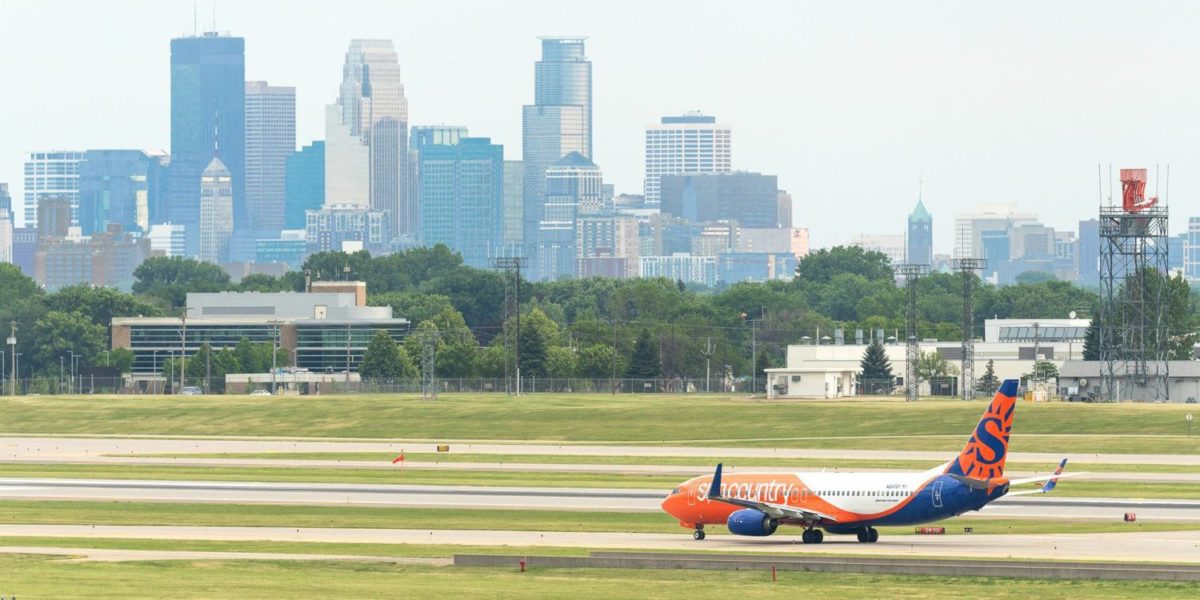



Sun Country stitched together an airline from the dregs of Braniff International, rode out multiple economic downturns, survived both a Ponzi scheme scandal and a once-in-a-century pandemic, ditched much of its beloved hometown airline DNA, and established itself as a rare success story in the struggling low-cost airline market.
Now, we know it’s final chapter: In the coming years, it will disappear as it gets swallowed by another carrier in the latest round of consolidation in the U.S. airline industry.
Out of nowhere, Allegiant announced Sunday it will acquire Minnesota’s tiny-but-famous (at least to us Minnesotans) low-cost carrier in a $1.5 billion deal. The proposed merger would eventually fold Sun Country’s planes, pilots, and crews all under Allegiant’s umbrella, creating one bigger budget carrier headquartered not in Minneapolis, but in Las Vegas.
Nearly a decade after coming to the airline, CEO Jude Bricker spoke with Thrifty Traveler Monday about how the merger came together, what’s next … and, most importantly, to try to quell concerns that Allegiant’s takeover could eventually mean less service – and higher fares – in Minneapolis.
How & Why the Deal Came Together
Bricker said Sun Country had flirted with possible mergers “on and off” since he joined the airline in 2017. But nothing made sense until this past fall.
Allegiant first approached Sun Country way back in early November, Bricker said – the two sides had been talking about and finalizing a deal until they made it official Sunday.
“I don’t think there’s any other company that can offer the kind of benefits … that Allegiant does,” Bricker said. “We didn’t set out to be sold, it just kind of came together.”
After going public in 2021 and growing rapidly in the post-pandemic travel boom, Sun Country eventually hit a wall, hemmed in by Delta’s dominance and struggling to expand outside of its Minneapolis hub. Efforts to get a foothold in other markets like Dallas, Portland (PDX), St. Louis (STL), and elsewhere across the Midwest never panned out. By 2025, Sun Country was shifting resources into flying packages for Amazon rather than ferrying Minnesota travelers across the country.
In the airline industry, you keep growing … or you die. So an acquisition made sense.
“I think we’ve been challenged to expand outside of Minnesota. This is a solution for that,” Bricker said.
What Happens in Minneapolis?
Wall Street analysts and shareholders may love them, but mergers are typically a dirty word for everyday travelers, code for cutbacks and price increases. “Synergies” are shorthand for job losses.
Bricker and Allegiant have repeatedly insisted that’s not what will happen in Minneapolis, vowing that Allegiant will not just maintain a significant presence in Minnesota but increase flights over time. As a Minnesota-based travel company, we’re still concerned. The last 20-plus years of airline mergers shows that there’s almost always another shoe to drop.
While they’re both best known as budget airlines, Allegiant and Sun Country have drastically different DNA.
- Sun Country has relished its role as a scrappy (and cheaper) alternative to Delta, charging $89 one-way fares when the Atlanta-based carrier often wants far more, keeping Delta fares in check in the process
- Allegiant, meanwhile, shies away from competition by design. Its entire business model is built around flying between smaller cities and further-flung airports – routes where it can have a monopoly
What if Allegiant eventually decides to give up the fight against Delta and instead fly those planes between Las Vegas or southern Florida and other, smaller airports? Or what if it shifts Sun Country’s existing routes down to Mexico and the Caribbean to instead depart from other airports where it doesn’t go head-to-head with Delta?
Any potential that Allegiant would eventually retract would be bad news for Minnesota-based travelers. That would give Delta everything it needs to raise fares – a troubling prospect for the hub captives in Minneapolis who already feel they’re overpaying.
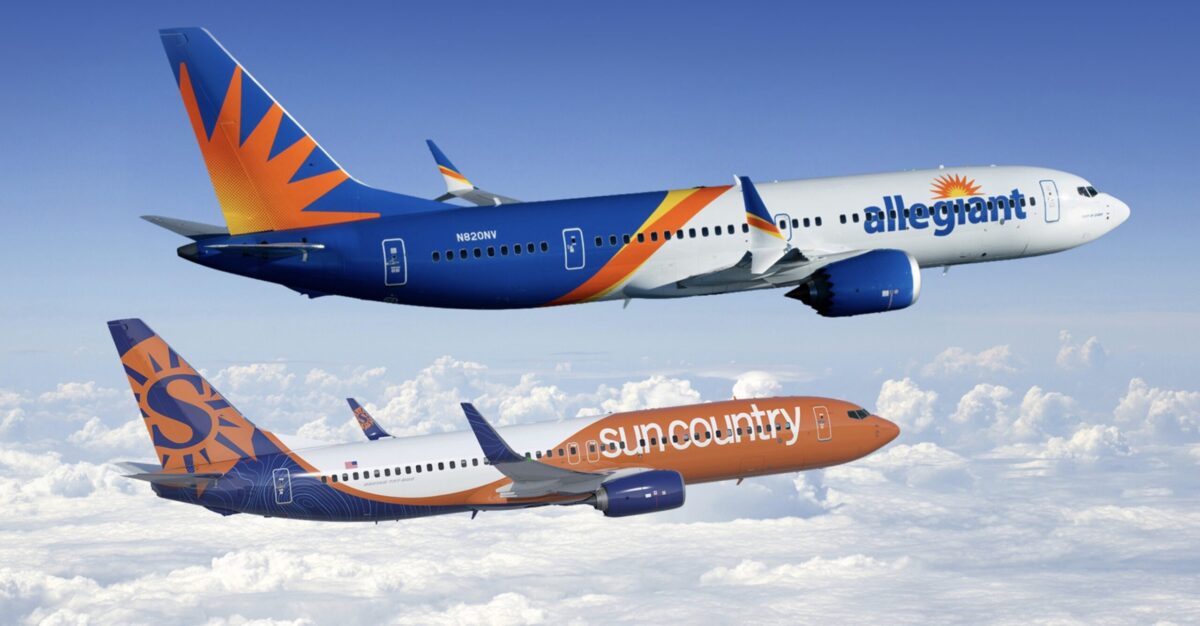
Bricker conceded that Allegiant may not be looking for a fight with Delta, but said it can do both, building on Sun Country’s existing strength in Minnesota while expanding elsewhere.
“They’re going to have more monopoly opportunities so that we can be bigger here,” he said, mentioning routes to airports like Orlando-Sanford (SFB), Phoenix-Mesa (AZA), and Punta Gorda (PGD) in Florida as potential opportunities.
And unlike many previous airline mergers, Allegiant and Sun Country hardly overlap. They currently share just one route, in fact: Between Appleton (ATW) and Fort Myers (RSW).
So while two airlines going head-to-head on dozens of routes will naturally raise fares after joining forces – they’re no longer competitors, after all – that’s not the case as Allegiant and Sun Country combine.
“Two competing airlines will rationalize those overlaps and fares will rise,” Bricker said. “That doesn’t exist here.”
That’s the best-case scenario, anyway. One day after announcing a deal to sell off his airline, Bricker was confident that the worst-case scenario – that Allegiant would eventually shrink its Minneapolis operation – wouldn’t materialize.
When Will Sun Country Disappear?
Let’s be clear: There is no “we” with Sun Country and Allegiant. At some point in the not-too-distant future, Sun Country will be no more as Allegiant officially takes the reins.
That alone is a strange prospect to Minnesotans, for whom the airline has been a household name for more than four decades. But Allegiant is acquiring Sun Country, eventually bringing them under the umbrella of Allegiant and its headquarters in Nevada. Surely, Sun Country’s fresh orange, white, and blue liveries will be repainted with Allegiant’s signature sunny tails.
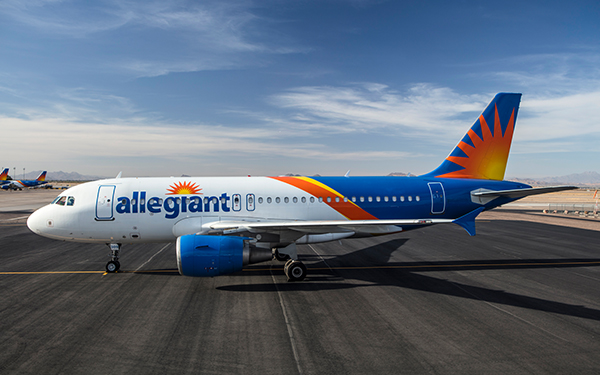
That won’t happen overnight. For starters, it will take months for the acquisition itself to close. While Allegiant has told investors the transaction will close sometime in “the second half of 2026,” Bricker said it could take six to 12 months.
Then, the two carriers will need to combine under a single “operating certificate.” In the end, Bricker estimated it could be “five years or so from now” before Sun Country’s entire brand gets folded into Allegiant and disappears.
“We’ll have a long time to convince the consumers here in the Twin Cities that they should extend their loyalty over to the new brand,” he said.
Bricker said Sun Country will continue hiring frontline staff – pilots, flight attendants, and ground crew – and that those employees should be safe as two airlines become one. But as headquarters officially shifts out west, some Sun Country management employees in Minnesota may lose jobs in the consolidation.
The deal will also eventually put Bricker out of a day job. He’s joining Allegiant’s board and will serve in an advisory role “to help ensure a smooth and successful integration.”
“They’re the bigger carrier. We couldn’t force this to happen without them controlling the terms of the surviving management team,” Bricker said.
“It’s bittersweet,” he said.

Bummer. My & my friends whole travel strategy the past few years has been to simply fly Sunny C from MSP nonstop to all the cool US spots (like Santa Fe & Portland ME last year & this year Palm Springs, Philly & Syracuse). Laughing all the way at Delta’s (usually) way higher prices. Flew Allegiant once years ago–did not like it. Subscribed to TTPremium this year so hoping it comes through with some awesome deals I like this fall. R.I.P. Sunny C.